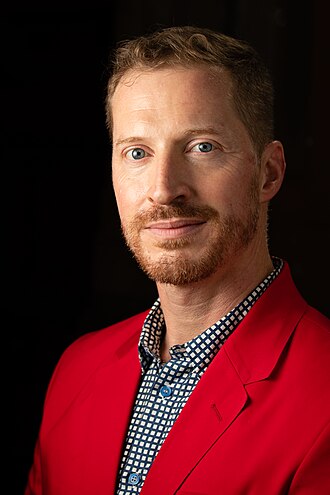
Andrew Sean Greer
Pulitzer Prize-winning novelist
Where to hear and read about Andrew Sean Greer1 episode or test

Andrew Sean Greer is a novelist whose comic book Less won the 2018 Pulitzer Prize after a run of rejections. The thing most worth learning from him is to write what comes easily, draft messily, and use revision to find the echoes your subconscious left behind.
it's not shameful to do what you're good at.
Write Better Stories in 72 Minutes (Andrew Sean Greer Interview)
Andrew Sean Greer: the story and the lessons
1Andrew Sean Greer's road to Less and the Pulitzer
Greer's obscure stories were hated, but a realistic one was loved. In graduate school he wrote stories about aliens and robots that everyone disliked. A realistic story about a gay man and a lesbian in a marriage of cover was loved, and it became his first published short story.
His professor William Kittredge's only comment was that Whitey Ford always threw with his left hand. What feels easy doesn't feel like art, but it is the thing only you can do.
Greer wanted to be the cleverest writer in America at 23. He says he was instead a vulnerable writer, which is the last thing you want to be at 23. He didn't know he was good at comic novels until Less.
Few literary comic novels exist, so comic fiction such as Villa Coco became his niche.
His serious novel only worked once he mocked his hero. His serious novel about a middle-aged gay man in San Francisco was tedious and self-pitying. When he decided to make fun of the character instead, it opened every door, because he was finally writing about things that were hard for him.
"I'll just make fun of him instead."
Believing his career was over freed him to write Less. His previous novel, The Impossible Lives of Greta Wells, was barely reviewed and barely bought, and at 46 he felt out of the club. He assumed no one would read Less, so he put in things too personal.
Faber, his British publisher for every earlier book, declined it over the last book's sales, and 11 other British publishers did too. A British publisher appeared the day after the Pulitzer, about 10 months later, and then all of them wanted it.
Greer refused to believe he had won until a friend confirmed it. He was directing an artist residency in Tuscany with no cell reception, training pugs to wear diapers before Margaret Atwood's visit. His boyfriend showed him a Chronicle headline and he answered, "That is not true."
He called Michael Chabon, who asked whether he was the first person to tell him. The win came on April 18th, for a book he thought no one would read.
Past winners told him the prize removes the downside. Chabon told him there is no downside and he can now write any book he wants. Michael Cunningham told him not to waste time wondering whether he deserved it.
Every living winner reached out, including Donna Tartt and Jhumpa Lahiri. Greer decided judging a comic novel's worth was not his job, since he wasn't on the committee.
Greer got noticed by dressing in the loudest colors. To reach a Travel and Leisure editor, he wore bright clothes and had an intern friend introduce him in passing. When a piece needed a writer, the friend named "the guy in the bright clothes."
He says you will probably never make money from writing, so find someone or something to support you at a minimum level. There is no champagne room, only the work.
2How Greer drafts and revises
Greer spills everything into the first draft and judges it later. He puts in every story and character he might use, without asking whether it is useful. On the second pass the conscious mind picks out what the subconscious was reaching for and turns it into theme and story.
He quotes the saying to write on whiskey and edit on soda water. "I just spill it all on the table."
Greer writes scenes out of order, like a crossword puzzle. He writes the scenes he can already see, wherever they fall in the book, and lets each one give clues to the others. He keeps a list of scenes that seem fun and plans how to tell each one while swimming.
The method avoids the mid-book breakdown of a plot that drifted and the stiffness of over-planning. He traces the idea to Nabokov, who reportedly wrote on index cards this way.
In the second draft he finds the images that repeat. He rereads his draft and notes what recurs. If birds keep showing up, he cuts the porcupine stories and adds more birds, because readers enjoy a pattern they can feel but can't name.
The echoes also tell him what the book is really about. A scene with a donkey on page 30 calls for a matching donkey scene 30 pages from the end.
Greer cuts even a wonderful piece if it doesn't rhyme. In a 250-page novel he wants the reader to finish feeling it was all for a reason, like a milkman mentioned in a story who then has to matter. He cut a hilarious story about a 17th century Venetian fraud from Villa Coco.
The book is really about what to do with your life, so the story "was off the mark so it had to go."
Greer treats revision as technical work, like a painter's. He compares a day swapping the word dog for cat to a painter spending a day on tiny flowers in one corner. Matching a donkey scene 30 pages later means reconnecting everything around it.
After polishing a scene he can't see it clearly, so, like painters waiting for lacquer to dry, he lets it leave his mind before critiquing it.
3How Greer builds voice, characters and scenes
Greer finds a voice by piling up books his book should sound like. Before and during drafting he pulls a stack from his library that the book seems to blend. He often needs false starts: the first 100 pages of The Impossible Lives of Greta Wells were rewritten three or four times, changing gender, point of view and tense.
He knows he has the voice when pages come easily and are a pleasure to write.
Greer gives a first-person narrator more wit and foresight than the hero. In Less, Arthur Less is upset and doesn't know he's in a comedy, but the narrator is smarter, funnier and knows how it ends. The reader has fun while the character suffers.
Comedy depends on the sense that things will turn out okay. He says the narrator is why he enjoyed writing the book so much.
Greer builds characters from distinctive speech, not backstory. Literary fiction now expects a character in a few sentences, and he gives them a distinctive way of talking and thinking rather than a complicated past. He watches real people in bars with a pad of paper, noting how they move, talk and dress.
He likes off-putting people, since a gruff bartender gives a scene more to work with than a friendly one.
Greer reports dialogue instead of staging every line. TV habits teach writers to show people entering, talking and leaving. A novel can summarize speech, such as "I told her exactly what she needed to hear," or withhold it.
He admires Beryl Bainbridge ending a chapter with the narrator's mother saying what she always says. "You can just report it."
Greer stops a line short and trusts the reader to finish. Colette ends Gigi on an ellipsis at the marriage proposal. Greer saw that one more word would be too sentimental, and that a writer can leave the reader hanging.
The more readers invent, the more tied to the book they feel, but he notes some readers reject a book that asks too much, so the writer chooses the difficulty.
Greer replaced chapter transitions with white space in Villa Coco. He calls transitions the hardest and most boring connective tissue. Villa Coco uses sections divided by a small flower, some very short and some long, so he can go straight to the good part.
He compares it to a wedding best man who wrote his speech as about 25 index cards, each a complete story. The lesson is to find a structure that lets you write the way you like to.
Greer writes down every odd detail and keeps what feels meaningful. As a travel writer he invented nothing, and in a Vietnamese restaurant that took two hours to serve him he noted even the brand of the air conditioner. A dog shooed between the chef and the waitress and a talking parrot both reached his novel.
He looks for the unexpected rather than the cliche or its opposite, such as a ski resort in Morocco or a boy selling chicks dyed bright pink.
4How Greer writes comedy from hard material
Greer makes comedy from his hardest subject and touches it quickly. He touches the serious subject briefly, then lets the reader see what is underneath. The line that Arthur Less was "the first homosexual ever to grow old" points to the generation of men above him who died of AIDS.
He cites Paul Beatty's The Sellout and Joan Rivers as models for leading readers through the fire so they find they are on the other side.
Greer writes the jokes fast and finds the setups in revision. He isn't quick-witted, so the funny lines come in the first pass at the writer's speed. In revision he finds setups he planted without knowing.
In Less, Arthur first woke up naked in a teepee. After revision he wakes on the rickety universe appreciation platform introduced earlier and cannot get down.
Greer controls comic timing with grammar and omission. Told his last 20 pages needed to be eight, he kept cutting but couldn't remove a flight from Japan to San Francisco. A friend pointed out he needn't write the plane at all: an ellipsis, then Less at his house.
You delay a beat by playing it out and speed up by cutting. The ending of Less only became funny and moving once he picked up the pace.
5What Greer reads and how he takes editors' notes
Greer reads old and odd books instead of chasing the newest. He shops secondhand bookstores, because reading only what is new makes you sound like everyone else. Old novels hold forgotten techniques, like French novels naming characters "Madame M---" or Rebecca never naming its narrator.
He borrowed the hidden-name device for Villa Coco's narrator and read Nancy Mitford and Gerald Durrell for its gentle comedy. "What you want to sound is just like yourself."
Greer reads like a detective and takes only what suits his book. When something works he stops and asks how the writer did it, and when something bores him he asks why. Cormac McCarthy's missing quotation marks feel cold, which would not suit his warm books.
He steals Proust's long sentence that lands on a colon, usable once or twice a book, and rejects Proust's 50-page speech about church stones. He can no longer read The Lord of the Rings for fun.
Greer treats his editor as the patient and himself as the doctor. Daniel Handler told him readers know where it hurts but not what is wrong. If several readers flag the same spot they are right about the problem, but their proposed fix should be ignored.
His editor Lee Boudreaux suggested cutting the ending of Less. He rewrote the rest of the novel so the ending would land.
When something doesn't fit, Greer tries more of it before cutting. In a workshop story about a married couple, a mermaid appears at the end and everyone says cut it. Greer asks for more mermaid: prepare the reader and commit to the strange thing.
The first fix readers suggest is often the easiest one, and it tends to make the work more mediocre.

Write Better Stories in 72 Minutes (Andrew Sean Greer Interview)
Greer drafts messily and out of order, then uses revision to find the echoes, setups and structure his subconscious left behind, and he feeds that process with old, odd books instead of current ones. He also explains why you should write what comes easily, make comedy from your hardest material, and treat an editor's notes as symptoms rather than prescriptions.
Greer's obscure stories were hated, but a realistic one was loved. In graduate school he wrote stories about aliens and robots that everyone disliked. A realistic story about a gay man and a lesbian in a marriage of cover was loved, and it became his first published short story.
His professor William Kittredge's only comment was that Whitey Ford always threw with his left hand. What feels easy doesn't feel like art, but it is the thing only you can do.
Greer wanted to be the cleverest writer in America at 23. He says he was instead a vulnerable writer, which is the last thing you want to be at 23. He didn't know he was good at comic novels until Less.
Few literary comic novels exist, so comic fiction such as Villa Coco became his niche.
His serious novel only worked once he mocked his hero. His serious novel about a middle-aged gay man in San Francisco was tedious and self-pitying. When he decided to make fun of the character instead, it opened every door, because he was finally writing about things that were hard for him.
"I'll just make fun of him instead."
Believing his career was over freed him to write Less. His previous novel, The Impossible Lives of Greta Wells, was barely reviewed and barely bought, and at 46 he felt out of the club. He assumed no one would read Less, so he put in things too personal.
Faber, his British publisher for every earlier book, declined it over the last book's sales, and 11 other British publishers did too. A British publisher appeared the day after the Pulitzer, about 10 months later, and then all of them wanted it.
Greer refused to believe he had won until a friend confirmed it. He was directing an artist residency in Tuscany with no cell reception, training pugs to wear diapers before Margaret Atwood's visit. His boyfriend showed him a Chronicle headline and he answered, "That is not true."
He called Michael Chabon, who asked whether he was the first person to tell him. The win came on April 18th, for a book he thought no one would read.
Past winners told him the prize removes the downside. Chabon told him there is no downside and he can now write any book he wants. Michael Cunningham told him not to waste time wondering whether he deserved it.
Every living winner reached out, including Donna Tartt and Jhumpa Lahiri. Greer decided judging a comic novel's worth was not his job, since he wasn't on the committee.
Greer got noticed by dressing in the loudest colors. To reach a Travel and Leisure editor, he wore bright clothes and had an intern friend introduce him in passing. When a piece needed a writer, the friend named "the guy in the bright clothes."
He says you will probably never make money from writing, so find someone or something to support you at a minimum level. There is no champagne room, only the work.
Greer spills everything into the first draft and judges it later. He puts in every story and character he might use, without asking whether it is useful. On the second pass the conscious mind picks out what the subconscious was reaching for and turns it into theme and story.
He quotes the saying to write on whiskey and edit on soda water. "I just spill it all on the table."
Greer writes scenes out of order, like a crossword puzzle. He writes the scenes he can already see, wherever they fall in the book, and lets each one give clues to the others. He keeps a list of scenes that seem fun and plans how to tell each one while swimming.
The method avoids the mid-book breakdown of a plot that drifted and the stiffness of over-planning. He traces the idea to Nabokov, who reportedly wrote on index cards this way.
In the second draft he finds the images that repeat. He rereads his draft and notes what recurs. If birds keep showing up, he cuts the porcupine stories and adds more birds, because readers enjoy a pattern they can feel but can't name.
The echoes also tell him what the book is really about. A scene with a donkey on page 30 calls for a matching donkey scene 30 pages from the end.
Greer cuts even a wonderful piece if it doesn't rhyme. In a 250-page novel he wants the reader to finish feeling it was all for a reason, like a milkman mentioned in a story who then has to matter. He cut a hilarious story about a 17th century Venetian fraud from Villa Coco.
The book is really about what to do with your life, so the story "was off the mark so it had to go."
Greer treats revision as technical work, like a painter's. He compares a day swapping the word dog for cat to a painter spending a day on tiny flowers in one corner. Matching a donkey scene 30 pages later means reconnecting everything around it.
After polishing a scene he can't see it clearly, so, like painters waiting for lacquer to dry, he lets it leave his mind before critiquing it.
Greer finds a voice by piling up books his book should sound like. Before and during drafting he pulls a stack from his library that the book seems to blend. He often needs false starts: the first 100 pages of The Impossible Lives of Greta Wells were rewritten three or four times, changing gender, point of view and tense.
He knows he has the voice when pages come easily and are a pleasure to write.
Greer gives a first-person narrator more wit and foresight than the hero. In Less, Arthur Less is upset and doesn't know he's in a comedy, but the narrator is smarter, funnier and knows how it ends. The reader has fun while the character suffers.
Comedy depends on the sense that things will turn out okay. He says the narrator is why he enjoyed writing the book so much.
Greer builds characters from distinctive speech, not backstory. Literary fiction now expects a character in a few sentences, and he gives them a distinctive way of talking and thinking rather than a complicated past. He watches real people in bars with a pad of paper, noting how they move, talk and dress.
He likes off-putting people, since a gruff bartender gives a scene more to work with than a friendly one.
Greer reports dialogue instead of staging every line. TV habits teach writers to show people entering, talking and leaving. A novel can summarize speech, such as "I told her exactly what she needed to hear," or withhold it.
He admires Beryl Bainbridge ending a chapter with the narrator's mother saying what she always says. "You can just report it."
Greer stops a line short and trusts the reader to finish. Colette ends Gigi on an ellipsis at the marriage proposal. Greer saw that one more word would be too sentimental, and that a writer can leave the reader hanging.
The more readers invent, the more tied to the book they feel, but he notes some readers reject a book that asks too much, so the writer chooses the difficulty.
Greer replaced chapter transitions with white space in Villa Coco. He calls transitions the hardest and most boring connective tissue. Villa Coco uses sections divided by a small flower, some very short and some long, so he can go straight to the good part.
He compares it to a wedding best man who wrote his speech as about 25 index cards, each a complete story. The lesson is to find a structure that lets you write the way you like to.
Greer writes down every odd detail and keeps what feels meaningful. As a travel writer he invented nothing, and in a Vietnamese restaurant that took two hours to serve him he noted even the brand of the air conditioner. A dog shooed between the chef and the waitress and a talking parrot both reached his novel.
He looks for the unexpected rather than the cliche or its opposite, such as a ski resort in Morocco or a boy selling chicks dyed bright pink.
Greer makes comedy from his hardest subject and touches it quickly. He touches the serious subject briefly, then lets the reader see what is underneath. The line that Arthur Less was "the first homosexual ever to grow old" points to the generation of men above him who died of AIDS.
He cites Paul Beatty's The Sellout and Joan Rivers as models for leading readers through the fire so they find they are on the other side.
Greer writes the jokes fast and finds the setups in revision. He isn't quick-witted, so the funny lines come in the first pass at the writer's speed. In revision he finds setups he planted without knowing.
In Less, Arthur first woke up naked in a teepee. After revision he wakes on the rickety universe appreciation platform introduced earlier and cannot get down.
Greer controls comic timing with grammar and omission. Told his last 20 pages needed to be eight, he kept cutting but couldn't remove a flight from Japan to San Francisco. A friend pointed out he needn't write the plane at all: an ellipsis, then Less at his house.
You delay a beat by playing it out and speed up by cutting. The ending of Less only became funny and moving once he picked up the pace.
Greer reads old and odd books instead of chasing the newest. He shops secondhand bookstores, because reading only what is new makes you sound like everyone else. Old novels hold forgotten techniques, like French novels naming characters "Madame M---" or Rebecca never naming its narrator.
He borrowed the hidden-name device for Villa Coco's narrator and read Nancy Mitford and Gerald Durrell for its gentle comedy. "What you want to sound is just like yourself."
Greer reads like a detective and takes only what suits his book. When something works he stops and asks how the writer did it, and when something bores him he asks why. Cormac McCarthy's missing quotation marks feel cold, which would not suit his warm books.
He steals Proust's long sentence that lands on a colon, usable once or twice a book, and rejects Proust's 50-page speech about church stones. He can no longer read The Lord of the Rings for fun.
Greer treats his editor as the patient and himself as the doctor. Daniel Handler told him readers know where it hurts but not what is wrong. If several readers flag the same spot they are right about the problem, but their proposed fix should be ignored.
His editor Lee Boudreaux suggested cutting the ending of Less. He rewrote the rest of the novel so the ending would land.
When something doesn't fit, Greer tries more of it before cutting. In a workshop story about a married couple, a mermaid appears at the end and everyone says cut it. Greer asks for more mermaid: prepare the reader and commit to the strange thing.
The first fix readers suggest is often the easiest one, and it tends to make the work more mediocre.