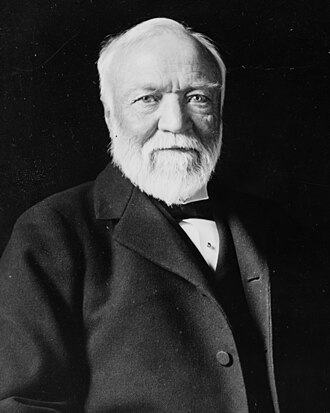
Andrew Carnegie
Founder of Carnegie Steel Company
Where to hear and read about Andrew Carnegie2 episodes and tests

 FoundersThe Tycoons: Carnegie, Rockefeller, Gould & Morgan
 FoundersThe Autobiography of Andrew Carnegie
Andrew Carnegie arrived in America at 13 as a poor immigrant, worked his way from bobbin boy to telegraph operator to railroad man, and built the steel business he sold to J.P. Morgan for $480 million before giving much of his fortune to free libraries. The lesson most worth taking from him is to know your costs to the penny, adopt new technology before rivals, and put all your capital and attention into one business.
the proper policy was to put all good eggs in one basket and watch that basket
The Autobiography of Andrew Carnegie
Andrew Carnegie: the story and the lessons
1Andrew Carnegie's climb from bobbin boy to telegraph operator
Watching steam looms ruin his father set Carnegie's lifelong drive. His father wove linen by hand and missed the shift to steam looms. The looms lost their value and the family had to borrow 20 pounds more to pay passage to America.
Carnegie drew the lesson that being on the wrong side of technology means ruin, and built his fortune by riding technological change instead. "Then and there came the resolve that I would cure that when I got to be a man."
He arrived at 13 with a concrete money goal. His father was 43, his mother 33, Carnegie 13 and his brother 5, and he left school forever when he boarded the ship. The family target was $300 a year, or $25 a month, enough to live without depending on others.
He called the prospect of want a "fright Nightmare." At 13 he tracked every dollar the family earned and spent each week, the habit behind his later cost control.
His first wage of $1.20 a week meant more than his later millions. As a bobbin boy he rose before daylight and worked until after dark, bathing spools in oil vats whose smell nauseated him. The wage made him a breadwinner instead of a charge on his parents.
When the mill's bookkeeper used single entry, Carnegie and four or five friends went to night school to learn double entry. He was always ready to leave a job for a better one.
He took the messenger job by offering to start at once. Offered a telegraph messenger job in 1850 at $2 a week, he said he could stay immediately, reasoning another boy might be sent for. It moved him from running a steam engine in a dark cellar to an office with newspapers and sunshine.
Messengers met the businessmen who could lift them, and he felt "my foot was upon the ladder." "It is a great mistake not to seize the opportunity."
A stranger's free library became Carnegie's education. Colonel James Anderson opened his 400 volumes to working boys on Saturdays, and Carnegie borrowed a book a week. He had no money for books and messenger duty often kept him out until 11 at night.
He called the books "windows opened in the walls of my dungeon" and said reading with ambitious friends kept his circle clear of low company and bad habits.
Practicing the telegraph before it was his job brought him to Tom Scott. He swept the office each morning so he could use the keys before the operators arrived. A year later he was an operator at $25 a month, and in 1853 Thomas Scott of the Pennsylvania Railroad hired him at $35 a month.
Sharing an office with Scott let him "inhale the essence of the railroad business" from the flow of messages. "Knowledge is sure to prove useful in one way or another, it always tells."
2What Carnegie learned and built under Tom Scott
As a superintendent he cleared blocked lines by burning stalled cars. Running the Western Division, he saw the core job was keeping traffic flowing. Burning stalled cars shocked fellow executives but soon became standard practice.
Charles Morris sums up his method as: "Focus on an objective, then cut brutally through any conventions, competitors, or ordinary people who stood in your way."
His mother mortgaged the family home for his first investment. Scott offered to invest $500 for him, far beyond his savings, and Carnegie said he could manage it. The 10 shares paid a $10 check, his first income not earned by his own labor.
"Eureka I cried here is the goose that lays the golden eggs." Scott went on to steer him into firms serving the railroad, such as a sleeping car company and a bridge builder, often lending him the money.
He spotted the iron bridge business from inside the railroad. Seeing the railroad's first small iron bridge work, he concluded wooden bridges were finished and formed a bridge company with Scott. His share cost $1,250.
Following Scott to Washington during the Civil War, he met Lincoln and took a small stake in a railway materials venture. The habit of finding the next business while working inside the current one is the part worth copying.
Keystone Bridge Works refused to build any unsafe bridge. Most American iron bridge builders failed and some of the worst railway disasters came from their bridges. Keystone used only the best material, enough of it, and declined any bridge of insufficient strength or unscientific design.
Nothing ever happened to a Keystone bridge, which Carnegie called a true secret of success. "We were our own severest inspectors."
3Why Andrew Carnegie bet everything on steel
A 1872 visit to Birmingham steelworks gave him a 30-year plan. He was spread across bridge companies, railroad work and scattered stocks, with $2.1 million in assets, $1.7 million net worth and under $5,000 in cash, and had thought of retiring. The scale of the Birmingham works on a bond-selling trip made his life plan suddenly clear.
His logic ran from America to railroads to steel. Railroad demand for rails would make steel a mass-production business, and steel would replace iron for most industrial purposes.
His bridge work had already shown him steel beating iron, and the Bessemer process made steel cheap at huge scale. "If you believed in America, you believed in railroads. And if you believed in railroads, you believed in steel."
He sold every outside stock to keep his judgment clear. Catching himself reading stock quotations first each morning, he resolved to own no stocks and dropped his western railroad ventures. He believed nothing tells in the long run like good judgment, and a mind disturbed by the market cannot judge.
He said he had rarely met a man who reached preeminence in moneymaking while interested in many concerns, and that the true gold mine lies in your own factory, not in bank shares.
4Carnegie's playbook: costs, scale and new technology
He measured the cost of every process and every worker. Iron makers learned their results only when the books were balanced at year end. Carnegie installed weighing and monthly reports that spread labor over each product and tracked waste, scrap, defects, returns and furnace idle time.
Every mill manager opposed the system and it took years to install, but it let him compare one furnace and one man against another. "I felt as if we were moles burrowing in the dark and to me this was intolerable."
Prices swing, but a saving in cost is permanent. Carnegie and Henry Clay Frick ran on one mantra: "cut the prices scoop the market watch the costs and the profits will take care of themselves."
Both held that if you knew your cost down to the penny you were always on firm ground.
He kept the mills full even at thin margins. His plants were always the biggest and most automated, and running full absorbed fixed costs. He told his team he would rather quote big customers low figures than stand back afraid to break the market.
"I would run the factory full next year even if we made but $2 per ton." In slumps his losses were the smallest of any rival.
He bought the newest furnaces while rivals called it extravagant. His accounts showed older furnaces wasted almost half the material when heating large masses of iron. In some years most of the company's profit came from the savings of the improved furnaces.
Rivals copied him only many years later. "The expenditure would have been justified even if it had been doubled."
He hired a chemist when rivals said they could not afford one. The chemist turned waste into profit, and the Lucy furnace became the most profitable branch of the business, its profits paying for another furnace.
Carnegie said they held almost a monopoly of scientific management for years. His answer to rivals: "they could not afford to be without one."
He took control of every input his process depended on. The bridge business led him to make his own iron and later his own steel. He bought the Frick Coke Company and Lake Superior ore reserves to control his raw materials.
For 25 years he reinvested and never let up. Rivals rose and declined as founders got comfortable and shareholders demanded payouts, and British steel coasted after the 1880s rail boom. Carnegie kept plowing earnings into bigger, newer plants.
He funded growth internally and guarded his independence from bankers and securities markets, selling bonds to Junius Morgan for some big plants only as an exception.
5How Carnegie organized and drove people
He credited his success to choosing people who knew more. As a boy he got other children to gather food for his rabbits by naming the rabbits after them, his first sign of organizing power. Later he admitted he did not understand steam machinery but studied "that much more complicated piece of mechanism man."
"A success not to be attributed to what I have known or done myself but to the faculty of knowing and choosing others who did know better than myself."
He managed from a distance, by letter, and was harder for it. A sprinter rather than a grinder, he sent reports and orders from Scotland and recoiled from gritty operations. With no operating duties, he could criticize managers without answering for shortfalls.
Morris argues closer involvement might have made him easier to live with but a less successful tycoon. Constant travel also kept him among the best informed in the company on new technology.
He played executives against each other and crushed his best men. He harped on underlings' small failures and took credit for their successes. Rockefeller, by contrast, recruited the ablest executives, gave them room, and kept them loyal for whole careers.
He tried to cheat Henry Clay Frick out of his stake. Frick, arguably the managerial genius behind Carnegie Steel, contributed as much as anyone to the empire. When Frick retired, Carnegie applied all his energy to cheating him, and Frick's parting words, to meet him in hell, titled a biography.
Morris also calls Carnegie a compulsive liar who issued pro-labor manifestos while cutting workers' pay.
6Andrew Carnegie's personal rules
Carnegie answered only to the judge within. His early motto held that the inner judge sits in the Supreme Court and can never be cheated. He valued it above all the sermons he heard.
"Your own reproach alone do fear." It parallels Warren Buffett's inner scorecard.
He treated optimism as something you can cultivate. He inherited a sunny nature from his grandfather but held that the mind can be moved "from the shade into sunshine."
As a boy facing hardship he asked what William Wallace would do and decided a Scotsman ought never to give up.
Do something beyond your duties to be seen from above. He said the battle of life is half won by the young man brought into contact with high officials. He rose faster than the other boys in his office because he did more.
He believed people who help themselves get help at critical times, and that those who rise should help others in turn.
7Carnegie's sale to Morgan and his turn to libraries
He sold to J.P. Morgan for $480 million, and later said too cheaply. Profits had reached $40 million a year, and Morgan combined the company into U.S. Steel, the first billion dollar corporation. The buyers netted $60 million in one year soon after.
Carnegie later told Morgan he had sold out too cheap by $100 million. Morgan answered, "Very likely, Andrew."
He spent his fortune on free libraries that demand effort. Remembering Anderson's books, he made free public libraries a major use of his wealth, and one of his first acts once rich was erecting a statue of Anderson.
He valued that a library "gives nothing for nothing," since young people must acquire knowledge themselves. He said he would not trade his taste for literature for all the millions ever amassed.
Another builder's autobiography prompted him to write his own. Judge Thomas Mellon's autobiography, itself inspired by Franklin's, moved Carnegie to tell his story. The manuscript ends abruptly after his turn to philanthropy with the line "Nothing is impossible to genius."
The Tycoons: Carnegie, Rockefeller, Gould & Morgan
Charles Morris's book shows how three disruptors, Carnegie, Rockefeller and Gould, won through scale, cost control and speed, while Morgan sold order to a market they kept upending. The lesson is that small efficiencies compounded across an integrated company, plus a willingness to move faster than rivals, beat comfortable cartels.
Practicing the telegraph before it was his job brought him to Tom Scott. He swept the office each morning so he could use the keys before the operators arrived. A year later he was an operator at $25 a month, and in 1853 Thomas Scott of the Pennsylvania Railroad hired him at $35 a month.
Sharing an office with Scott let him "inhale the essence of the railroad business" from the flow of messages. "Knowledge is sure to prove useful in one way or another, it always tells."
As a superintendent he cleared blocked lines by burning stalled cars. Running the Western Division, he saw the core job was keeping traffic flowing. Burning stalled cars shocked fellow executives but soon became standard practice.
Charles Morris sums up his method as: "Focus on an objective, then cut brutally through any conventions, competitors, or ordinary people who stood in your way."
His mother mortgaged the family home for his first investment. Scott offered to invest $500 for him, far beyond his savings, and Carnegie said he could manage it. The 10 shares paid a $10 check, his first income not earned by his own labor.
"Eureka I cried here is the goose that lays the golden eggs." Scott went on to steer him into firms serving the railroad, such as a sleeping car company and a bridge builder, often lending him the money.
A 1872 visit to Birmingham steelworks gave him a 30-year plan. He was spread across bridge companies, railroad work and scattered stocks, with $2.1 million in assets, $1.7 million net worth and under $5,000 in cash, and had thought of retiring. The scale of the Birmingham works on a bond-selling trip made his life plan suddenly clear.
His logic ran from America to railroads to steel. Railroad demand for rails would make steel a mass-production business, and steel would replace iron for most industrial purposes.
His bridge work had already shown him steel beating iron, and the Bessemer process made steel cheap at huge scale. "If you believed in America, you believed in railroads. And if you believed in railroads, you believed in steel."
He measured the cost of every process and every worker. Iron makers learned their results only when the books were balanced at year end. Carnegie installed weighing and monthly reports that spread labor over each product and tracked waste, scrap, defects, returns and furnace idle time.
Every mill manager opposed the system and it took years to install, but it let him compare one furnace and one man against another. "I felt as if we were moles burrowing in the dark and to me this was intolerable."
He kept the mills full even at thin margins. His plants were always the biggest and most automated, and running full absorbed fixed costs. He told his team he would rather quote big customers low figures than stand back afraid to break the market.
"I would run the factory full next year even if we made but $2 per ton." In slumps his losses were the smallest of any rival.
He took control of every input his process depended on. The bridge business led him to make his own iron and later his own steel. He bought the Frick Coke Company and Lake Superior ore reserves to control his raw materials.
For 25 years he reinvested and never let up. Rivals rose and declined as founders got comfortable and shareholders demanded payouts, and British steel coasted after the 1880s rail boom. Carnegie kept plowing earnings into bigger, newer plants.
He funded growth internally and guarded his independence from bankers and securities markets, selling bonds to Junius Morgan for some big plants only as an exception.
He managed from a distance, by letter, and was harder for it. A sprinter rather than a grinder, he sent reports and orders from Scotland and recoiled from gritty operations. With no operating duties, he could criticize managers without answering for shortfalls.
Morris argues closer involvement might have made him easier to live with but a less successful tycoon. Constant travel also kept him among the best informed in the company on new technology.
He played executives against each other and crushed his best men. He harped on underlings' small failures and took credit for their successes. Rockefeller, by contrast, recruited the ablest executives, gave them room, and kept them loyal for whole careers.
He tried to cheat Henry Clay Frick out of his stake. Frick, arguably the managerial genius behind Carnegie Steel, contributed as much as anyone to the empire. When Frick retired, Carnegie applied all his energy to cheating him, and Frick's parting words, to meet him in hell, titled a biography.
Morris also calls Carnegie a compulsive liar who issued pro-labor manifestos while cutting workers' pay.
The Autobiography of Andrew Carnegie
Carnegie went from a poor bobbin boy to the owner of the world's most profitable steel business by knowing his costs to the penny, adopting new technology before rivals, and concentrating everything in one industry. He sold to J.P. Morgan for $480 million and gave most of the money away.
Watching steam looms ruin his father set Carnegie's lifelong drive. His father wove linen by hand and missed the shift to steam looms. The looms lost their value and the family had to borrow 20 pounds more to pay passage to America.
Carnegie drew the lesson that being on the wrong side of technology means ruin, and built his fortune by riding technological change instead. "Then and there came the resolve that I would cure that when I got to be a man."
He arrived at 13 with a concrete money goal. His father was 43, his mother 33, Carnegie 13 and his brother 5, and he left school forever when he boarded the ship. The family target was $300 a year, or $25 a month, enough to live without depending on others.
He called the prospect of want a "fright Nightmare." At 13 he tracked every dollar the family earned and spent each week, the habit behind his later cost control.
His first wage of $1.20 a week meant more than his later millions. As a bobbin boy he rose before daylight and worked until after dark, bathing spools in oil vats whose smell nauseated him. The wage made him a breadwinner instead of a charge on his parents.
When the mill's bookkeeper used single entry, Carnegie and four or five friends went to night school to learn double entry. He was always ready to leave a job for a better one.
He took the messenger job by offering to start at once. Offered a telegraph messenger job in 1850 at $2 a week, he said he could stay immediately, reasoning another boy might be sent for. It moved him from running a steam engine in a dark cellar to an office with newspapers and sunshine.
Messengers met the businessmen who could lift them, and he felt "my foot was upon the ladder." "It is a great mistake not to seize the opportunity."
A stranger's free library became Carnegie's education. Colonel James Anderson opened his 400 volumes to working boys on Saturdays, and Carnegie borrowed a book a week. He had no money for books and messenger duty often kept him out until 11 at night.
He called the books "windows opened in the walls of my dungeon" and said reading with ambitious friends kept his circle clear of low company and bad habits.
Practicing the telegraph before it was his job brought him to Tom Scott. He swept the office each morning so he could use the keys before the operators arrived. A year later he was an operator at $25 a month, and in 1853 Thomas Scott of the Pennsylvania Railroad hired him at $35 a month.
Sharing an office with Scott let him "inhale the essence of the railroad business" from the flow of messages. "Knowledge is sure to prove useful in one way or another, it always tells."
His mother mortgaged the family home for his first investment. Scott offered to invest $500 for him, far beyond his savings, and Carnegie said he could manage it. The 10 shares paid a $10 check, his first income not earned by his own labor.
"Eureka I cried here is the goose that lays the golden eggs." Scott went on to steer him into firms serving the railroad, such as a sleeping car company and a bridge builder, often lending him the money.
He spotted the iron bridge business from inside the railroad. Seeing the railroad's first small iron bridge work, he concluded wooden bridges were finished and formed a bridge company with Scott. His share cost $1,250.
Following Scott to Washington during the Civil War, he met Lincoln and took a small stake in a railway materials venture. The habit of finding the next business while working inside the current one is the part worth copying.
Keystone Bridge Works refused to build any unsafe bridge. Most American iron bridge builders failed and some of the worst railway disasters came from their bridges. Keystone used only the best material, enough of it, and declined any bridge of insufficient strength or unscientific design.
Nothing ever happened to a Keystone bridge, which Carnegie called a true secret of success. "We were our own severest inspectors."
His logic ran from America to railroads to steel. Railroad demand for rails would make steel a mass-production business, and steel would replace iron for most industrial purposes.
His bridge work had already shown him steel beating iron, and the Bessemer process made steel cheap at huge scale. "If you believed in America, you believed in railroads. And if you believed in railroads, you believed in steel."
He sold every outside stock to keep his judgment clear. Catching himself reading stock quotations first each morning, he resolved to own no stocks and dropped his western railroad ventures. He believed nothing tells in the long run like good judgment, and a mind disturbed by the market cannot judge.
He said he had rarely met a man who reached preeminence in moneymaking while interested in many concerns, and that the true gold mine lies in your own factory, not in bank shares.
He measured the cost of every process and every worker. Iron makers learned their results only when the books were balanced at year end. Carnegie installed weighing and monthly reports that spread labor over each product and tracked waste, scrap, defects, returns and furnace idle time.
Every mill manager opposed the system and it took years to install, but it let him compare one furnace and one man against another. "I felt as if we were moles burrowing in the dark and to me this was intolerable."
Prices swing, but a saving in cost is permanent. Carnegie and Henry Clay Frick ran on one mantra: "cut the prices scoop the market watch the costs and the profits will take care of themselves."
Both held that if you knew your cost down to the penny you were always on firm ground.
He bought the newest furnaces while rivals called it extravagant. His accounts showed older furnaces wasted almost half the material when heating large masses of iron. In some years most of the company's profit came from the savings of the improved furnaces.
Rivals copied him only many years later. "The expenditure would have been justified even if it had been doubled."
He hired a chemist when rivals said they could not afford one. The chemist turned waste into profit, and the Lucy furnace became the most profitable branch of the business, its profits paying for another furnace.
Carnegie said they held almost a monopoly of scientific management for years. His answer to rivals: "they could not afford to be without one."
He took control of every input his process depended on. The bridge business led him to make his own iron and later his own steel. He bought the Frick Coke Company and Lake Superior ore reserves to control his raw materials.
He credited his success to choosing people who knew more. As a boy he got other children to gather food for his rabbits by naming the rabbits after them, his first sign of organizing power. Later he admitted he did not understand steam machinery but studied "that much more complicated piece of mechanism man."
"A success not to be attributed to what I have known or done myself but to the faculty of knowing and choosing others who did know better than myself."
Carnegie answered only to the judge within. His early motto held that the inner judge sits in the Supreme Court and can never be cheated. He valued it above all the sermons he heard.
"Your own reproach alone do fear." It parallels Warren Buffett's inner scorecard.
He treated optimism as something you can cultivate. He inherited a sunny nature from his grandfather but held that the mind can be moved "from the shade into sunshine."
As a boy facing hardship he asked what William Wallace would do and decided a Scotsman ought never to give up.
Do something beyond your duties to be seen from above. He said the battle of life is half won by the young man brought into contact with high officials. He rose faster than the other boys in his office because he did more.
He believed people who help themselves get help at critical times, and that those who rise should help others in turn.
He sold to J.P. Morgan for $480 million, and later said too cheaply. Profits had reached $40 million a year, and Morgan combined the company into U.S. Steel, the first billion dollar corporation. The buyers netted $60 million in one year soon after.
Carnegie later told Morgan he had sold out too cheap by $100 million. Morgan answered, "Very likely, Andrew."
He spent his fortune on free libraries that demand effort. Remembering Anderson's books, he made free public libraries a major use of his wealth, and one of his first acts once rich was erecting a statue of Anderson.
He valued that a library "gives nothing for nothing," since young people must acquire knowledge themselves. He said he would not trade his taste for literature for all the millions ever amassed.
Another builder's autobiography prompted him to write his own. Judge Thomas Mellon's autobiography, itself inspired by Franklin's, moved Carnegie to tell his story. The manuscript ends abruptly after his turn to philanthropy with the line "Nothing is impossible to genius."