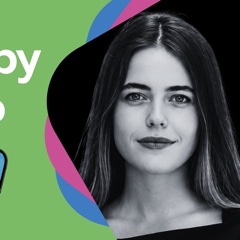
Anada Lakra
Co-founder and CEO of BoldVoice, an AI speech coaching app for non-native English speakers
Where to hear and read about Anada Lakra1 episode or test

Anada Lakra is co-founder and CEO of BoldVoice, an AI speech coach for non-native English speakers that he says reached $10M ARR with a team of 10. The most useful lesson is to charge from day one, serve one high-intent audience, and judge every test on net revenue after refunds.
Charging for the product is a way to already figure out who that ICP is.
Why BoldVoice charged from day 1 and ignored the Duolingo freemium playbook — Anada Lakra
Anada Lakra: the story and the lessons
1Anada Lakra's path to BoldVoice
Ten years of top English grades did not get Lakra understood at Yale. He moved from Albania to Yale at 18, and classmates asked him to repeat himself. Pronunciation, accent and fluency got in the way in class and in job interviews.
He would swap in a synonym mid-sentence to avoid mispronouncing a word. He calls BoldVoice's job the "last mile of fluency".
Accent cost him a McKinsey offer, and working on it won one later. He failed the McKinsey interview in college but got an offer from a Swiss firm whose interviewers were non-native speakers. He got the McKinsey offer years later, in business school, after working on his accent.
Co-founder Ilia moved to the US at four, and his engineer parents were never offered management roles because they lacked communication confidence. The two founders met in their first consulting jobs and later left together.
His first startup taught him to understand the problem before building. At 23 and 24 he built a recruiting tool using third-party references. Over a dozen companies and thousands of candidates used it, but it never raised a big round.
He says they obsessed over the solution before understanding the problem. The experience pulled him toward product work.
He chose a problem he could work on for a decade. Rising audio AI in 2021 made coach-quality speech feedback look possible, before ChatGPT. The idea had been in his head since he first moved to the US, and he came to it after Peloton and a Series B startup.
Accent coaching needs precise feedback, not a thumbs up or thumbs down.
Lakra gave himself six months to land a term sheet. Six months before graduating from Harvard Business School, he turned down his McKinsey return offer. His rule was to get a term sheet or apply for jobs, and a term sheet of about $500K arrived within the window.
He called the deadline "a great forcing mechanism to have that 100% focus". The term sheet also sped up the YC interview process.
He tested the idea by hand before writing any code. A speech coach, Ron, recorded videos for about a dozen beta users, who emailed speech recordings back. The coach gave feedback asynchronously and manually.
Lakra first reached out to Hollywood speech coaches. The team built in New York in summer 2021, so there was no in-person YC time. The pilot helped lead to the term sheet and YC acceptance.
2Why BoldVoice charged from day one and skipped the Duolingo playbook
Lakra charged in the first weeks of YC to find his real customer. BoldVoice launched with a $10 a month plan and a one-week free trial. Willingness to pay screens out people who will never be the target customer, so their feedback does not distract the team.
This ran against the 2021 grow-first mood. He says willingness to pay generally correlates with the problem resonating.
He launched with a plain paywall and put effort into the product. The standard $10 plan with a one-week trial freed the team to work on onboarding and the core product. Pricing variants came later.
Today the paywall leads with an annual plan of about $150, with monthly as a fallback and a $200 a year tier with AI chat. The trial exists so people experience the product, not to trap them in a payment they regret.
Lakra deliberately ignores beginners and the freemium base. Duolingo monetizes a portion of a huge free base of hobby learners. BoldVoice serves intermediate to advanced career professionals, whose alternative is a one-on-one coach costing hundreds of dollars an hour.
He calls combining pieces of different apps' playbooks the worst thing a team can do, and says it produces a "mishmash strategy".
He added a free taste of value without dropping the trial. If a user exits the paywall, they get the speech assessment, a practice set and a coach video free on day one. A 7-day trial is required from day two.
This reverse trial suits skeptical users who dislike entering a card. Removing the trial paywall entirely risks users thinking the app is free and getting upset later.
Campuses were the planned launch, but working professionals fit better. The first plan borrowed the campus playbook from dating apps and Facebook. Students improve anyway among native speakers, can pay less, and have not yet lost a meeting or job interview to their communication.
Professionals who already see the return on better communication resonated most. Students still use the app in good numbers.
He is holding off on a B2B push because demand already arrives. Companies reach out to buy for employees, and users expense the app to their employers. A B2B go-to-market is a different muscle, and the team is too small for it.
The consumer market is big enough, and its popularity creates the inbound interest.
3Lakra's rules for testing paywalls
Lakra judges every paywall test on net revenue after refunds. The metric is net revenue after refunds per exposed user, read on a matured cohort. That means one extra week for trials to convert and at least two more for refunds to settle.
Trial start rate became the default scoreboard because it arrives first and has the most users, so it reaches significance fastest. Early on, the team also lacked the instrumentation to see later outcomes.
Two paywall tricks lifted trial starts and then lost money. One test removed the X button. The other let people dismiss the paywall, then showed an X% off offer they could not close. Refunds spiked by more than the gain in trial starts.
The logic had seemed sound, since users had already spent time in onboarding. His summary: "Anything that kind of forces or tricks people into starting a trial, you'll pay it when it comes to refunds." Angry refunders also build negative sentiment.
Waiting for mature data costs speed, and Lakra says that is the hard part. Sitting on an exciting result for a month or more delays learnings. He says he was the impatient one, but has not had to reverse a shipped decision.
Refunds come late because people ask only after the charge hits their bank account. RevenueCat has widened its experiment lookback window to over a year, which makes checking back easier than with homemade analytics.
He optimizes the paywall briefly, then returns to the product. A high trial cancellation rate means people got in and found no value, so two more onboarding pages will not convert them. He still tests the paywall but sees many teams take it to an extreme.
He names over-optimizing paywall words and buttons as the biggest fail of the year. His conclusion: "just make a better product for people".
4How Lakra keeps the team close to users
Everyone on the team does two user interviews a week. Automated invites go to a varied sample, from three-year subscribers to people a week into a trial. Each asks for 15 minutes and books whoever has calendar space, so engineers, growth people and both founders all hear users directly.
That works out to around 20 calls a week across 10 people. Automation matters because manually emailing users is a one-off.
He layers research methods so the picture stays current. A super user group meets roughly weekly, and engineers demo unreleased features to it. Some users come into the office so the team can watch what they tap.
The user base keeps changing as the product expands, so an early round of interviews goes stale. Pronunciation is "deceptively very complicated", with no clear rules like grammar, so features need real users' eyes before launch.
Lakra corrects for happy users being the ones who take calls. A three-question email that can be answered by replying reaches unhappy users, and a short cancellation flow asks what went wrong.
Chasing only happy users risks a super niche, super technical product.
5How BoldVoice grows without a freemium base
Accent Oracle is a free tool that became the biggest viral hit. An in-house model guesses where you are from after 10 seconds of speech. It lives on a separate web app with no download, no gate and no trial, and shows a snippet of the full in-app results to lift conversion.
A Korean angel investor shared it on Threads after a monthly update, and about 100,000 people in Korea tried it the next day. Adding city-level results brought another viral boost.
Virality cannot be planned, and humor brings lower intent. A TikTok trend of people crying at low scores brought one creator about 300 million views in a few months, with no ad spend.
He says humorous content gives huge spikes but viewers have less intent than people from paid ads or word of mouth, so he treats it as a companion to paid marketing.
He runs paid ads against known unit economics. Growth mixes product-led viral features with paid marketing, and spend is tied to lifetime value over acquisition cost. Channels produce very different customer durations, and TikTok proved flimsier on intent and loyalty.
Leading with annual plans brings cash in right after the 7-day trial, so payback per channel shows at once. Monthly plans leave retention anywhere between one month and 24 unknown.
6How Lakra builds a small team and a defensible company
BoldVoice hires founder-type owners and holds one meeting a week. The team reached $10M ARR with 10 people. It holds a single company sync on Mondays and keeps the rest of the week heads-down, plus talking to users.
His line on the team: "Everyone is a doer and an owner."
AI tools let non-engineers ship. Everyone uses Claude. As a non-technical CEO, Lakra is the lowest producer of code on the team yet shipped pull requests for the first time, and the designer's prototypes reach about 80% before engineers take over.
He says tools that make everyone a builder were the biggest win of the year, making people twice or more as productive.
He built audio models in-house so general chatbots cannot copy the product. An in-house audio ML team trains models from scratch on BoldVoice's own data, with speech coaches labeling and transcribing. The bet is that non-native English speech is too niche for general models yet a huge market for one company.
ChatGPT and Claude still cannot give this kind of feedback. He describes five years of work as a durable business, not an AI wrapper.
He expands in rings around accent training, not toward a bigger market. Accent was the spikiest pain, so it was the wedge. After a Series A, BoldVoice moved a step earlier in fluency, adding idioms, sentence structure, grammar slips and whether the point comes across.
Coaching native speakers stays out of scope, since it is a nice-to-have, one-off problem. Non-native coaching is repeatable and higher-stakes.
Lakra frames the goal as confidence because "accent" is a taboo word. He calls "accent" an "almost antiviral word". Users say the product changed their lives but few post about it or tell colleagues, which blunts word of mouth.
The broader scope and Accent Oracle both work around the stigma. The aim is to be as confident in English as in one's native language and always be understood, not to remove accents.

Why BoldVoice charged from day 1 and ignored the Duolingo freemium playbook — Anada Lakra
BoldVoice charged from day one, aimed at high-intent professionals instead of hobby learners, and judged every paywall test on net revenue after refunds. That approach took it to $10M ARR with a team of 10 and no reliance on a freemium base or big paid-ad spend.
Ten years of top English grades did not get Lakra understood at Yale. He moved from Albania to Yale at 18, and classmates asked him to repeat himself. Pronunciation, accent and fluency got in the way in class and in job interviews.
He would swap in a synonym mid-sentence to avoid mispronouncing a word. He calls BoldVoice's job the "last mile of fluency".
Accent cost him a McKinsey offer, and working on it won one later. He failed the McKinsey interview in college but got an offer from a Swiss firm whose interviewers were non-native speakers. He got the McKinsey offer years later, in business school, after working on his accent.
Co-founder Ilia moved to the US at four, and his engineer parents were never offered management roles because they lacked communication confidence. The two founders met in their first consulting jobs and later left together.
His first startup taught him to understand the problem before building. At 23 and 24 he built a recruiting tool using third-party references. Over a dozen companies and thousands of candidates used it, but it never raised a big round.
He says they obsessed over the solution before understanding the problem. The experience pulled him toward product work.
He chose a problem he could work on for a decade. Rising audio AI in 2021 made coach-quality speech feedback look possible, before ChatGPT. The idea had been in his head since he first moved to the US, and he came to it after Peloton and a Series B startup.
Accent coaching needs precise feedback, not a thumbs up or thumbs down.
Lakra gave himself six months to land a term sheet. Six months before graduating from Harvard Business School, he turned down his McKinsey return offer. His rule was to get a term sheet or apply for jobs, and a term sheet of about $500K arrived within the window.
He called the deadline "a great forcing mechanism to have that 100% focus". The term sheet also sped up the YC interview process.
He tested the idea by hand before writing any code. A speech coach, Ron, recorded videos for about a dozen beta users, who emailed speech recordings back. The coach gave feedback asynchronously and manually.
Lakra first reached out to Hollywood speech coaches. The team built in New York in summer 2021, so there was no in-person YC time. The pilot helped lead to the term sheet and YC acceptance.
Lakra charged in the first weeks of YC to find his real customer. BoldVoice launched with a $10 a month plan and a one-week free trial. Willingness to pay screens out people who will never be the target customer, so their feedback does not distract the team.
This ran against the 2021 grow-first mood. He says willingness to pay generally correlates with the problem resonating.
He launched with a plain paywall and put effort into the product. The standard $10 plan with a one-week trial freed the team to work on onboarding and the core product. Pricing variants came later.
Today the paywall leads with an annual plan of about $150, with monthly as a fallback and a $200 a year tier with AI chat. The trial exists so people experience the product, not to trap them in a payment they regret.
Lakra deliberately ignores beginners and the freemium base. Duolingo monetizes a portion of a huge free base of hobby learners. BoldVoice serves intermediate to advanced career professionals, whose alternative is a one-on-one coach costing hundreds of dollars an hour.
He calls combining pieces of different apps' playbooks the worst thing a team can do, and says it produces a "mishmash strategy".
He added a free taste of value without dropping the trial. If a user exits the paywall, they get the speech assessment, a practice set and a coach video free on day one. A 7-day trial is required from day two.
This reverse trial suits skeptical users who dislike entering a card. Removing the trial paywall entirely risks users thinking the app is free and getting upset later.
Campuses were the planned launch, but working professionals fit better. The first plan borrowed the campus playbook from dating apps and Facebook. Students improve anyway among native speakers, can pay less, and have not yet lost a meeting or job interview to their communication.
Professionals who already see the return on better communication resonated most. Students still use the app in good numbers.
He is holding off on a B2B push because demand already arrives. Companies reach out to buy for employees, and users expense the app to their employers. A B2B go-to-market is a different muscle, and the team is too small for it.
The consumer market is big enough, and its popularity creates the inbound interest.
Lakra judges every paywall test on net revenue after refunds. The metric is net revenue after refunds per exposed user, read on a matured cohort. That means one extra week for trials to convert and at least two more for refunds to settle.
Trial start rate became the default scoreboard because it arrives first and has the most users, so it reaches significance fastest. Early on, the team also lacked the instrumentation to see later outcomes.
Two paywall tricks lifted trial starts and then lost money. One test removed the X button. The other let people dismiss the paywall, then showed an X% off offer they could not close. Refunds spiked by more than the gain in trial starts.
The logic had seemed sound, since users had already spent time in onboarding. His summary: "Anything that kind of forces or tricks people into starting a trial, you'll pay it when it comes to refunds." Angry refunders also build negative sentiment.
Waiting for mature data costs speed, and Lakra says that is the hard part. Sitting on an exciting result for a month or more delays learnings. He says he was the impatient one, but has not had to reverse a shipped decision.
Refunds come late because people ask only after the charge hits their bank account. RevenueCat has widened its experiment lookback window to over a year, which makes checking back easier than with homemade analytics.
He optimizes the paywall briefly, then returns to the product. A high trial cancellation rate means people got in and found no value, so two more onboarding pages will not convert them. He still tests the paywall but sees many teams take it to an extreme.
He names over-optimizing paywall words and buttons as the biggest fail of the year. His conclusion: "just make a better product for people".
Everyone on the team does two user interviews a week. Automated invites go to a varied sample, from three-year subscribers to people a week into a trial. Each asks for 15 minutes and books whoever has calendar space, so engineers, growth people and both founders all hear users directly.
That works out to around 20 calls a week across 10 people. Automation matters because manually emailing users is a one-off.
He layers research methods so the picture stays current. A super user group meets roughly weekly, and engineers demo unreleased features to it. Some users come into the office so the team can watch what they tap.
The user base keeps changing as the product expands, so an early round of interviews goes stale. Pronunciation is "deceptively very complicated", with no clear rules like grammar, so features need real users' eyes before launch.
Lakra corrects for happy users being the ones who take calls. A three-question email that can be answered by replying reaches unhappy users, and a short cancellation flow asks what went wrong.
Chasing only happy users risks a super niche, super technical product.
Accent Oracle is a free tool that became the biggest viral hit. An in-house model guesses where you are from after 10 seconds of speech. It lives on a separate web app with no download, no gate and no trial, and shows a snippet of the full in-app results to lift conversion.
A Korean angel investor shared it on Threads after a monthly update, and about 100,000 people in Korea tried it the next day. Adding city-level results brought another viral boost.
Virality cannot be planned, and humor brings lower intent. A TikTok trend of people crying at low scores brought one creator about 300 million views in a few months, with no ad spend.
He says humorous content gives huge spikes but viewers have less intent than people from paid ads or word of mouth, so he treats it as a companion to paid marketing.
He runs paid ads against known unit economics. Growth mixes product-led viral features with paid marketing, and spend is tied to lifetime value over acquisition cost. Channels produce very different customer durations, and TikTok proved flimsier on intent and loyalty.
Leading with annual plans brings cash in right after the 7-day trial, so payback per channel shows at once. Monthly plans leave retention anywhere between one month and 24 unknown.
BoldVoice hires founder-type owners and holds one meeting a week. The team reached $10M ARR with 10 people. It holds a single company sync on Mondays and keeps the rest of the week heads-down, plus talking to users.
His line on the team: "Everyone is a doer and an owner."
AI tools let non-engineers ship. Everyone uses Claude. As a non-technical CEO, Lakra is the lowest producer of code on the team yet shipped pull requests for the first time, and the designer's prototypes reach about 80% before engineers take over.
He says tools that make everyone a builder were the biggest win of the year, making people twice or more as productive.
He built audio models in-house so general chatbots cannot copy the product. An in-house audio ML team trains models from scratch on BoldVoice's own data, with speech coaches labeling and transcribing. The bet is that non-native English speech is too niche for general models yet a huge market for one company.
ChatGPT and Claude still cannot give this kind of feedback. He describes five years of work as a durable business, not an AI wrapper.
He expands in rings around accent training, not toward a bigger market. Accent was the spikiest pain, so it was the wedge. After a Series A, BoldVoice moved a step earlier in fluency, adding idioms, sentence structure, grammar slips and whether the point comes across.
Coaching native speakers stays out of scope, since it is a nice-to-have, one-off problem. Non-native coaching is repeatable and higher-stakes.
Lakra frames the goal as confidence because "accent" is a taboo word. He calls "accent" an "almost antiviral word". Users say the product changed their lives but few post about it or tell colleagues, which blunts word of mouth.
The broader scope and Accent Oracle both work around the stigma. The aim is to be as confident in English as in one's native language and always be understood, not to remove accents.