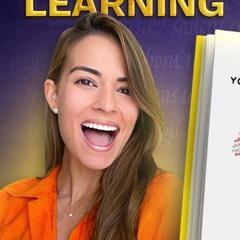
Ana Lorena Fabrega
Author of The Learning Game and former teacher, Chief Evangelist at Synthesis School
Where to hear and read about Ana Lorena Fabrega1 episode or test

Ana Lorena Fabrega is a former teacher who disliked writing and became the author of The Learning Game by unlearning school's writing habits. The idea most worth stealing is her feedback system, where each reader gets one specific job, including a friend told to attack the argument.
I want you to make me hate you
What’s Wrong with Writing Education? — Ana Lorena Fabrega
Ana Lorena Fabrega: the story and the lessons
1Ana Fabrega's path from writing hater to author
Fabrega nearly quit her writing course before it began. She taught writing, and it was the subject she looked forward to least. Her students shared her attitude.
She booked David Perell's course, then called for a refund, thinking 'I'm not a writer, I hate writing.' Her husband and others convinced her to stay.
The course's biggest lesson was unlearning how she was taught to write. She boiled it down to seven core lessons she wishes more kids would hear. The five-week course felt like a full-time job, spent outside capturing ideas.
She calls adults who hate writing 'damaged writers', people who spent years focused on the wrong thing.
She left school teaching though she loved working with kids. Much of the system clashed with what she believed. Her first article, about loving teaching and quitting, became the intro of The Learning Game.
David pushed her to write her classroom stories instead of leaning on research first.
Fabrega needed years to write in a voice that sounds like her. Her first Fab Fridays pitch promised research and powerful ideas in easy to digest ways, which David said did not sound like her. In his foreword he called her writing bubbly and imaginative.
She updated her 'personal Monopoly' of what makes her unique many times. David quoted Miles Davis: it can take a long time to play like yourself.
2How Fabrega finds ideas and her own angle
She starts from what excites her today and time-boxes the rest. She opens her Evernote 'cold' and 'hot' notebooks and picks the topic she is excited about that day. She then calls someone who can add a fresh angle, gathers podcasts, books and experts, and fills gaps with research.
A timer caps research so she avoids rabbit holes. After about an hour and a half she has a first draft she can work with.
Fabrega curates and remixes instead of demanding total originality. She built on long-standing alternative education ideas and added her experience from attending 10 schools and teaching for five to six years.
She gives credit and builds until she has her own perspective. People credit her with ideas she says she only builds on.
She treats writing as how she becomes an expert, not the result. From Perell she took the idea that writing is the process that makes you learn a topic well enough to become good at it. She only needed curiosity to start.
Schools tell kids to write what they already know, which she says paralyzes them.
She reads outside education with no agenda and connects it back. After finding other educators had written her ideas, she stopped reading education books. She read about finance, poker, sports, gaming and mental models, and quit any book halfway if bored.
Because education stayed on her mind, she linked each book back to kids and learning. That made her writing relatable and different.
Fabrega writes simply, the way she talks to her students. School rewarded jargon and SAT words, and English is not her first language, so she had been imitating words she did not fully understand.
Readers said simplicity made them feel valued. Some feel she said what they long thought, others feel threatened, and either reaction means she made them reflect.
She leads with stories from her own life. Her instinct was to reach for research, facts and figures. Quotes made up 20 to 30% of her early pieces, which she treats as training wheels she dropped with confidence.
'People don't remember the facts and the figures, they remember the stories.'
3How Fabrega built The Learning Game
She built the book from newsletters that had already resonated. She reviewed her old newsletters, picked those at the core of her message that readers wanted more of, and combined common themes. She arranged them into a table of contents and wrote the missing chapters.
Every chapter ends with a simple action parents can try right away. She says she 'totally started from abundance'.
Fabrega paired a short text with illustrations that carry meaning. She asked illustrator Yanis Zolin to read the book first and pick what excited him, then they went through several drafts. The cover shows tic-tac-toe played the wrong way, so a stranger can guess the book is about doing things differently.
She grew up moving between countries, often without the language, so she learned to lean on visuals. Some pages are understood from the drawing, not her text.
She cut any paragraph that added nothing. She wanted no extra word, because many books could have been articles and readers drop them halfway through.
Her husband was her sharpest editor. He told her a favorite paragraph was not adding anything, and it was cut.
Fabrega gave each reader one specific kind of feedback to give. Asking six people for open feedback produced conflicting advice, and she felt she had to rewrite everything. She changed strategy and assigned roles: one reader gave high-level notes on stories and interest, and her husband Fernando hunted words, sentences and grammar.
This was the most miserable stage of the book, and she was pregnant. She picked up the idea, possibly from Seth Godin, to choose editors and tell each what to look for.
She asked a friend to attack her argument and gave permission to be harsh. Her childhood friend Sylvia, who has known her since age 10 and supports her work, played devil's advocate against Ana's biases about education. Ana told her, 'I want you to make me hate you.'
Said openly, the request leaves no animosity. Without it, a friend must choose between the friendship and the work. Sylvia's pushback surfaced holes in the one-sided argument, and she later wrote the foreword.
4What Fabrega thinks is wrong with how school teaches writing
School drills sentences and spelling before ideas. Two third graders wrote phenomenal stories but froze over spelling, and their parents saw only the misspelled words. Fabrega says spelling and grammar can be corrected later, and the idea is what AI won't replace.
Spelling tests teach words in isolation, so they don't stick. Kids learn spelling from reading and writing.
Fabrega says nobody thinks in sentences, so mastering them first blocks ideas. She cites John Warner's Why They Can't Write, which calls the idea that you must master the sentence before writing a lie. The five-paragraph essay works for some people and paralyzes others.
His book arrived as she was leaving teaching and put into words what she felt as a student and teacher. She still had to try a different way herself to learn it.
The schedule and required reading leave no room for original ideas. Writing gets about 45 minutes a day and the piece is due Friday, so ideas can't marinate. Required reading means everyone thinks about the same things.
At summer camp, 12-year-olds were paralyzed when asked for an idea. Unless you're excited about the teacher's topic, 'you're kind of screwed.'
Fabrega sees kids as natural storytellers whom school trains out of them. Young children imitate characters from books and movies, and their play is a running story. Rules and parameters replace natural curiosity.
She had to recapture storytelling as an adult.
5Fabrega on why writing matters beyond writers
She used a problem notebook to help upset kids in her classroom. After recess fights, too many kids needed her at once, so she set up a notebook. Kids wrote for five minutes on a timer and a clip sealed the page.
Names were optional, and kids who wanted a reply left the page on her desk. Many were fine afterward, though some still asked for a talk.
Letters helped Fabrega and her husband understand each other. She interrupts out of excitement, so her husband could not get his point across. He began writing her letters, and reading them showed her his view.
When she wrote back, she sometimes found 'this is not what's bothering me', which speech would have hidden.
She calls writing the best way to become a good communicator. Communication is one of the top skills the modern world requires, she says, and writing improves how you communicate, not only what you write.
She echoes Perell's rule that the larger the audience, the simpler the message must be, as in Napoleon's view that military orders must be simple.
Fabrega now spreads her written ideas through video and podcasts. Her recent video and podcast work comes from ideas she first wrote down. She thought Instagram was only pictures until she began posting videos of her ideas there.
She wants people to reflect and act on the ideas, in any medium.

What’s Wrong with Writing Education? — Ana Lorena Fabrega
Ana Fabrega went from a teacher who hated writing to a published author by unlearning school habits: chasing originality, big words and grammar before ideas. The habit worth stealing is her feedback system, where each reader gets one specific job, including a friend told to attack the argument.
Fabrega nearly quit her writing course before it began. She taught writing, and it was the subject she looked forward to least. Her students shared her attitude.
She booked David Perell's course, then called for a refund, thinking 'I'm not a writer, I hate writing.' Her husband and others convinced her to stay.
The course's biggest lesson was unlearning how she was taught to write. She boiled it down to seven core lessons she wishes more kids would hear. The five-week course felt like a full-time job, spent outside capturing ideas.
She calls adults who hate writing 'damaged writers', people who spent years focused on the wrong thing.
She left school teaching though she loved working with kids. Much of the system clashed with what she believed. Her first article, about loving teaching and quitting, became the intro of The Learning Game.
David pushed her to write her classroom stories instead of leaning on research first.
Fabrega needed years to write in a voice that sounds like her. Her first Fab Fridays pitch promised research and powerful ideas in easy to digest ways, which David said did not sound like her. In his foreword he called her writing bubbly and imaginative.
She updated her 'personal Monopoly' of what makes her unique many times. David quoted Miles Davis: it can take a long time to play like yourself.
She starts from what excites her today and time-boxes the rest. She opens her Evernote 'cold' and 'hot' notebooks and picks the topic she is excited about that day. She then calls someone who can add a fresh angle, gathers podcasts, books and experts, and fills gaps with research.
A timer caps research so she avoids rabbit holes. After about an hour and a half she has a first draft she can work with.
Fabrega curates and remixes instead of demanding total originality. She built on long-standing alternative education ideas and added her experience from attending 10 schools and teaching for five to six years.
She gives credit and builds until she has her own perspective. People credit her with ideas she says she only builds on.
She treats writing as how she becomes an expert, not the result. From Perell she took the idea that writing is the process that makes you learn a topic well enough to become good at it. She only needed curiosity to start.
Schools tell kids to write what they already know, which she says paralyzes them.
She reads outside education with no agenda and connects it back. After finding other educators had written her ideas, she stopped reading education books. She read about finance, poker, sports, gaming and mental models, and quit any book halfway if bored.
Because education stayed on her mind, she linked each book back to kids and learning. That made her writing relatable and different.
Fabrega writes simply, the way she talks to her students. School rewarded jargon and SAT words, and English is not her first language, so she had been imitating words she did not fully understand.
Readers said simplicity made them feel valued. Some feel she said what they long thought, others feel threatened, and either reaction means she made them reflect.
She leads with stories from her own life. Her instinct was to reach for research, facts and figures. Quotes made up 20 to 30% of her early pieces, which she treats as training wheels she dropped with confidence.
'People don't remember the facts and the figures, they remember the stories.'
She built the book from newsletters that had already resonated. She reviewed her old newsletters, picked those at the core of her message that readers wanted more of, and combined common themes. She arranged them into a table of contents and wrote the missing chapters.
Every chapter ends with a simple action parents can try right away. She says she 'totally started from abundance'.
Fabrega paired a short text with illustrations that carry meaning. She asked illustrator Yanis Zolin to read the book first and pick what excited him, then they went through several drafts. The cover shows tic-tac-toe played the wrong way, so a stranger can guess the book is about doing things differently.
She grew up moving between countries, often without the language, so she learned to lean on visuals. Some pages are understood from the drawing, not her text.
She cut any paragraph that added nothing. She wanted no extra word, because many books could have been articles and readers drop them halfway through.
Her husband was her sharpest editor. He told her a favorite paragraph was not adding anything, and it was cut.
Fabrega gave each reader one specific kind of feedback to give. Asking six people for open feedback produced conflicting advice, and she felt she had to rewrite everything. She changed strategy and assigned roles: one reader gave high-level notes on stories and interest, and her husband Fernando hunted words, sentences and grammar.
This was the most miserable stage of the book, and she was pregnant. She picked up the idea, possibly from Seth Godin, to choose editors and tell each what to look for.
She asked a friend to attack her argument and gave permission to be harsh. Her childhood friend Sylvia, who has known her since age 10 and supports her work, played devil's advocate against Ana's biases about education. Ana told her, 'I want you to make me hate you.'
Said openly, the request leaves no animosity. Without it, a friend must choose between the friendship and the work. Sylvia's pushback surfaced holes in the one-sided argument, and she later wrote the foreword.
School drills sentences and spelling before ideas. Two third graders wrote phenomenal stories but froze over spelling, and their parents saw only the misspelled words. Fabrega says spelling and grammar can be corrected later, and the idea is what AI won't replace.
Spelling tests teach words in isolation, so they don't stick. Kids learn spelling from reading and writing.
Fabrega says nobody thinks in sentences, so mastering them first blocks ideas. She cites John Warner's Why They Can't Write, which calls the idea that you must master the sentence before writing a lie. The five-paragraph essay works for some people and paralyzes others.
His book arrived as she was leaving teaching and put into words what she felt as a student and teacher. She still had to try a different way herself to learn it.
The schedule and required reading leave no room for original ideas. Writing gets about 45 minutes a day and the piece is due Friday, so ideas can't marinate. Required reading means everyone thinks about the same things.
At summer camp, 12-year-olds were paralyzed when asked for an idea. Unless you're excited about the teacher's topic, 'you're kind of screwed.'
Fabrega sees kids as natural storytellers whom school trains out of them. Young children imitate characters from books and movies, and their play is a running story. Rules and parameters replace natural curiosity.
She had to recapture storytelling as an adult.
She used a problem notebook to help upset kids in her classroom. After recess fights, too many kids needed her at once, so she set up a notebook. Kids wrote for five minutes on a timer and a clip sealed the page.
Names were optional, and kids who wanted a reply left the page on her desk. Many were fine afterward, though some still asked for a talk.
Letters helped Fabrega and her husband understand each other. She interrupts out of excitement, so her husband could not get his point across. He began writing her letters, and reading them showed her his view.
When she wrote back, she sometimes found 'this is not what's bothering me', which speech would have hidden.
She calls writing the best way to become a good communicator. Communication is one of the top skills the modern world requires, she says, and writing improves how you communicate, not only what you write.
She echoes Perell's rule that the larger the audience, the simpler the message must be, as in Napoleon's view that military orders must be simple.
Fabrega now spreads her written ideas through video and podcasts. Her recent video and podcast work comes from ideas she first wrote down. She thought Instagram was only pictures until she began posting videos of her ideas there.
She wants people to reflect and act on the ideas, in any medium.