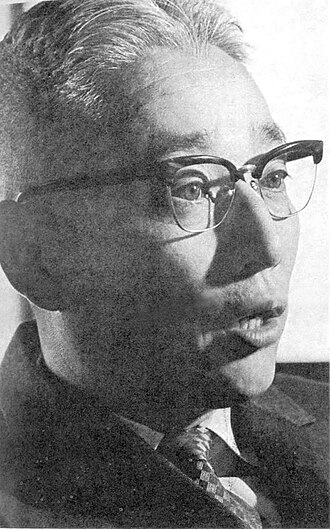
Akio Morita
Co-founder of Sony
Where to hear and read about Akio Morita1 episode or test

Akio Morita co-founded Sony with Masaru Ibuka in a ruined postwar Tokyo and built it into a global brand known for original, premium products. The lesson most worth taking from him is conviction held for the long term: trust your own judgment about what is possible, teach the market directly, and refuse quick money that would trade away the brand.
The public does not know what is possible but we do.
The Life Story of Akio Morita: Founder of Sony
Akio Morita: the story and the lessons
1Akio Morita's path from sake heir to Sony co-founder
Morita was raised to run a 300-year-old sake brewery. He was first son and fifteenth-generation heir of a wealthy brewing family, and sat in on board meetings at 10 or 11.
Two earlier family heads left the brewery to hired managers while they pursued art and antiques, and it nearly went bankrupt. To those managers the business was no more than a livelihood, a lesson about owner focus his father fixed by taking over.
Electronics pulled him away from the family business. A relative's homemade electric phonograph hooked him, and he nearly flunked out of school reading about radio and sound.
He then chose physics over economics to learn why things worked. He repeats "I'm determined" throughout his life story.
The war introduced him to Ibuka and to America's scale. As a naval technical officer in a research group on heat-seeking missiles, he met Masaru Ibuka, a civilian engineer 13 years older who ran his own company.
His physics training let him grasp what the Hiroshima bomb meant. He says his family never joined the worship of the emperor or the idea of a glorious death, and he told a Navy superior he would refuse an order of mass suicide.
Morita kept his self-confidence amid Japan's total defeat. After the Hiroshima news, in a Tokyo where firebombing had killed 100,000 people in hours, he still felt he had a role in Japan's future.
"I had confidence in myself and in my future even then." He called himself cocky.
He left a safe path to work with the best engineer he knew. Morita saw Ibuka as the most inventive engineer alive, a man who hired music students with good pitch to check radar parts against a 1,000-cycle tuning fork.
Morita taught physics to cover his salary and asked his father's permission to join. His father smiled, said "You're going to do what you like best," and lent money later converted to equity. Morita said without Ibuka there would be no Sony.
2How Morita and Ibuka started Sony in a ruined Tokyo
They began in a city where making electronics looked absurd. Less than half of Tokyo's 7 million prewar residents remained, only 10% of streetcars ran and just 60 buses worked.
People asked Ibuka why he did not make food instead. Relatives who saw the shabby shop thought Morita had become an anarchist.
Their first product added to radios people already owned. Ibuka designed a shortwave adapter that attached to any standard radio, just as wartime bans on shortwave listening lifted.
Built with tubes bought on the black market, it sold well right away and kept the company alive while the founders aimed to be innovators, not radio makers.
Excellent work in a leaky shack earned trust and the next job. The occupation forces ordered studio mixing units, and a visiting general advised buckets of sand and water in case of fire.
The equipment impressed everyone, more jobs followed, and the work put a tape recorder in front of them, which they saw beat wire recorders.
Their first tape recorder flopped until Morita found buyers with a problem. Passers-by saw it as a pricey toy, but courts short of stenographers saw a tool, and the Supreme Court bought 20 machines at once.
Morita realized good products do not bring orders on their own and that he would have to be the company's merchandiser. "It wouldn't be a toy for them. It'd be a tool."
3Why Morita aimed Sony at quality, premium prices and America
Morita chose a mission bigger than Sony. He set out to make Japan, not just Sony, known for quality, when Japanese goods meant cheap copies.
Early Sony printed "Made in Japan" as small as possible. A visit to Philips, based in a small town in a small agricultural country, convinced him a world-class company could come from Japan.
Quality at a premium needed rich foreign buyers. Morita reasoned that expensive, high-quality products required affluent customers, so Sony had to export to survive and grow.
"It is our policy to charge a premium for our products."
He moved his family to the United States to understand Americans. His children were the only Japanese pupils at their school, and his wife built a social circle without speaking English.
"I'm a believer in the total immersion theory." Sony became the first Japanese company to sell its stock in the United States.
Sony was meant to be a pioneer that never follows. Morita said the company would always be a seeker of the unknown and accepted that the pioneer's road is full of difficulties.
He echoed Edwin Land's motto at Polaroid: don't do anything somebody else can do.
4How Morita taught the market to buy new products
Morita treated marketing as communication and cut out middlemen. Japan's distribution system kept makers away from consumers, so Sony built its own outlets to educate buyers.
He believed third and fourth parties would never share Sony's enthusiasm or explain its new technology. "Marketing is really just a form of communication."
His showrooms had no salesmen at all. The Ginza showroom let customers try products freely and became a popular hangout, and he copied it on Fifth Avenue in New York.
He said its advertising value was enormous.
Sony won the pocket radio market a rival opened first. Regency released a pocket radio months before Sony but gave up with little marketing, while Sony built the market with its own stores and patient advertising.
The first Sony model was slightly too big for a shirt pocket, so salesmen got shirts with larger pockets. Morita's conclusion: products don't compete, companies do.
New products need slow preparation of the market. Morita borrowed nemawashi, the gardener's practice of binding a tree's roots bit by bit before transplanting it.
Educating customers, he said, takes time and patience.
5How Morita bet on the Walkman without market research
The Walkman came from Ibuka complaining about a heavy stereo. Morita had engineers strip a small cassette recorder of its recording circuit and speaker and add light headphones, which also had to be invented.
He overrode his own marketing staff and took personal responsibility. Staff said nobody would buy a player that could not record; Morita pointed to the millions who bought car stereos without recording.
The Walkman sold over 400 million units. "I do not believe that any amount of market research could have told us that the Sony Walkman would be successful."
Morita led the public rather than asking what it wanted. He skipped market research because the market did not exist yet, relying on his own judgment and then educating buyers.
Rivals waited and watched, so Sony often had a new market to itself for a year or more and made a lot of money doing so.
6Morita's rules for building for the long term
Morita refused a fortune to keep Sony's name on its radios. He turned down a 100,000-unit Bulova order worth several times Sony's capital because the radios had to carry Bulova's brand.
When the buyer said Bulova's name took 50 years to build, Morita replied it was once unknown too. "I am here with a new product and I am now taking the first step for the next 50 years of my company."
He threatened to fire a president who would not fund a launch. Morita told the Sony president to spend $1 to $2 million promoting a new product within two months or be fired.
He argued that saving instead of investing means cashing in on assets built in the past. "You must consider the return that comes in five or 10 years, not just the immediate return."
Morita judged management by years, not the next quarter. He said a manager can look good on the bottom line while destroying the company.
A fan won today, he reasoned, buys other products for 5, 10 or 15 years and tells others.
Money went into the product before the offices. "You need to air condition your factories before your offices," he said, since plush offices signal care for management over customers.
On a 1974 Soviet tour he noted Japan studied even the exact soldering iron temperature, while there no one seemed to care.
He treated waste as a sin and scarcity as an edge. Morita credited mottainai, never wasting anything, for Sony redesigning products and factories to save even small amounts of energy.
Japan imports its iron ore and fuel, so Japanese lack the phrase "there's plenty more where that came from."
7How Morita listened, hired and found weak managers
Morita hired his harshest critic, who later ran Sony. Norio Ohga, a vocal arts student, tore apart Sony's first tape recorder in 1950, and Morita made him a paid critic while still in school.
Ohga compared the role to a mirror for a ballet dancer. He became president of Sony.
Confidential transfers exposed failing managers. Morita started a weekly newspaper of internal job openings that staff could apply to confidentially.
It began after a young recruit at dinner said his "stupid" section chief was Sony to him. Managers many people tried to leave stood out. "Wisdom is not the exclusive possession of management."
He believed hard training builds confidence. Unheated classrooms and Navy runs before breakfast taught him he was not weak, and he sent his son to a strict boarding school.
"Unless you are forced to use your mind, you become mentally lazy." He also urged unhappy young hires to leave: "Nobody can live twice."
8Who learned from Akio Morita
Sony became a model for founders in Japan and the US. Founders of Japan's 1960s and 70s electronics industry said Sony gave them the confidence to start companies.
Jeff Bezos took from Morita the idea of a mission bigger than the company, and Phil Knight called Sony the Apple of its day.
Steve Jobs admired Sony's products, marketing and uniforms. Jobs liked that Sony made no me-too products and charged high prices, and nearly named the iMac "MacMan" after the Walkman.
Issey Miyake designed Sony's uniforms and later made Jobs's black turtlenecks. Sony's direct stores anticipated the reasoning behind Apple stores.

The Life Story of Akio Morita: Founder of Sony
Akio Morita and Masaru Ibuka built Sony from a burned-out Tokyo department store by aiming at quality, premium prices, direct customer contact and long-term investment. The worth-hearing moments are the Walkman, which his own company opposed and which sold over 400 million units, and his refusal of a 100,000-unit order that would have put another company's name on his radios.
Morita was raised to run a 300-year-old sake brewery. He was first son and fifteenth-generation heir of a wealthy brewing family, and sat in on board meetings at 10 or 11.
Two earlier family heads left the brewery to hired managers while they pursued art and antiques, and it nearly went bankrupt. To those managers the business was no more than a livelihood, a lesson about owner focus his father fixed by taking over.
Electronics pulled him away from the family business. A relative's homemade electric phonograph hooked him, and he nearly flunked out of school reading about radio and sound.
He then chose physics over economics to learn why things worked. He repeats "I'm determined" throughout his life story.
The war introduced him to Ibuka and to America's scale. As a naval technical officer in a research group on heat-seeking missiles, he met Masaru Ibuka, a civilian engineer 13 years older who ran his own company.
His physics training let him grasp what the Hiroshima bomb meant. He says his family never joined the worship of the emperor or the idea of a glorious death, and he told a Navy superior he would refuse an order of mass suicide.
Morita kept his self-confidence amid Japan's total defeat. After the Hiroshima news, in a Tokyo where firebombing had killed 100,000 people in hours, he still felt he had a role in Japan's future.
"I had confidence in myself and in my future even then." He called himself cocky.
He left a safe path to work with the best engineer he knew. Morita saw Ibuka as the most inventive engineer alive, a man who hired music students with good pitch to check radar parts against a 1,000-cycle tuning fork.
Morita taught physics to cover his salary and asked his father's permission to join. His father smiled, said "You're going to do what you like best," and lent money later converted to equity. Morita said without Ibuka there would be no Sony.
They began in a city where making electronics looked absurd. Less than half of Tokyo's 7 million prewar residents remained, only 10% of streetcars ran and just 60 buses worked.
People asked Ibuka why he did not make food instead. Relatives who saw the shabby shop thought Morita had become an anarchist.
Their first product added to radios people already owned. Ibuka designed a shortwave adapter that attached to any standard radio, just as wartime bans on shortwave listening lifted.
Built with tubes bought on the black market, it sold well right away and kept the company alive while the founders aimed to be innovators, not radio makers.
Excellent work in a leaky shack earned trust and the next job. The occupation forces ordered studio mixing units, and a visiting general advised buckets of sand and water in case of fire.
The equipment impressed everyone, more jobs followed, and the work put a tape recorder in front of them, which they saw beat wire recorders.
Their first tape recorder flopped until Morita found buyers with a problem. Passers-by saw it as a pricey toy, but courts short of stenographers saw a tool, and the Supreme Court bought 20 machines at once.
Morita realized good products do not bring orders on their own and that he would have to be the company's merchandiser. "It wouldn't be a toy for them. It'd be a tool."
Morita chose a mission bigger than Sony. He set out to make Japan, not just Sony, known for quality, when Japanese goods meant cheap copies.
Early Sony printed "Made in Japan" as small as possible. A visit to Philips, based in a small town in a small agricultural country, convinced him a world-class company could come from Japan.
Quality at a premium needed rich foreign buyers. Morita reasoned that expensive, high-quality products required affluent customers, so Sony had to export to survive and grow.
"It is our policy to charge a premium for our products."
He moved his family to the United States to understand Americans. His children were the only Japanese pupils at their school, and his wife built a social circle without speaking English.
"I'm a believer in the total immersion theory." Sony became the first Japanese company to sell its stock in the United States.
Sony was meant to be a pioneer that never follows. Morita said the company would always be a seeker of the unknown and accepted that the pioneer's road is full of difficulties.
He echoed Edwin Land's motto at Polaroid: don't do anything somebody else can do.
Morita treated marketing as communication and cut out middlemen. Japan's distribution system kept makers away from consumers, so Sony built its own outlets to educate buyers.
He believed third and fourth parties would never share Sony's enthusiasm or explain its new technology. "Marketing is really just a form of communication."
His showrooms had no salesmen at all. The Ginza showroom let customers try products freely and became a popular hangout, and he copied it on Fifth Avenue in New York.
He said its advertising value was enormous.
Sony won the pocket radio market a rival opened first. Regency released a pocket radio months before Sony but gave up with little marketing, while Sony built the market with its own stores and patient advertising.
The first Sony model was slightly too big for a shirt pocket, so salesmen got shirts with larger pockets. Morita's conclusion: products don't compete, companies do.
New products need slow preparation of the market. Morita borrowed nemawashi, the gardener's practice of binding a tree's roots bit by bit before transplanting it.
Educating customers, he said, takes time and patience.
The Walkman came from Ibuka complaining about a heavy stereo. Morita had engineers strip a small cassette recorder of its recording circuit and speaker and add light headphones, which also had to be invented.
He overrode his own marketing staff and took personal responsibility. Staff said nobody would buy a player that could not record; Morita pointed to the millions who bought car stereos without recording.
The Walkman sold over 400 million units. "I do not believe that any amount of market research could have told us that the Sony Walkman would be successful."
Morita led the public rather than asking what it wanted. He skipped market research because the market did not exist yet, relying on his own judgment and then educating buyers.
Rivals waited and watched, so Sony often had a new market to itself for a year or more and made a lot of money doing so.
Morita refused a fortune to keep Sony's name on its radios. He turned down a 100,000-unit Bulova order worth several times Sony's capital because the radios had to carry Bulova's brand.
When the buyer said Bulova's name took 50 years to build, Morita replied it was once unknown too. "I am here with a new product and I am now taking the first step for the next 50 years of my company."
He threatened to fire a president who would not fund a launch. Morita told the Sony president to spend $1 to $2 million promoting a new product within two months or be fired.
He argued that saving instead of investing means cashing in on assets built in the past. "You must consider the return that comes in five or 10 years, not just the immediate return."
Morita judged management by years, not the next quarter. He said a manager can look good on the bottom line while destroying the company.
A fan won today, he reasoned, buys other products for 5, 10 or 15 years and tells others.
Money went into the product before the offices. "You need to air condition your factories before your offices," he said, since plush offices signal care for management over customers.
On a 1974 Soviet tour he noted Japan studied even the exact soldering iron temperature, while there no one seemed to care.
He treated waste as a sin and scarcity as an edge. Morita credited mottainai, never wasting anything, for Sony redesigning products and factories to save even small amounts of energy.
Japan imports its iron ore and fuel, so Japanese lack the phrase "there's plenty more where that came from."
Morita hired his harshest critic, who later ran Sony. Norio Ohga, a vocal arts student, tore apart Sony's first tape recorder in 1950, and Morita made him a paid critic while still in school.
Ohga compared the role to a mirror for a ballet dancer. He became president of Sony.
Confidential transfers exposed failing managers. Morita started a weekly newspaper of internal job openings that staff could apply to confidentially.
It began after a young recruit at dinner said his "stupid" section chief was Sony to him. Managers many people tried to leave stood out. "Wisdom is not the exclusive possession of management."
He believed hard training builds confidence. Unheated classrooms and Navy runs before breakfast taught him he was not weak, and he sent his son to a strict boarding school.
"Unless you are forced to use your mind, you become mentally lazy." He also urged unhappy young hires to leave: "Nobody can live twice."
Sony became a model for founders in Japan and the US. Founders of Japan's 1960s and 70s electronics industry said Sony gave them the confidence to start companies.
Jeff Bezos took from Morita the idea of a mission bigger than the company, and Phil Knight called Sony the Apple of its day.
Steve Jobs admired Sony's products, marketing and uniforms. Jobs liked that Sony made no me-too products and charged high prices, and nearly named the iMac "MacMan" after the Walkman.
Issey Miyake designed Sony's uniforms and later made Jobs's black turtlenecks. Sony's direct stores anticipated the reasoning behind Apple stores.