Adam Fishman
Executive in Residence at Reforge and growth and product advisor; former CPO at Imperfect Foods, VP of product and growth at Patreon, first growth and marketing hire at Lyft
Where to hear and read about Adam Fishman1 episode or test
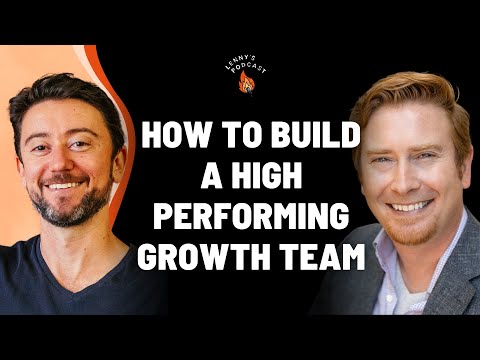
Adam Fishman is a growth and product leader who was Lyft's first growth and marketing hire, spent over four years at Patreon, served as CPO at Imperfect Foods, and is now an Executive in Residence at Reforge. The thing most worth learning from him is to hire growth people against specific skills rather than for a silver bullet, and to treat onboarding as the first and biggest lever on retention.
Onboarding is the only part of your product experience that a hundred percent of people are ever going to touch.
How to build a high-performing growth team | Adam Fishman (Patreon, Lyft, Imperfect Foods)
Adam Fishman: the story and the lessons
1Adam Fishman's path and his Wyzant mistake
Fishman went from Lyft's first growth hire to product leadership at three companies. He led growth at Lyft for two and a half years, spent over four years at Patreon, and later served as CPO at Imperfect Foods.
Today he is an Executive in Residence at Reforge, runs a growth and product advisory practice, and writes a newsletter. He describes the advisory work as a revolving door: a company he can't take on now may fit a few months later.
At Wyzant, nobody tested the growth hire against real competencies. The founders of the tutoring marketplace wanted a silver bullet, but needed a strategy for new growth loops and a system to run it. The San Francisco office closed and Fishman laid off the people he had hired, himself included.
He calls himself naive for never asking the questions that would have exposed the gap. His lesson: "executing a growth strategy takes time and patience," which the founders didn't have.
He wrote the growth competency model because no canonical hiring reference existed. The post tells founders how to hire and evaluate growth people, and it feeds his Reforge program on growth leadership and building balanced teams.
It follows an existing product management competency model. He thinks marketers, engineers, designers and researchers need one too.
2How Fishman hires and builds growth teams
Fishman scores growth candidates on four skill areas, not on pattern matching. The areas are growth execution, customer knowledge, growth strategy, and communication and influence, each with three skills. The aim is a balanced team with no gaps, not one person who is 11 out of 10 at everything.
Founders often ask for "you, but 10 years earlier." He says that is pattern matching, and someone who looks like him may not be the best fit.
He uses the model to make feedback and expectations concrete. "Be more strategic" becomes "model your loops better and explain them clearly." Founders and candidates can also run it as a reverse interview to agree on the skills that matter most for the role.
It also sets review priorities, such as three skills to focus on in the next cycle.
Fishman hires a first growth person for execution and customer knowledge. Strategy and influence take years to build, while execution is hard to teach an adult. He hired Ben Lazier at Lyft, a generalist marketer and avid Lyft user who later became VP of product at Thumbtack.
During a long interview day, Ben borrowed an old Chromebook to deploy a fix at the job he was leaving. Fishman read that as someone who gets things done even at the cost of pausing his own interview.
He leans toward promoting internal people into growth. At Patreon, Sean moved from marketing into an entry-level growth PM role. He already knew the customers and kept improving how he pulled insights from data.
Sean's profile was very different from Ben's, and he turned out great. Fishman says opportunity inside a company is not created often enough.
Fishman says to pay for outside coaching when hiring a junior growth person. A founder who doesn't know growth can't teach it, so advisors, courses, mentorship or coaching have to fill the gap.
Without guidance, a hungry hire runs through many brick walls and misses the door standing next to them.
He hires specialists only after the foundation exists. Fishman compares growth people to painters, architects and surgeons, and does not recommend the surgeon as a first hire. Hire one externally when you are onto something and lack the expertise inside.
"I can't just teach someone SEO over the course of a weekend." SEO and paid growth still carry a lot of dark art that takes years to learn.
3Fishman on onboarding as the biggest retention lever
Fishman treats onboarding as the highest-reach growth lever. Every user touches it, it is the first test of the brand's promise, and users arrive highly motivated. He runs at least one onboarding project at every company he works with.
The brand is the promise and the product is the delivery. If they don't match, customers are disappointed on day one.
He has seen onboarding work shift retention curves by 10 to 20 points. Onboarding drives habit formation, and churn concentrates in the earliest usage. Getting people past that early hump moves the whole cohort curve outward.
He says he has seen companies shift their curve outward by 10, 15 and 20 percentage points.
At Patreon he sent high-potential creators to a human, then productized it. The team pulled audience size and engagement from linked channels such as YouTube, Instagram and Spotify, with data scientists setting criteria per channel. High scorers left self-serve onboarding for personal outreach, which raised first and second month revenue by 25 percent.
Engagement counted alongside audience size, because a million subscribers means little if few watch, comment or share. What the humans learned was then built into the product.
Fishman built opinionated defaults that make the wrong choice hard but possible. Learning from hundreds of thousands of creators, Patreon steered them toward three to five tiers and an entry price of three or five dollars, not one. Creators could still pick one tier or 40, with more friction.
Airbnb used the same idea as smart defaults, setting calendar defaults for new hosts based on whether they looked professional or mom and pop.
He accepts lower onboarding conversion if the right people stay. Extra friction screens out poor-fit users who would have churned, so retention can rise while conversion dips. He watches opposing metrics together so conversion doesn't fall further than retention can offset.
"Sometimes conversion should actually decrease a little bit."
Fishman uses early proxy metrics instead of waiting 90 days. At Patreon the proxies were how fast a creator reached a first patron and the first $100 processed. Early velocity predicted how big a creator would get and so how well they would retain.
He also sampled onboarding creators and checked them against the customer model to confirm the right people were doing the right behaviors.
He redesigns onboarding only on a hard-earned new insight. Micro-tuning a sound foundation rarely moves the needle. At Patreon, new learnings such as the right tier setup were folded in after the earlier work had run.
At larger companies he wants a team that owns activation, since he often finds onboarding untouched for years while first-seven-day drop-off is a problem. A quarter or two a year is enough.
He leads with the user's emotional frame before pitching benefits. People arrive with an emotional need, so he asks how low their lows are, how high their highs are, and why they sought the product out.
His example: people don't use a chatbot because it gives the best answers. They are solving an emotional problem first. He studied consumer psychology in college.
4How Fishman judges a company before joining
He screens jobs on people, mission and financials and won't settle for two of three. He calls it PMF for candidates. He chose well at Lyft and Patreon, and at Wyzant and Imperfect Foods he shortcut his criteria and it cost him.
Imperfect Foods had a great mission, a strong financial strategy and a fantastic CFO. But c-suite infighting made planning hard, and the product or growth leader bears the brunt.
Fishman says to watch the leadership team work before accepting an offer. Ask to sit in on an executive meeting or off-site, or for junior roles a team meeting or product review under NDA. Watch who talks and whether feedback is constructive or antagonistic.
He also suggests asking the CEO how the team resolved its last big disagreement, which works as a reverse behavioral interview.
He back-channels references on the company and the manager. Talk to current or former employees who are off the interview circuit and have no reason to sell you. A PM at Patreon asked Fishman for a list of people he had managed and called them, a first in his career.
A refusal to share references says a lot, and Fishman would offer even someone he had let go. "You're investing your time, there is no way to get more time."

How to build a high-performing growth team | Adam Fishman (Patreon, Lyft, Imperfect Foods)
Teaches how to hire and evaluate growth people with a four-part competency model, how to get the most out of onboarding, and how to judge a company before joining. Backed by Adam's results at Lyft and Patreon, including a 25 percent lift in creator revenue from onboarding work and 10 to 20 point shifts in retention curves.
Fishman went from Lyft's first growth hire to product leadership at three companies. He led growth at Lyft for two and a half years, spent over four years at Patreon, and later served as CPO at Imperfect Foods.
Today he is an Executive in Residence at Reforge, runs a growth and product advisory practice, and writes a newsletter. He describes the advisory work as a revolving door: a company he can't take on now may fit a few months later.
At Wyzant, nobody tested the growth hire against real competencies. The founders of the tutoring marketplace wanted a silver bullet, but needed a strategy for new growth loops and a system to run it. The San Francisco office closed and Fishman laid off the people he had hired, himself included.
He calls himself naive for never asking the questions that would have exposed the gap. His lesson: "executing a growth strategy takes time and patience," which the founders didn't have.
He wrote the growth competency model because no canonical hiring reference existed. The post tells founders how to hire and evaluate growth people, and it feeds his Reforge program on growth leadership and building balanced teams.
It follows an existing product management competency model. He thinks marketers, engineers, designers and researchers need one too.
Fishman scores growth candidates on four skill areas, not on pattern matching. The areas are growth execution, customer knowledge, growth strategy, and communication and influence, each with three skills. The aim is a balanced team with no gaps, not one person who is 11 out of 10 at everything.
Founders often ask for "you, but 10 years earlier." He says that is pattern matching, and someone who looks like him may not be the best fit.
He uses the model to make feedback and expectations concrete. "Be more strategic" becomes "model your loops better and explain them clearly." Founders and candidates can also run it as a reverse interview to agree on the skills that matter most for the role.
It also sets review priorities, such as three skills to focus on in the next cycle.
Fishman hires a first growth person for execution and customer knowledge. Strategy and influence take years to build, while execution is hard to teach an adult. He hired Ben Lazier at Lyft, a generalist marketer and avid Lyft user who later became VP of product at Thumbtack.
During a long interview day, Ben borrowed an old Chromebook to deploy a fix at the job he was leaving. Fishman read that as someone who gets things done even at the cost of pausing his own interview.
He leans toward promoting internal people into growth. At Patreon, Sean moved from marketing into an entry-level growth PM role. He already knew the customers and kept improving how he pulled insights from data.
Sean's profile was very different from Ben's, and he turned out great. Fishman says opportunity inside a company is not created often enough.
Fishman says to pay for outside coaching when hiring a junior growth person. A founder who doesn't know growth can't teach it, so advisors, courses, mentorship or coaching have to fill the gap.
Without guidance, a hungry hire runs through many brick walls and misses the door standing next to them.
He hires specialists only after the foundation exists. Fishman compares growth people to painters, architects and surgeons, and does not recommend the surgeon as a first hire. Hire one externally when you are onto something and lack the expertise inside.
"I can't just teach someone SEO over the course of a weekend." SEO and paid growth still carry a lot of dark art that takes years to learn.
Fishman treats onboarding as the highest-reach growth lever. Every user touches it, it is the first test of the brand's promise, and users arrive highly motivated. He runs at least one onboarding project at every company he works with.
The brand is the promise and the product is the delivery. If they don't match, customers are disappointed on day one.
He has seen onboarding work shift retention curves by 10 to 20 points. Onboarding drives habit formation, and churn concentrates in the earliest usage. Getting people past that early hump moves the whole cohort curve outward.
He says he has seen companies shift their curve outward by 10, 15 and 20 percentage points.
At Patreon he sent high-potential creators to a human, then productized it. The team pulled audience size and engagement from linked channels such as YouTube, Instagram and Spotify, with data scientists setting criteria per channel. High scorers left self-serve onboarding for personal outreach, which raised first and second month revenue by 25 percent.
Engagement counted alongside audience size, because a million subscribers means little if few watch, comment or share. What the humans learned was then built into the product.
Fishman built opinionated defaults that make the wrong choice hard but possible. Learning from hundreds of thousands of creators, Patreon steered them toward three to five tiers and an entry price of three or five dollars, not one. Creators could still pick one tier or 40, with more friction.
Airbnb used the same idea as smart defaults, setting calendar defaults for new hosts based on whether they looked professional or mom and pop.
He accepts lower onboarding conversion if the right people stay. Extra friction screens out poor-fit users who would have churned, so retention can rise while conversion dips. He watches opposing metrics together so conversion doesn't fall further than retention can offset.
"Sometimes conversion should actually decrease a little bit."
Fishman uses early proxy metrics instead of waiting 90 days. At Patreon the proxies were how fast a creator reached a first patron and the first $100 processed. Early velocity predicted how big a creator would get and so how well they would retain.
He also sampled onboarding creators and checked them against the customer model to confirm the right people were doing the right behaviors.
He redesigns onboarding only on a hard-earned new insight. Micro-tuning a sound foundation rarely moves the needle. At Patreon, new learnings such as the right tier setup were folded in after the earlier work had run.
At larger companies he wants a team that owns activation, since he often finds onboarding untouched for years while first-seven-day drop-off is a problem. A quarter or two a year is enough.
He leads with the user's emotional frame before pitching benefits. People arrive with an emotional need, so he asks how low their lows are, how high their highs are, and why they sought the product out.
His example: people don't use a chatbot because it gives the best answers. They are solving an emotional problem first. He studied consumer psychology in college.
He screens jobs on people, mission and financials and won't settle for two of three. He calls it PMF for candidates. He chose well at Lyft and Patreon, and at Wyzant and Imperfect Foods he shortcut his criteria and it cost him.
Imperfect Foods had a great mission, a strong financial strategy and a fantastic CFO. But c-suite infighting made planning hard, and the product or growth leader bears the brunt.
Fishman says to watch the leadership team work before accepting an offer. Ask to sit in on an executive meeting or off-site, or for junior roles a team meeting or product review under NDA. Watch who talks and whether feedback is constructive or antagonistic.
He also suggests asking the CEO how the team resolved its last big disagreement, which works as a reverse behavioral interview.
He back-channels references on the company and the manager. Talk to current or former employees who are off the interview circuit and have no reason to sell you. A PM at Patreon asked Fishman for a list of people he had managed and called them, a first in his career.
A refusal to share references says a lot, and Fishman would offer even someone he had let go. "You're investing your time, there is no way to get more time."