Wrestle AI
An AI app that analyzes wrestling matches and tracks weight-class calories for wrestlers.
Wrestle AI passed 100,000 downloads with about 10 creators and no paid ads, via a 50/50 partnership with a top wrestling creator. A pre-order brought $8K in week one and launch day ranked number 19 in Sports. Pricing split about 50/50 between $59 yearly and $9.99 monthly. Lesson: in an untouched niche, a top creator partner plus a daily-use feature like a calorie tracker can drive growth and retention.
- 1Spot niche demandFight AI users kept asking for wrestling
- 2Partner with top creator50/50 split with Kaden Henshaw
- 3Creator-hyped pre-order$8K first week, #19 in Sports
- 4Scale with creators100,000 downloads from about 10 creators
- 5Move to paid adsCreator videos become ads once proven
From George, founder interview
What was said about Wrestle AI
1Niching down from Fight AI to wrestling
Build the vertical users keep asking for. George's general martial arts app, Fight AI, made about $1,000 at pure margin from posts by him and his friends. When people kept asking whether it did wrestling, he built Wrestle AI for that niche.
Fight AI began as a personal tool: users upload a training video and get told what they did right and wrong. George, who is not technical and wrestled in high school, later repeated the format for boxing with Brawler, and an MMA app is in the works.
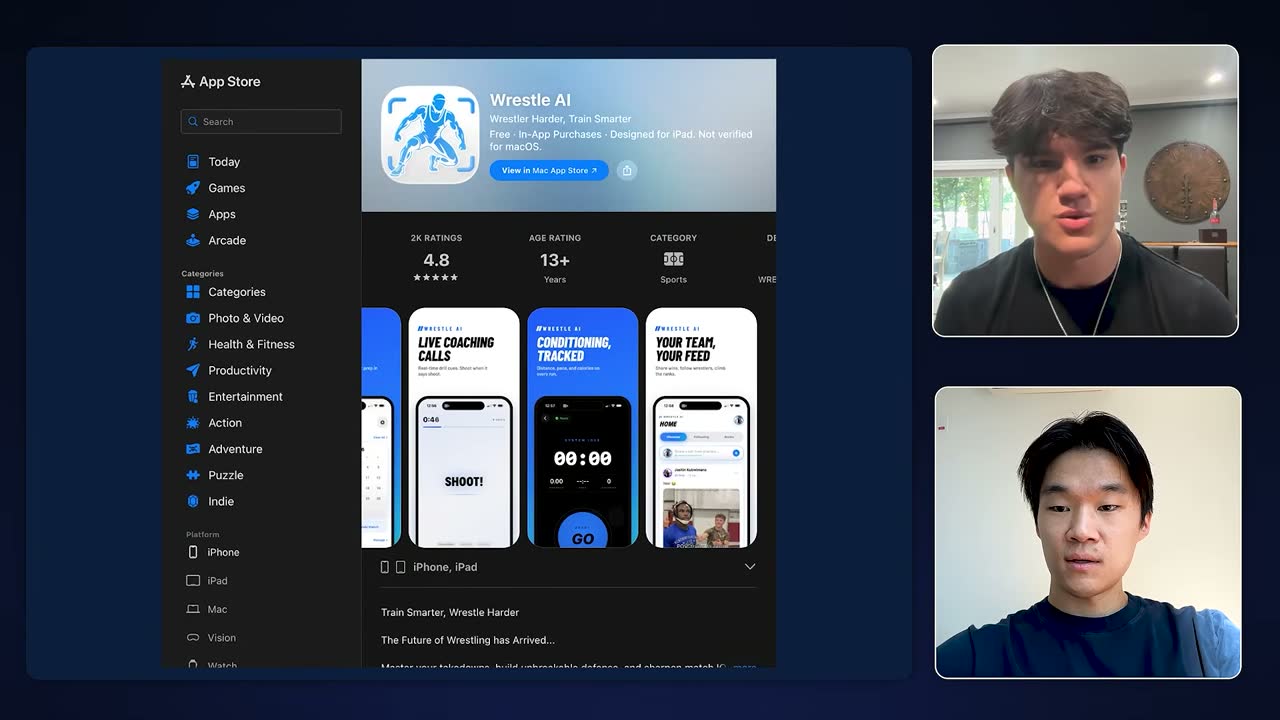
Wrestle AI's App Store page shows a 4.8 rating from 2K reviews, plus live coaching and conditioning screenshots. Pair a validated product with the niche's top creator as a partner. George had the validation and wrestling creator Kaden Henshaw had the audience, so they went 50/50 on Wrestle AI. Other influencers were sponsored only after the partnership began.
They had no agreement beyond the 50/50 split, which George calls luck. He recommends setting minimum posts and vesting up front in any similar deal.
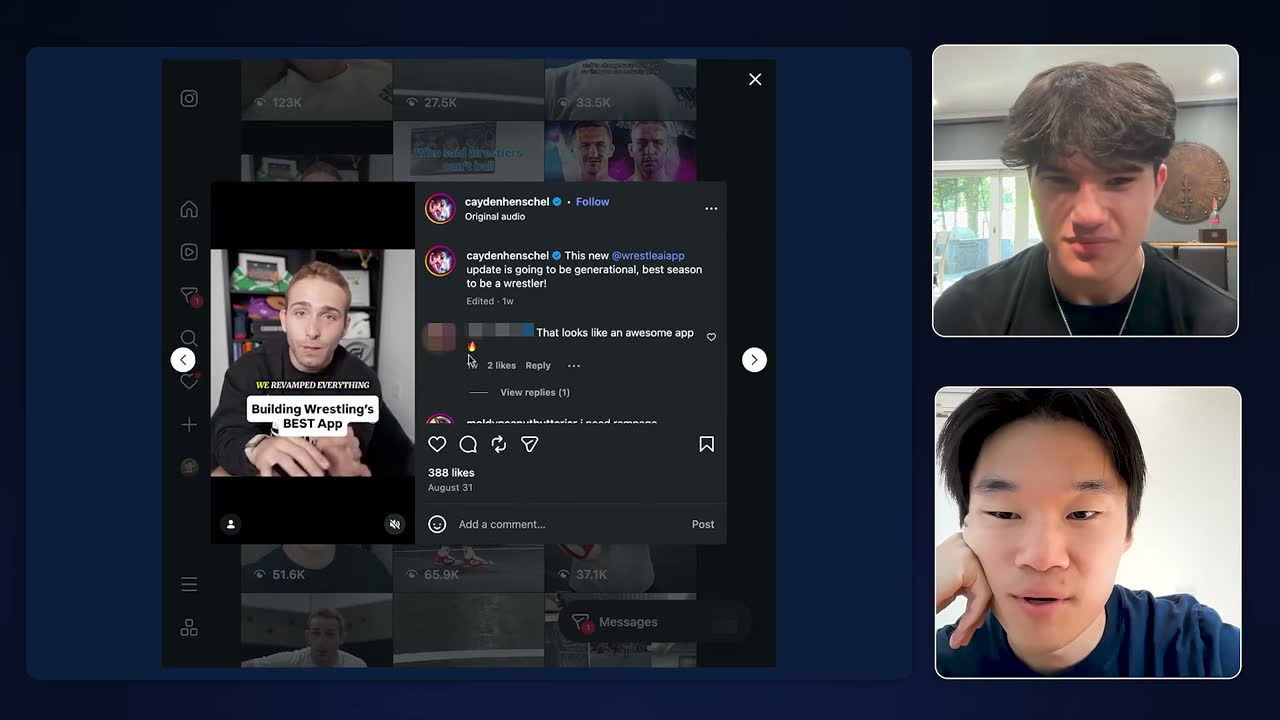
Instagram post by Cayden Henschel announcing the rebuilt Wrestle AI app, with 388 likes. Reach big creators through a warm intro run by a DM assistant. George's first hire was a VA who ran Instagram DMs. Instead of messaging Kaden directly, the VA messaged someone who knew him, which led to a reply, then email, then a phone number.
George spotted the mutual connection in the "followed by" line on Kaden's profile minutes before a sponsor call, and scrapped that call. "The first hire you have is getting someone to run your DMs through your Instagram."
2The pre-order launch and growing to 100,000 downloads on creators
- 1Wrestler uploads a matchDuring the September to March season
- 2Teammates see itSame room, same practice
- 3Teammates subscribeAbout 1.2 to 1.3 per paying customer
From George, founder interview
A creator-hyped pre-order made launch day a surge. Kaden pushed a pre-order and asked everyone to order ahead. The first week brought $8K and launch day hit number 19 in Sports, briefly ahead of the NFL app.
The pre-order started almost a year before recording. Kaden's later announcement that the whole product was rebuilt also did well.
In a niche with no app competitors, a few creators go very far. Wrestle AI passed 100,000 downloads with about 10 creators and no paid ads until the week before recording. As the only wrestling app, its audience had never seen an app sponsorship.
George's sequence: prove the offer with influencers, then move to paid ads, which scale further, expecting to burn about $2K in the first 2 weeks while the pixel learns. "If you have a smaller budget, you could 10x your money with influencers."
Match uploads spread the app through teams by word of mouth. During the season, revenue rose while views stayed flat, because teammates in one room see a match being uploaded. In January, a quarter to a half of revenue came from word of mouth, with about 1.2 to 1.3 word-of-mouth customers per paying customer.
The season runs September to March, so revenue is seasonal; Wrestle AI has the most total revenue of George's apps but not in the off-season month of recording. The off-season plan is to sign as many of the few wrestling influencers as possible.
3Turning creator videos into clear paid ads
Stitch videos that call out another clip convert well as ads. Kaden stitched a clip of a coach calling out moves, pitching that the app calls them so no coach is needed. Creator videos became ads only once paid spend started.
The move-calling feature uses Kaden's own recorded voice for every combo, matched randomly, not voice AI.
Ranking videos flop organically but work as paid ads. Kaden ranked wrestling apps, naming the notes app and MyFitnessPal before Wrestle AI. Joseph Choi suggests rankings build trust because they aren't shilling one app.
A viewer forced to watch an ad doesn't mind it if it is all value and educational.
Clear ads beat polished ones because the product sells itself. The selling angle is a wrestler uploading a match and seeing their mistakes. Across George's apps, raw screen recordings and talking-head ads beat high-production creatives, which returned zero revenue.
The call to action should land in the first 15 seconds. George admits attribution is "kind of cooked," so CPA and ROAS figures are shaky. "It's everything is clarity."
4Onboarding and the paywall
Onboarding teaches the core feature, then asks pain-point questions before the paywall. The flow shows the main analysis, adds social proof and an attribution question, asks about attack style and weight struggles, builds a program, then shows a paywall with an example breakdown. The paywall is $59 a year or $9.99 a month, chosen about 50/50.
All three of George's apps use this format. Wrestle AI was the only one with a free trial, and George is testing removing it.
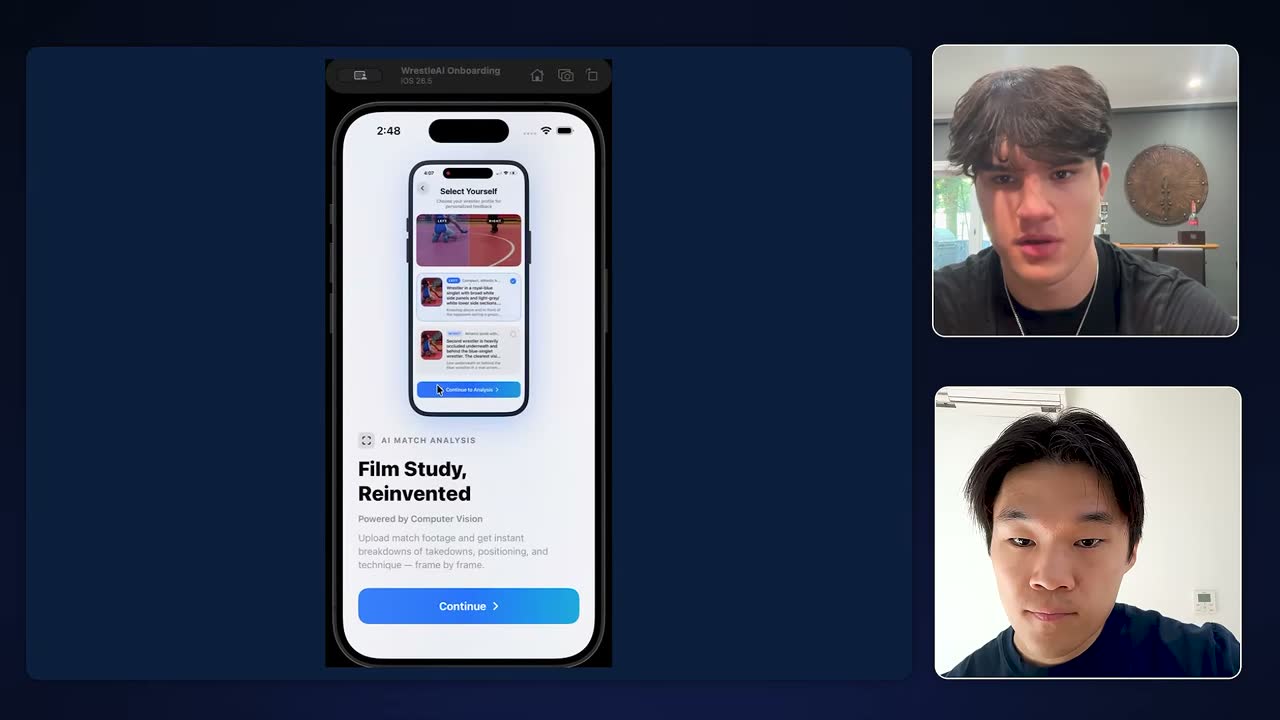
WrestleAI onboarding screen 'Film Study, Reinvented' showing AI match analysis as the first feature.
5Retention: calorie tracking, a creator-seeded feed and Duolingo-style nudges
A daily weight-class calorie tracker fixed long gaps between matches. Wrestlers only analyze a match when they compete, so usage was sparse. A calorie tracker built for weight classes gave them a reason to open the app daily, and George says it "helped our retention a ton."
Monthly subscribers have about a $40 12-month LTV. No data is given isolating the tracker's effect.
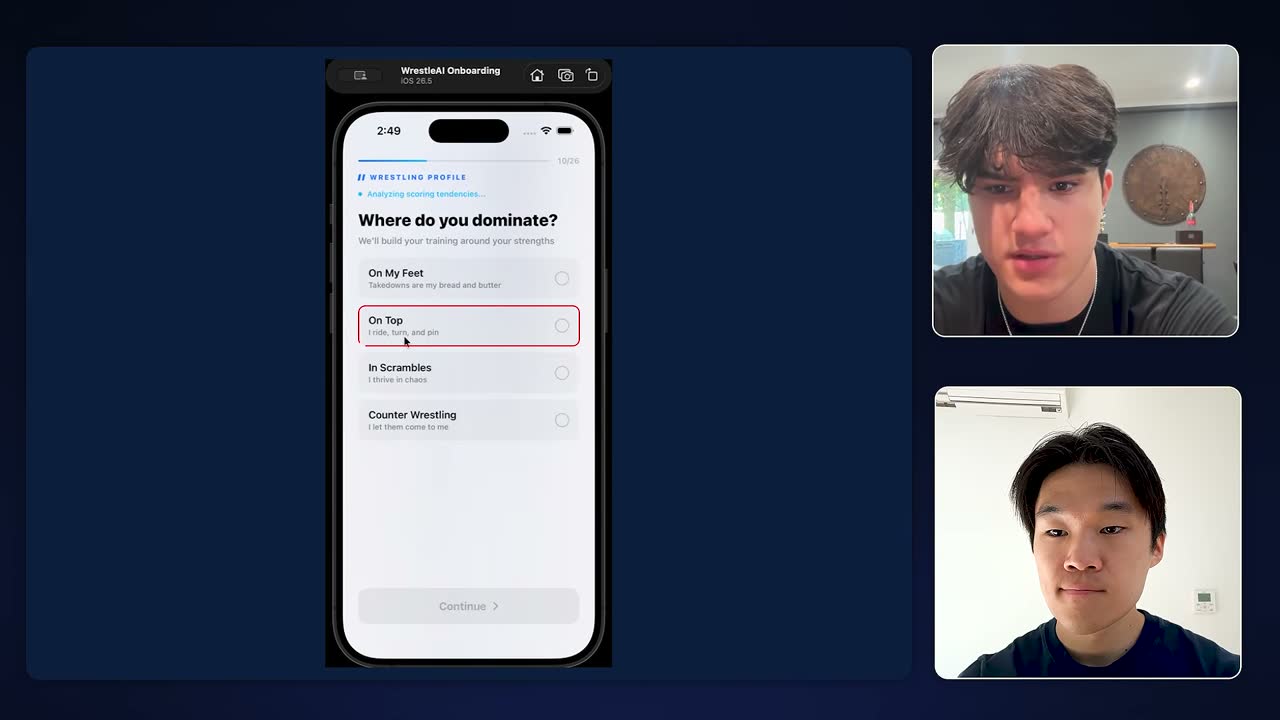
WrestleAI onboarding asks "Where do you dominate?" to tailor training, step 10 of 26. Seed a social feed with sponsored creators to beat cold start. Wrestle AI added a TikTok-style feed, and every sponsored creator must post into it. A simple point-based algorithm heavily favors new content, since a paid app has few posts.
"Come for the tool, stay for the community aspect." No retention data is given for the feed.
Copy Duolingo's notifications and tie them to each user's actions. The team reverse-engineered Duolingo's best notifications and sends at least one a day tied to past behavior, like tracking calories again or beating a run record. Non-payers after onboarding get "don't give up on yourself" messages.
They do not yet track which notifications drive clicks.
Explain complex features with short demo videos. An influencer filmed the wrong feature because a button was unclear, so the team now uses short demo videos to explain complex features.

Meet the ex-wrestler making $41k/mo with AI apps
Passed 100,000 downloads with about 10 creators and no paid ads, after a 50/50 partnership with creator Kaden Henshaw. A pre-order drove $8K in week one and launch day hit number 19 in Sports. Paywall is $59 a year or $9.99 a month, split about 50/50, and a social feed plus calorie tracker help retention.
Build the vertical users keep asking for. George's general martial arts app, Fight AI, made about $1,000 at pure margin from posts by him and his friends. When people kept asking whether it did wrestling, he built Wrestle AI for that niche.
Fight AI began as a personal tool: users upload a training video and get told what they did right and wrong. George, who is not technical and wrestled in high school, later repeated the format for boxing with Brawler, and an MMA app is in the works.
Wrestle AI's App Store page shows a 4.8 rating from 2K reviews, plus live coaching and conditioning screenshots. Pair a validated product with the niche's top creator as a partner. George had the validation and wrestling creator Kaden Henshaw had the audience, so they went 50/50 on Wrestle AI. Other influencers were sponsored only after the partnership began.
They had no agreement beyond the 50/50 split, which George calls luck. He recommends setting minimum posts and vesting up front in any similar deal.
Instagram post by Cayden Henschel announcing the rebuilt Wrestle AI app, with 388 likes. Reach big creators through a warm intro run by a DM assistant. George's first hire was a VA who ran Instagram DMs. Instead of messaging Kaden directly, the VA messaged someone who knew him, which led to a reply, then email, then a phone number.
George spotted the mutual connection in the "followed by" line on Kaden's profile minutes before a sponsor call, and scrapped that call. "The first hire you have is getting someone to run your DMs through your Instagram."
A creator-hyped pre-order made launch day a surge. Kaden pushed a pre-order and asked everyone to order ahead. The first week brought $8K and launch day hit number 19 in Sports, briefly ahead of the NFL app.
The pre-order started almost a year before recording. Kaden's later announcement that the whole product was rebuilt also did well.
In a niche with no app competitors, a few creators go very far. Wrestle AI passed 100,000 downloads with about 10 creators and no paid ads until the week before recording. As the only wrestling app, its audience had never seen an app sponsorship.
George's sequence: prove the offer with influencers, then move to paid ads, which scale further, expecting to burn about $2K in the first 2 weeks while the pixel learns. "If you have a smaller budget, you could 10x your money with influencers."
Match uploads spread the app through teams by word of mouth. During the season, revenue rose while views stayed flat, because teammates in one room see a match being uploaded. In January, a quarter to a half of revenue came from word of mouth, with about 1.2 to 1.3 word-of-mouth customers per paying customer.
The season runs September to March, so revenue is seasonal; Wrestle AI has the most total revenue of George's apps but not in the off-season month of recording. The off-season plan is to sign as many of the few wrestling influencers as possible.
Stitch videos that call out another clip convert well as ads. Kaden stitched a clip of a coach calling out moves, pitching that the app calls them so no coach is needed. Creator videos became ads only once paid spend started.
The move-calling feature uses Kaden's own recorded voice for every combo, matched randomly, not voice AI.
Ranking videos flop organically but work as paid ads. Kaden ranked wrestling apps, naming the notes app and MyFitnessPal before Wrestle AI. Joseph Choi suggests rankings build trust because they aren't shilling one app.
A viewer forced to watch an ad doesn't mind it if it is all value and educational.
Clear ads beat polished ones because the product sells itself. The selling angle is a wrestler uploading a match and seeing their mistakes. Across George's apps, raw screen recordings and talking-head ads beat high-production creatives, which returned zero revenue.
The call to action should land in the first 15 seconds. George admits attribution is "kind of cooked," so CPA and ROAS figures are shaky. "It's everything is clarity."
Onboarding teaches the core feature, then asks pain-point questions before the paywall. The flow shows the main analysis, adds social proof and an attribution question, asks about attack style and weight struggles, builds a program, then shows a paywall with an example breakdown. The paywall is $59 a year or $9.99 a month, chosen about 50/50.
All three of George's apps use this format. Wrestle AI was the only one with a free trial, and George is testing removing it.
WrestleAI onboarding screen 'Film Study, Reinvented' showing AI match analysis as the first feature. A daily weight-class calorie tracker fixed long gaps between matches. Wrestlers only analyze a match when they compete, so usage was sparse. A calorie tracker built for weight classes gave them a reason to open the app daily, and George says it "helped our retention a ton."
Monthly subscribers have about a $40 12-month LTV. No data is given isolating the tracker's effect.
WrestleAI onboarding asks "Where do you dominate?" to tailor training, step 10 of 26. Seed a social feed with sponsored creators to beat cold start. Wrestle AI added a TikTok-style feed, and every sponsored creator must post into it. A simple point-based algorithm heavily favors new content, since a paid app has few posts.
"Come for the tool, stay for the community aspect." No retention data is given for the feed.
Copy Duolingo's notifications and tie them to each user's actions. The team reverse-engineered Duolingo's best notifications and sends at least one a day tied to past behavior, like tracking calories again or beating a run record. Non-payers after onboarding get "don't give up on yourself" messages.
They do not yet track which notifications drive clicks.
Explain complex features with short demo videos. An influencer filmed the wrong feature because a button was unclear, so the team now uses short demo videos to explain complex features.
More in Health & Fitness
 Health & Fitness
Calm
A meditation and sleep app with guided sessions and celebrity-narrated Sleep Stories.


 45 sources · 102 tips
 Health & Fitness
Cal AI
A calorie tracking app that logs meals from photos, grown largely through influencer and UGC videos.
28 sources · 104 tips Health & Fitness
Headspace
A meditation and mental wellness app with guided sessions and subscriptions.
 27 sources · 50 tips
 Health & Fitness
Flo
A data tool that combines app analytics into one view and is adding AI agents.
 10 sources · 31 tips
 Health & Fitness
Ladder
A strength training app with human coaches, a workout journal and a nutrition feature.
12 sources · 39 tips Health & Fitness
Zero
An intermittent fasting tracker app that teaches fasting and builds habits toward metabolic health.
6 sources · 21 tips Health & Fitness
Rise
A sleep and energy app that helps people track and pay down their sleep debt.
3 sources · 29 tips Health & Fitness
Runna
A personalized running coach app that builds adaptive training plans around a runner's race goals.
6 sources · 28 tips