Brawler
A boxing app with AI video analysis, live coaching and an arcade mode.
Brawler gets about 75% of revenue from ads and 25% from influencers. A raw screen-recording ad hit a $10 CPA against a $40 break-even, while a $4,500 creator deal paid back only 75% and was its one losing influencer deal. Lesson: favor clear, raw creatives, judge ads against break-even CPA, and make features obvious, with demos and user calls.
From George, Brawler founder (one ad, one day)
What was said about Brawler
1Raw screen-recording ads priced against break-even CPA
A plain screen recording of Brawler beat every polished ad. A raw screen recording showing how Brawler works, with simple CapCut animation, ran for one day at about a $10 CPA against a $40 break-even, roughly 3 to 4x ROAS.
Each time the team went all out on slick, high-production visuals, the ads produced zero revenue and a very high CPA, while talking-head, stitch and raw demo formats kept winning. George calls the $10 CPA "insane, out of the norm". It comes from one ad after a single day. "Ads that are very high quality suck, at least in our experience."
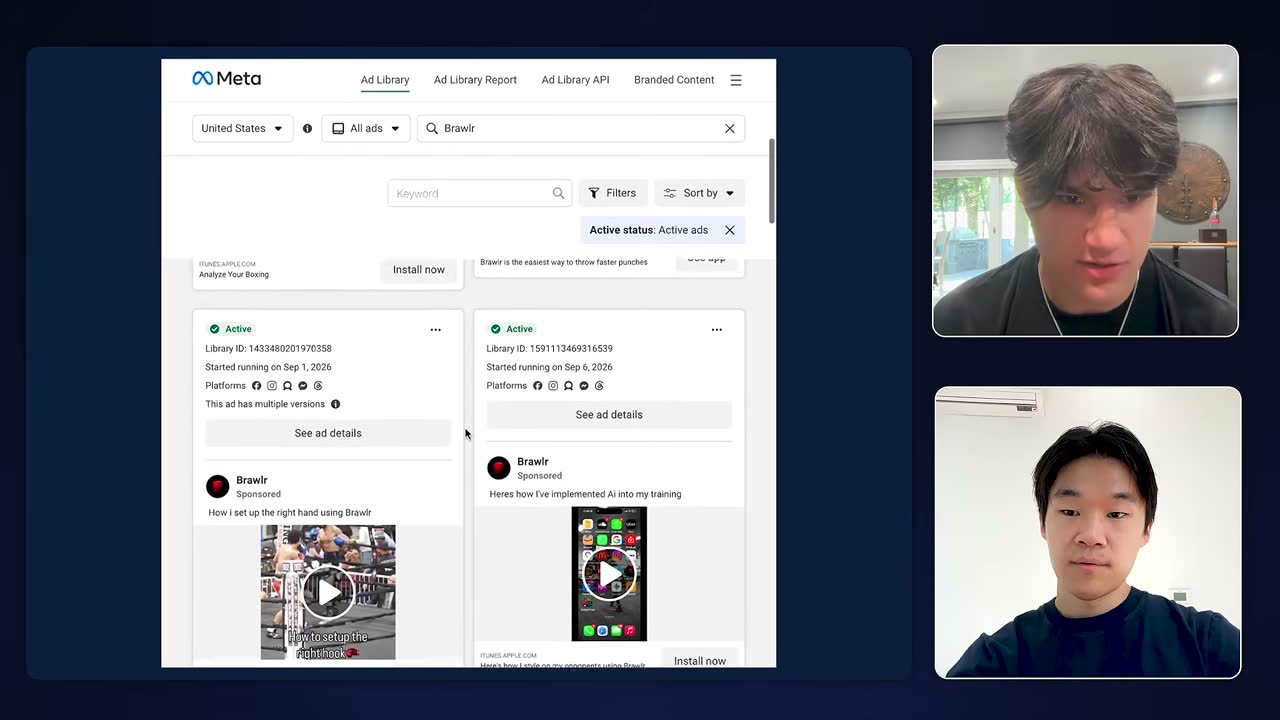
Meta Ad Library showing active Brawlr ads, including the product walkthrough ad started Sep 6, 2026. Steer ads by comparing CPA to a calculated break-even CPA. Compute the break-even CPA, then read a rising CPA as ads getting worse and a falling one as ads getting better. Ads drive about 75% of Brawler's revenue, with influencers at about 25%.
A healthy CPA depends on platform and app: on Meta a $24 CPA is close to 2x ROAS, and George's AdMax app averages about $15 per purchase on TikTok. George admits attribution on his apps is "kind of cooked" and hired a contractor to fix it, so the ROAS and CPA figures are shaky.
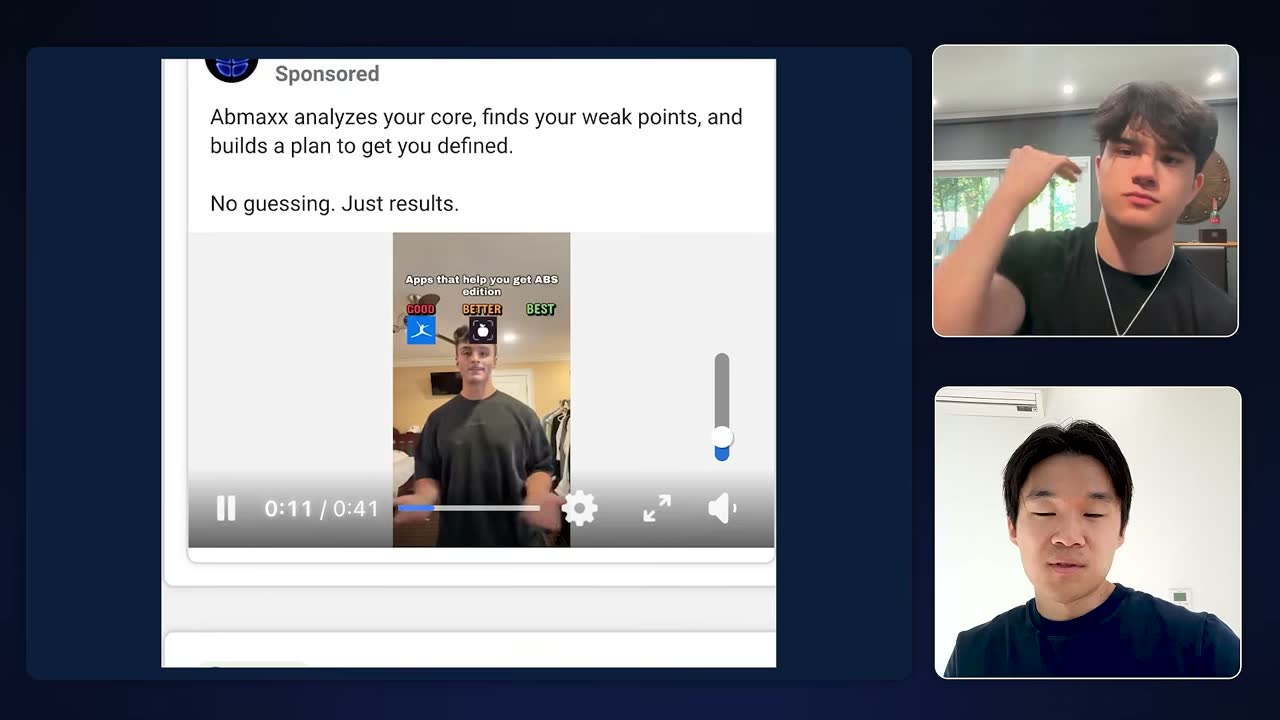
Abmaxx sponsored video ad ranking ab apps "good, better, best," which promotes Cal AI.
2Paying a big boxing creator to warm up the audience
A money-losing creator deal was bought to make later ads convert. George paid $4,500 for three videos from a boxing creator with about a million followers, expecting to recoup only 25% to 50%. It paid back 75%.
The aim was for boxers to see someone they trust using Brawler before his ads reached them, so the deal was priced for mindshare, not break-even. It was the only influencer deal on Brawler that lost money. No data is given showing it actually lifted ad results.
3Making every feature clear: demo videos and founder calls
Treat users misusing a feature as a UI problem, not a user problem. A creator filmed a Brawler video using the wrong feature because the pad work button was not clearly visible, and the team fixed the clarity of the UI rather than blaming the user.
George's rule is to assume users are dumb and explain things so plainly the product sells itself. "Clarity is like the most important thing I think that no one talks about."
Show a short demo video the first time a complex feature opens. Brawler's punch counter plays a short demo video on first use, then moves straight to the challenge and never shows it again.
The video can be a screen recording or a creator explaining the feature, and creators will often make it for free. PostHog analytics help spot where users get confused.
Founder calls revealed features users never knew existed. On the third app open, Brawler shows a pop-up offering a call with a founder. The team has done 10 to 15 calls out of about 2,500 active subscriptions.
Users enter their number, the team picks numbers at random and sets aside about an hour a week. Calls surfaced features that took weeks to build and that users had never discovered.
4Where Brawler came from
Brawler reused the Wrestle AI niche playbook, adding live coaching for boxing. George, a former wrestler who also boxed and did MMA, built Brawler after Wrestle AI, as one of three AI fitness apps totaling almost $41K MRR.
Unlike Wrestle AI, which grew on creators, Brawler grows mostly on paid ads. The MRR figure is self-reported.

Meet the ex-wrestler making $41k/mo with AI apps
Earns about 75% of revenue from ads and 25% from influencers. A raw screen recording ran at a $10 CPA against a $40 break-even, and a $4,500 creator deal paid back 75%. It offers founder calls to users, about 2,500 active subscriptions, and a first-use demo video for the punch counter.
A plain screen recording of Brawler beat every polished ad. A raw screen recording showing how Brawler works, with simple CapCut animation, ran for one day at about a $10 CPA against a $40 break-even, roughly 3 to 4x ROAS.
Each time the team went all out on slick, high-production visuals, the ads produced zero revenue and a very high CPA, while talking-head, stitch and raw demo formats kept winning. George calls the $10 CPA "insane, out of the norm". It comes from one ad after a single day. "Ads that are very high quality suck, at least in our experience."
Meta Ad Library showing active Brawlr ads, including the product walkthrough ad started Sep 6, 2026. Steer ads by comparing CPA to a calculated break-even CPA. Compute the break-even CPA, then read a rising CPA as ads getting worse and a falling one as ads getting better. Ads drive about 75% of Brawler's revenue, with influencers at about 25%.
A healthy CPA depends on platform and app: on Meta a $24 CPA is close to 2x ROAS, and George's AdMax app averages about $15 per purchase on TikTok. George admits attribution on his apps is "kind of cooked" and hired a contractor to fix it, so the ROAS and CPA figures are shaky.
Abmaxx sponsored video ad ranking ab apps "good, better, best," which promotes Cal AI. A money-losing creator deal was bought to make later ads convert. George paid $4,500 for three videos from a boxing creator with about a million followers, expecting to recoup only 25% to 50%. It paid back 75%.
The aim was for boxers to see someone they trust using Brawler before his ads reached them, so the deal was priced for mindshare, not break-even. It was the only influencer deal on Brawler that lost money. No data is given showing it actually lifted ad results.
Treat users misusing a feature as a UI problem, not a user problem. A creator filmed a Brawler video using the wrong feature because the pad work button was not clearly visible, and the team fixed the clarity of the UI rather than blaming the user.
George's rule is to assume users are dumb and explain things so plainly the product sells itself. "Clarity is like the most important thing I think that no one talks about."
Show a short demo video the first time a complex feature opens. Brawler's punch counter plays a short demo video on first use, then moves straight to the challenge and never shows it again.
The video can be a screen recording or a creator explaining the feature, and creators will often make it for free. PostHog analytics help spot where users get confused.
Founder calls revealed features users never knew existed. On the third app open, Brawler shows a pop-up offering a call with a founder. The team has done 10 to 15 calls out of about 2,500 active subscriptions.
Users enter their number, the team picks numbers at random and sets aside about an hour a week. Calls surfaced features that took weeks to build and that users had never discovered.
Brawler reused the Wrestle AI niche playbook, adding live coaching for boxing. George, a former wrestler who also boxed and did MMA, built Brawler after Wrestle AI, as one of three AI fitness apps totaling almost $41K MRR.
Unlike Wrestle AI, which grew on creators, Brawler grows mostly on paid ads. The MRR figure is self-reported.
More in Health & Fitness
 Health & Fitness
Calm
A meditation and sleep app with guided sessions and celebrity-narrated Sleep Stories.


 45 sources · 102 tips
 Health & Fitness
Cal AI
A calorie tracking app that logs meals from photos, grown largely through influencer and UGC videos.
28 sources · 104 tips Health & Fitness
Headspace
A meditation and mental wellness app with guided sessions and subscriptions.
 27 sources · 50 tips
 Health & Fitness
Flo
A data tool that combines app analytics into one view and is adding AI agents.
 10 sources · 31 tips
 Health & Fitness
Ladder
A strength training app with human coaches, a workout journal and a nutrition feature.
12 sources · 39 tips Health & Fitness
Zero
An intermittent fasting tracker app that teaches fasting and builds habits toward metabolic health.
6 sources · 21 tips Health & Fitness
Rise
A sleep and energy app that helps people track and pay down their sleep debt.
3 sources · 29 tips Health & Fitness
Runna
A personalized running coach app that builds adaptive training plans around a runner's race goals.
6 sources · 28 tips