
Pep AI
A peptide and GLP tracking app for logging doses, vials, injection sites, nutrition and sleep.
Pep AI hit $100,000 in 70 days by signing nearly every peptide creator on small trial retainers, scaling those who delivered. Monthly revenue rose from $30,000 to $50,000 to about $80,000 on $10,000 to $25,000 spend, with downloads near $2.50. Lesson: sign creators in a neglected niche, vet them on engagement rather than views, and promote winning organic videos as ads.
- 1DM 1,000+ creators weeklyOpener: paid promo / affiliate deal?
- 2Sign $200 trial monthFour videos, four stories, bio link
- 3Track each creator's linkAppsFlyer OneLinks and creator codes
- 4Reset pay by resultsStrong month raises fee, weak lowers
- 5Run winners as Meta adsAbout $2.50 per download
From Cedric, Pep AI founder, interview
What was said about Pep AI
1How Pep AI reached $100,000 in 70 days by signing the peptide creators
Launch early in a trending category where existing apps are neglected. Peptide calculator apps had existed for years with only a couple of reviews and no real marketing, while GLP-1 trackers like Ozempic apps were already proven. Cedric started building in late January and launched at the end of February.
Peptides are a wider market than GLPs, with uses from weight loss to tanning, skin care and recovery, which gives more angles for content. Cedric, a college student, says the app helped push the peptide trend itself. The app logs doses, due dates, nutrition and sleep.
Use the channel rivals ignore: Pep AI signed nearly every peptide creator. Successful GLP apps ran only ads, so Cedric copied influencer-led apps like CaliAI and Quitter and signed almost everyone making consistent peptide videos. Revenue grew from $30,000 to $50,000 to about $80,000 a month on roughly $10,000 to $25,000 of monthly marketing spend.
About 100 creators post, and ads only started in the third month, once there were proven winners to run. The figures are the founder's own, unaudited, and he corrected the spend ranges mid-answer; churn, refunds and retention are not covered. "None of them are doing influencer marketing. They're only running ads."
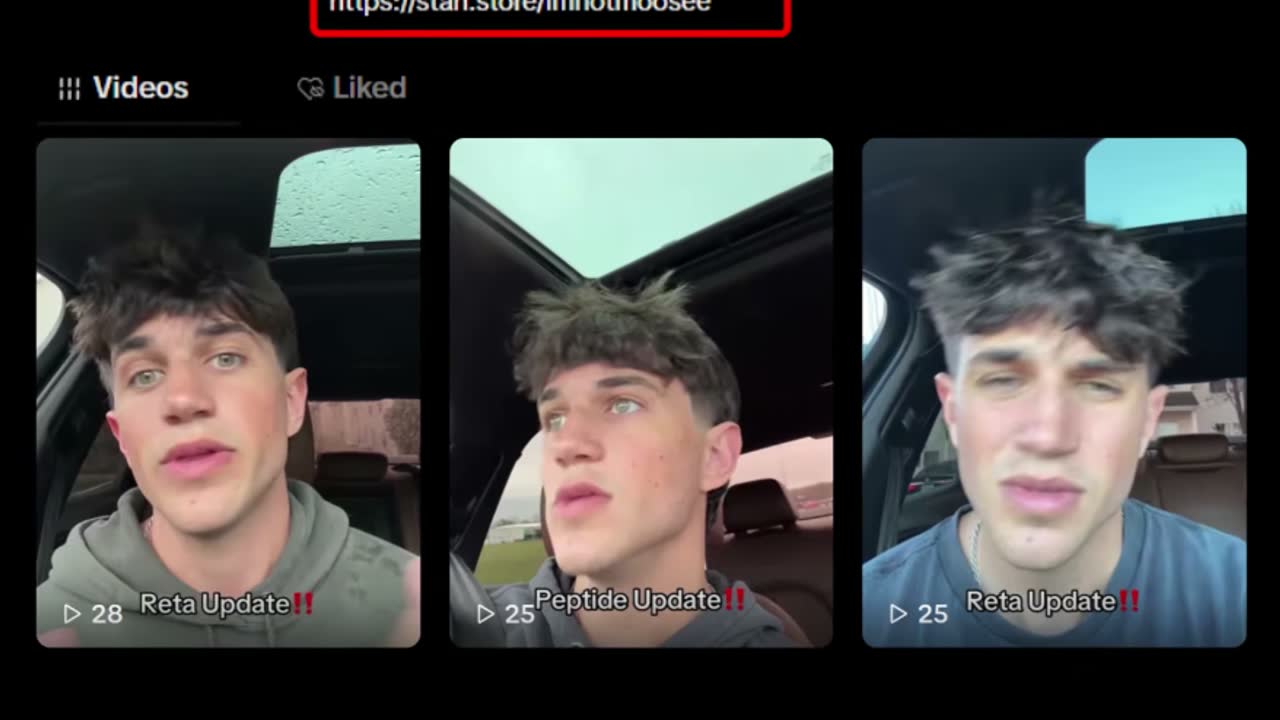
A peptide creator's TikTok profile, with a link in bio and 'Reta Update' and 'Peptide Update' videos.
2The creator deal system
Start creators on a $200 trial month, then reset pay by results. The trial is four videos, four stories and a link in bio for a month, priced on views and engagement rather than followers: about $200 for roughly 5,000 views per video, or about 20,000 views total. A strong month raises the fee and can lead straight to a 3-month deal; an okay month keeps it, a weak one lowers it.
Bigger creators earn up to $4,000 a month. One large fitness influencer, previously the number one channel for another app, was signed for over $20,000, a deal the founder calls a risk and which had not started posting yet.
A one-time 20% affiliate cut makes creators post more than asked. Almost every creator gets 20% of subscription sales, paid once and not recurring, on top of the retainer. Creators post more than the agreed amount and rush to promote new features because it raises their earnings.
"A lot of these guys will post more than we are even asking them to."
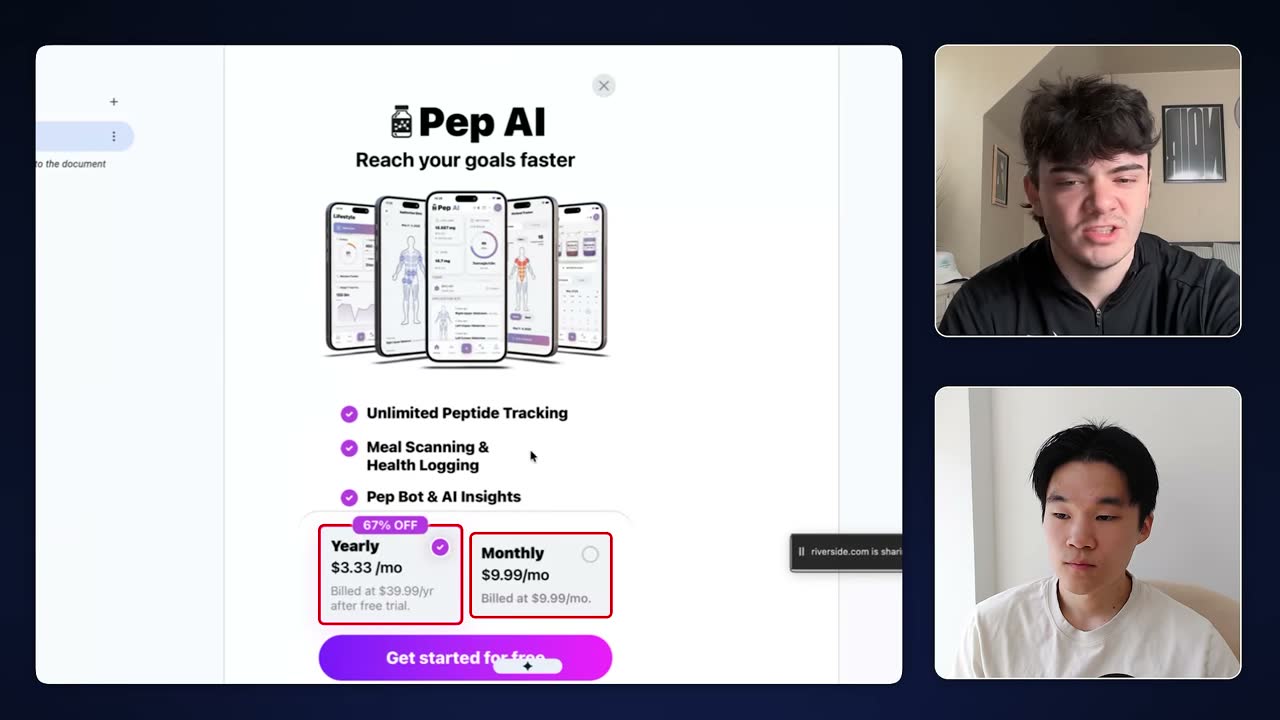
Pep AI paywall offering yearly at $3.33/mo ($39.99/yr, free trial) versus monthly at $9.99. Vet creators on comments and real engagement, not view counts. Pep AI signed creators with bought views, including one who got 120,000 views in an hour with no comments and zero sign-ups. Cedric now checks comments and genuine engagement before signing.
Close relationships with creators matter more than formal bonuses. The team texts creators almost daily, calls them, shares their sign-up numbers and gives new creators free lifetime access before dealing. Creators who like the app answer followers' peptide questions and go live on TikTok to promote it.
Strong performers still get bonuses, but informally. "They're the backbone to our success."
Run outreach at volume with a fixed opener and an immediate call. Four outreach hires send 100+ DMs a day, over 1,000 a week, across TikTok, Instagram and other platforms, opening with "paid promo / affiliate deal?" so it gets read. After a reply they move to WhatsApp or iMessage and onto a call.
Two marketing managers handle most calls and deals, and the founder takes the big creators.
Build the process yourself first, then teach friends each step. Cedric ran marketing himself, then taught friends the steps: respond to creators, get numbers, call, agree a deal, sign a contract, pay and set up codes. Hires follow a standard procedure, which freed him for product, pricing and ads.
The team includes two marketing managers, four outreach hires, two developers, a CFO and a product person.
3Tracked links and link-in-bio traffic
Give every creator a tracked link and code to price deals on profit. AppsFlyer OneLinks send viewers to the App Store or Google Play and log click, download and purchase per creator, and creator codes at signup show who referred each user. Weak creators are renegotiated to lower prices.
Visible links work here because the audience trusts these creators; other UGC avoids links and loses attribution. "We track everything through like these creator codes."
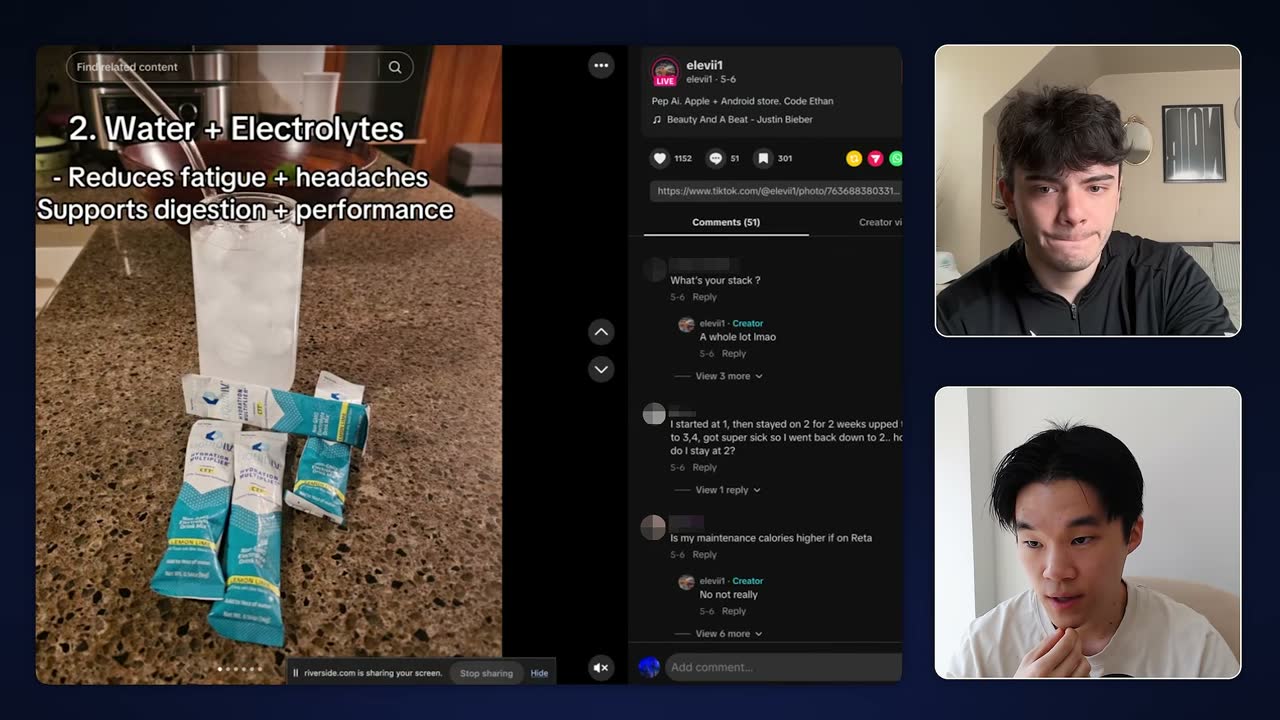
Ethan's TikTok slideshow slide 2, "Water + Electrolytes," with 1,152 likes and comments visible. A creator's bio link drives downloads even with no posts. One creator kept the link in bio but stopped posting for 2 weeks, and the app still got a ton of downloads. Followers click bio links from unrelated videos to reach the creator's paid community or calls, and see the app there.
Informational peptide creators steer people to bio links because TikTok restricts what they can say. "A lot of people convert from that without even seeing any video."
4What the creators post
Send a brief of past winners, then let creators pick the format. Creators get a Google Doc of best-performing videos and are told to recreate them or do their own thing because they know their audience best. The first video goes to the group chat before posting so off-topic or unbranded ones can be redone.
The founder's own early videos "didn't really do much."
Slideshows and jokes beat talking heads because the app needs only a mention. The top performer, Ethan, posts slideshows of tips on protein, water, electrolytes, workouts and cardio with a CTA. Moose's 19-second joke video mentioning the app at the end got 400,000 views.
Other posts cover a specific peptide and mention the app for tracking. Talking-head clips show the app only at the end and do worse.
5Turning organic winners into Meta ads
From Cedric, Pep AI founder, interview
Run proven organic creator posts as Meta ads, not scripted copies. Scripts copying other GLP apps failed and lost money, while winning TikTok and Instagram posts performed well on Meta. Cost per download is about $2.50 against a $5 rule of thumb, on about $400 a day on Meta plus $150 on Apple Search Ads.
Budget is raised weekly on winners, AI-generated app pictures are also testing well, and the goal was 50 to 100 campaigns. Meta is still not the top channel; creators are.
A cluttered static ad the founder disliked became the best performer. The ads lead made a crowded square static listing about eight pieces of information in about 2 minutes with ChatGPT. It got under $2 per install versus the $2.50 average.
The team now makes more variants, including cleaner ones aimed at men or women. The founder can't explain why it wins: "I think it's way too cluttered and it's overwhelming, but it's performing extremely well."
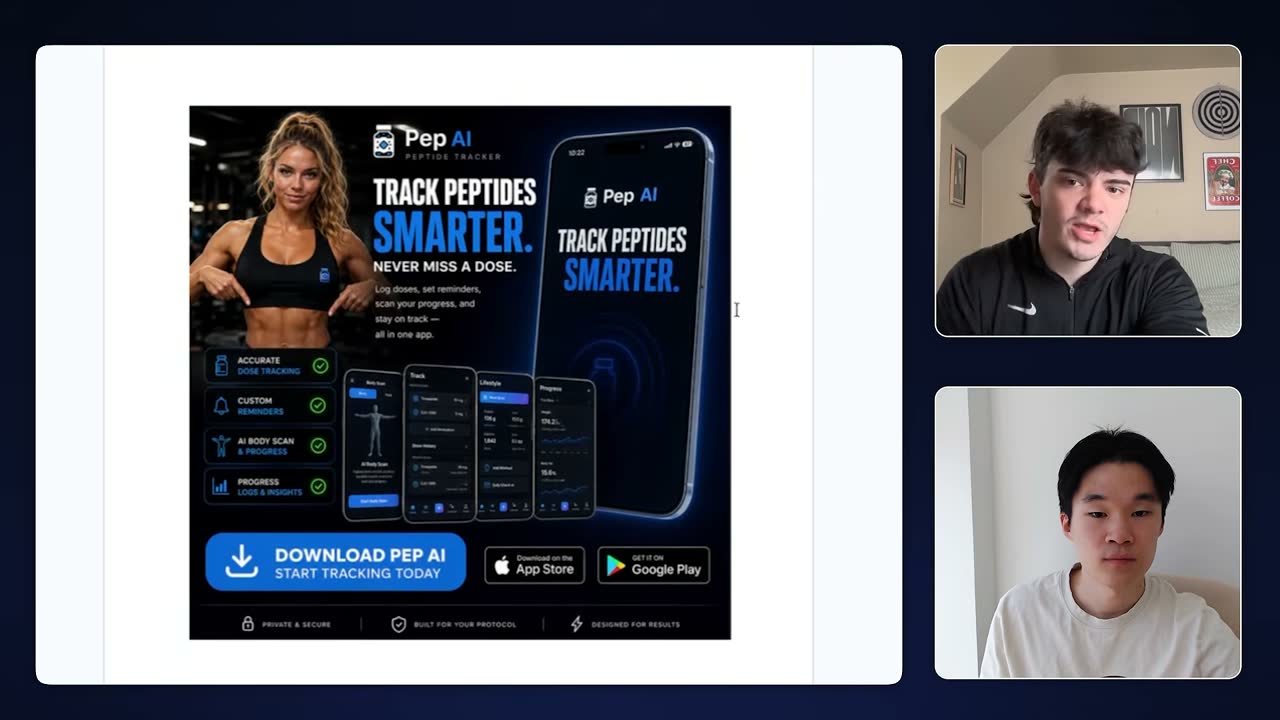
Pep AI's best Meta static ad, made in ChatGPT, packs many feature callouts and costs under $2 per download. Use Meta over TikTok ads because TikTok rejects peptide content. TikTok keeps rejecting Spark ads and removing videos because peptide content reads as medical advice, while Meta is more lenient and performs better. Rival GLP apps in the Health and Fitness top 100 run only Meta ads.
Pep AI ranked around 250 and aimed for the top 100.
6Onboarding, pricing and product choices
Shorten onboarding for under-25s and lengthen it for older users. Close to 60% of users are over 25 and respond well to a longer flow on nutrition, water and sleep with a personalized nutrition plan. Under-25s buy less and drop out of long onboarding, so they get a short version with key points and disclaimers.
An earlier onboarding mistake had been losing a meaningful share of sign-ups before the paywall.
Frame the yearly plan around a 3-day free trial. The paywall offers $40 a year with a 3-day trial or $10 a month, with slides before it framing the trial as low commitment. Cedric is working to make prices cheaper.
A flash sale borrowed from e-commerce gave the biggest revenue day. "We want you to try Peptide for free so that there's not this big commitment."
Add features users keep requesting, and cut the ones nobody uses. Cycle scheduling and a syringe dose calculator came from feedback and drove a ton of traffic once added. The AI body scan and bloodwork were removed, and achievements were simplified to streaks.
Feedback comes from in-app forms, emails, reviews, DMs and creator calls, and two developers ship two to three updates a week.
Keep a health tracker user-input only to avoid giving medical advice. All data is entered by users and the app gives no recommendations; the AI chat answers only simple questions like travelling with a GLP. New features, including the dose calculator, were checked with attorneys first.
The legal risk of the dose calculator has not been tested against real outcomes.

I speedran an ai app to $100k in 70 days.
Reached $100,000 in 70 days by signing nearly every peptide creator, with revenue growing from $30,000 to $50,000 to about $80,000 a month on $10,000 to $25,000 monthly spend. Downloads cost about $2.50 each, and it charges $40 a year or $10 a month with a 3-day trial on the yearly plan.
Launch early in a trending category where existing apps are neglected. Peptide calculator apps had existed for years with only a couple of reviews and no real marketing, while GLP-1 trackers like Ozempic apps were already proven. Cedric started building in late January and launched at the end of February.
Peptides are a wider market than GLPs, with uses from weight loss to tanning, skin care and recovery, which gives more angles for content. Cedric, a college student, says the app helped push the peptide trend itself. The app logs doses, due dates, nutrition and sleep.
Use the channel rivals ignore: Pep AI signed nearly every peptide creator. Successful GLP apps ran only ads, so Cedric copied influencer-led apps like CaliAI and Quitter and signed almost everyone making consistent peptide videos. Revenue grew from $30,000 to $50,000 to about $80,000 a month on roughly $10,000 to $25,000 of monthly marketing spend.
About 100 creators post, and ads only started in the third month, once there were proven winners to run. The figures are the founder's own, unaudited, and he corrected the spend ranges mid-answer; churn, refunds and retention are not covered. "None of them are doing influencer marketing. They're only running ads."
A peptide creator's TikTok profile, with a link in bio and 'Reta Update' and 'Peptide Update' videos. Start creators on a $200 trial month, then reset pay by results. The trial is four videos, four stories and a link in bio for a month, priced on views and engagement rather than followers: about $200 for roughly 5,000 views per video, or about 20,000 views total. A strong month raises the fee and can lead straight to a 3-month deal; an okay month keeps it, a weak one lowers it.
Bigger creators earn up to $4,000 a month. One large fitness influencer, previously the number one channel for another app, was signed for over $20,000, a deal the founder calls a risk and which had not started posting yet.
A one-time 20% affiliate cut makes creators post more than asked. Almost every creator gets 20% of subscription sales, paid once and not recurring, on top of the retainer. Creators post more than the agreed amount and rush to promote new features because it raises their earnings.
"A lot of these guys will post more than we are even asking them to."
Pep AI paywall offering yearly at $3.33/mo ($39.99/yr, free trial) versus monthly at $9.99. Vet creators on comments and real engagement, not view counts. Pep AI signed creators with bought views, including one who got 120,000 views in an hour with no comments and zero sign-ups. Cedric now checks comments and genuine engagement before signing.
Close relationships with creators matter more than formal bonuses. The team texts creators almost daily, calls them, shares their sign-up numbers and gives new creators free lifetime access before dealing. Creators who like the app answer followers' peptide questions and go live on TikTok to promote it.
Strong performers still get bonuses, but informally. "They're the backbone to our success."
Run outreach at volume with a fixed opener and an immediate call. Four outreach hires send 100+ DMs a day, over 1,000 a week, across TikTok, Instagram and other platforms, opening with "paid promo / affiliate deal?" so it gets read. After a reply they move to WhatsApp or iMessage and onto a call.
Two marketing managers handle most calls and deals, and the founder takes the big creators.
Build the process yourself first, then teach friends each step. Cedric ran marketing himself, then taught friends the steps: respond to creators, get numbers, call, agree a deal, sign a contract, pay and set up codes. Hires follow a standard procedure, which freed him for product, pricing and ads.
The team includes two marketing managers, four outreach hires, two developers, a CFO and a product person.
Give every creator a tracked link and code to price deals on profit. AppsFlyer OneLinks send viewers to the App Store or Google Play and log click, download and purchase per creator, and creator codes at signup show who referred each user. Weak creators are renegotiated to lower prices.
Visible links work here because the audience trusts these creators; other UGC avoids links and loses attribution. "We track everything through like these creator codes."
Ethan's TikTok slideshow slide 2, "Water + Electrolytes," with 1,152 likes and comments visible. A creator's bio link drives downloads even with no posts. One creator kept the link in bio but stopped posting for 2 weeks, and the app still got a ton of downloads. Followers click bio links from unrelated videos to reach the creator's paid community or calls, and see the app there.
Informational peptide creators steer people to bio links because TikTok restricts what they can say. "A lot of people convert from that without even seeing any video."
Send a brief of past winners, then let creators pick the format. Creators get a Google Doc of best-performing videos and are told to recreate them or do their own thing because they know their audience best. The first video goes to the group chat before posting so off-topic or unbranded ones can be redone.
The founder's own early videos "didn't really do much."
Slideshows and jokes beat talking heads because the app needs only a mention. The top performer, Ethan, posts slideshows of tips on protein, water, electrolytes, workouts and cardio with a CTA. Moose's 19-second joke video mentioning the app at the end got 400,000 views.
Other posts cover a specific peptide and mention the app for tracking. Talking-head clips show the app only at the end and do worse.
Run proven organic creator posts as Meta ads, not scripted copies. Scripts copying other GLP apps failed and lost money, while winning TikTok and Instagram posts performed well on Meta. Cost per download is about $2.50 against a $5 rule of thumb, on about $400 a day on Meta plus $150 on Apple Search Ads.
Budget is raised weekly on winners, AI-generated app pictures are also testing well, and the goal was 50 to 100 campaigns. Meta is still not the top channel; creators are.
A cluttered static ad the founder disliked became the best performer. The ads lead made a crowded square static listing about eight pieces of information in about 2 minutes with ChatGPT. It got under $2 per install versus the $2.50 average.
The team now makes more variants, including cleaner ones aimed at men or women. The founder can't explain why it wins: "I think it's way too cluttered and it's overwhelming, but it's performing extremely well."
Pep AI's best Meta static ad, made in ChatGPT, packs many feature callouts and costs under $2 per download. Use Meta over TikTok ads because TikTok rejects peptide content. TikTok keeps rejecting Spark ads and removing videos because peptide content reads as medical advice, while Meta is more lenient and performs better. Rival GLP apps in the Health and Fitness top 100 run only Meta ads.
Pep AI ranked around 250 and aimed for the top 100.
Shorten onboarding for under-25s and lengthen it for older users. Close to 60% of users are over 25 and respond well to a longer flow on nutrition, water and sleep with a personalized nutrition plan. Under-25s buy less and drop out of long onboarding, so they get a short version with key points and disclaimers.
An earlier onboarding mistake had been losing a meaningful share of sign-ups before the paywall.
Frame the yearly plan around a 3-day free trial. The paywall offers $40 a year with a 3-day trial or $10 a month, with slides before it framing the trial as low commitment. Cedric is working to make prices cheaper.
A flash sale borrowed from e-commerce gave the biggest revenue day. "We want you to try Peptide for free so that there's not this big commitment."
Add features users keep requesting, and cut the ones nobody uses. Cycle scheduling and a syringe dose calculator came from feedback and drove a ton of traffic once added. The AI body scan and bloodwork were removed, and achievements were simplified to streaks.
Feedback comes from in-app forms, emails, reviews, DMs and creator calls, and two developers ship two to three updates a week.
Keep a health tracker user-input only to avoid giving medical advice. All data is entered by users and the app gives no recommendations; the AI chat answers only simple questions like travelling with a GLP. New features, including the dose calculator, were checked with attorneys first.
The legal risk of the dose calculator has not been tested against real outcomes.
More in Health & Fitness
 Health & Fitness
Calm
A meditation and sleep app with guided sessions and celebrity-narrated Sleep Stories.


 45 sources · 102 tips
 Health & Fitness
Cal AI
A calorie tracking app that logs meals from photos, grown largely through influencer and UGC videos.
28 sources · 104 tips Health & Fitness
Headspace
A meditation and mental wellness app with guided sessions and subscriptions.
 27 sources · 50 tips
 Health & Fitness
Flo
A data tool that combines app analytics into one view and is adding AI agents.
 10 sources · 31 tips
 Health & Fitness
Ladder
A strength training app with human coaches, a workout journal and a nutrition feature.
12 sources · 39 tips Health & Fitness
Zero
An intermittent fasting tracker app that teaches fasting and builds habits toward metabolic health.
6 sources · 21 tips Health & Fitness
Rise
A sleep and energy app that helps people track and pay down their sleep debt.
3 sources · 29 tips Health & Fitness
Runna
A personalized running coach app that builds adaptive training plans around a runner's race goals.
6 sources · 28 tips