
DeBloat AI
A face-scan app that rates facial bloating and promises to help users debloat.
DeBloat AI, a face-scan app that rates facial bloating, got about 40,000 downloads from faceless UGC pages and TikTok ads costing cents per download. Cheap downloads saturated within days and profit settled near 30% of ad spend, while copycats now make $20k to $30k a month. Lesson: a face scan with an exaggerated rating before the paywall worked, but scale a novel idea fast before the arbitrage window closes.
- 1Take a face photoUser scans their face in the app
- 2See bloating ratingSlightly exaggerated: "you are really bloated"
- 3Feel sunk costFinished scan makes quitting feel wasteful
- 4Hit the paywallUrgency to fix it
From Rafael Kramer on DeBloat AI
What was said about DeBloat AI
The idea came from TikTok comments asking how to debloat. Rafael Kramer saw debloating transformation videos drawing about 100 comments asking how it was done. The only existing fix was pills people did not trust, so he built a face-scan app around the problem.
DeBloat AI was the third of three consumer apps he launched in 2025 and the only one that did well, a looks-maxing app with a different angle. He calls the comment section "a really good indicator of how strong a problem is."
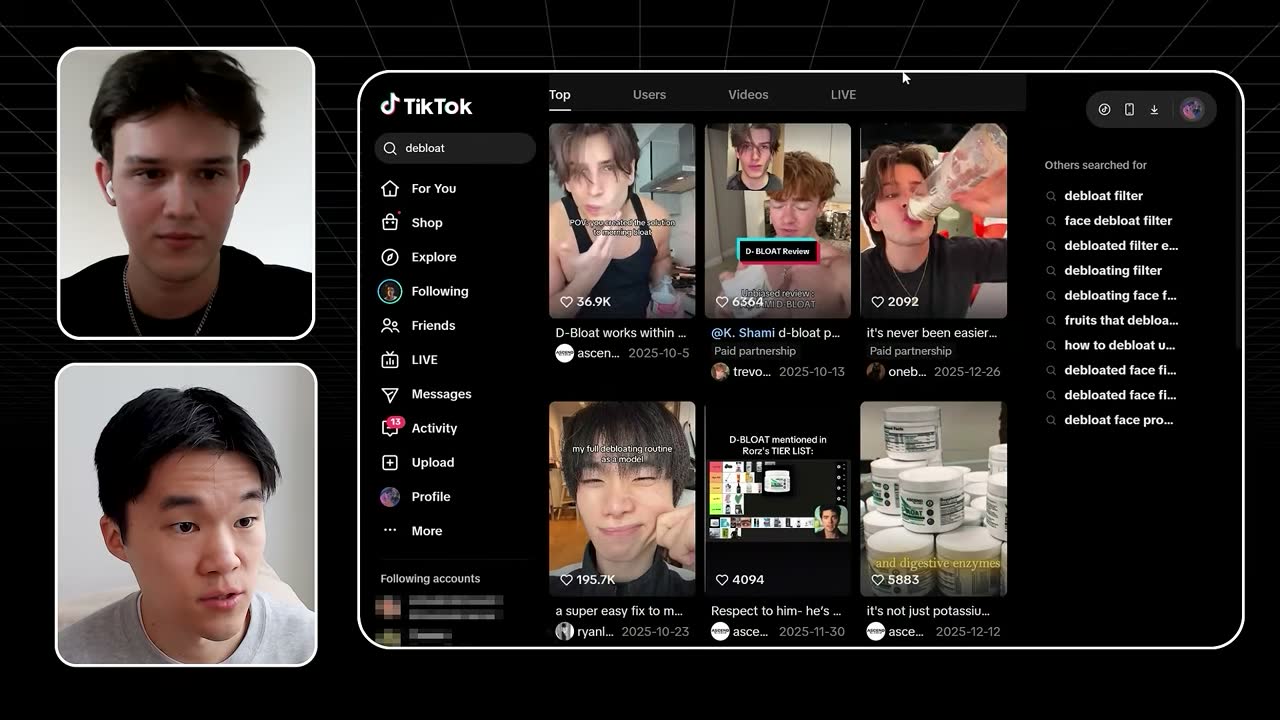
TikTok search for "debloat" shows D-Bloat supplement videos and paid partnerships, revealing demand for debloating. A face scan with an exaggerated rating came before the paywall. Users took a photo and saw their bloating rating before hitting the paywall. Having finished the scan created sunk cost, and a slightly exaggerated result (you are really bloated) created urgency to fix it.
The design came from understanding that users were insecure and wanted to solve that. Kramer named it one of the things that worked well for the app.
Cheap UGC and ads worked for days, so scale before copycats arrive. About eight faceless slideshow accounts paid on a CPM basis, plus TikTok ads costing a few cents per download, drove about 40,000 downloads. The cheap downloads saturated within days, and profit then held around 30% of ad spend for a few weeks.
CPM pay left creators to work out how to get views themselves, and the cost was tiny next to the installs produced; creators came through a friend running the same strategy. Kramer thinks he sold too early: copycats now make $20k to $30k a month. "We probably should have scaled it more before selling it."
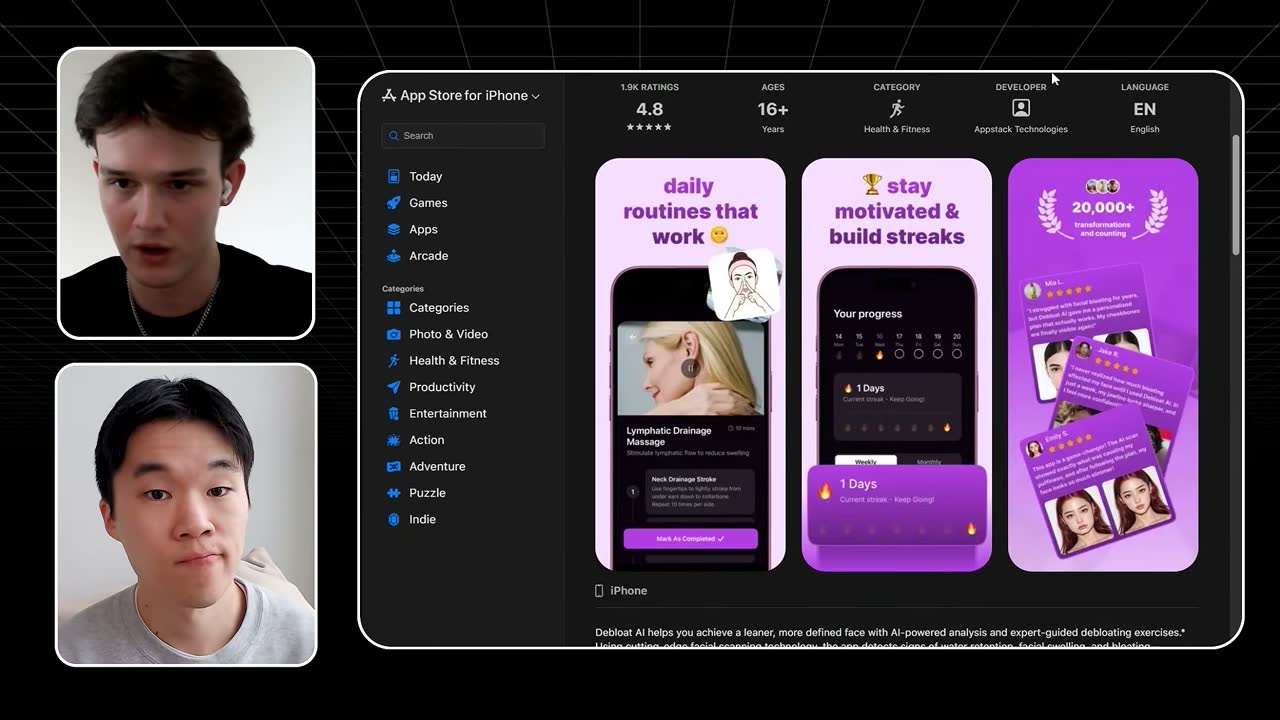
Debloat AI's App Store page: 4.8 rating from 1.9K reviews, a looksmaxxing app later sold.

this 14 yr old makes $100k/mo PROFIT building apps with ai (here's how)
Spotted from TikTok comments, it got about 40,000 downloads via faceless UGC pages and TikTok ads costing cents per download. Cheap downloads saturated in days, profit fell to about 30% of ad spend, and copycats now make $20k to $30k a month. A face scan with an exaggerated rating before the paywall worked well.
The idea came from TikTok comments asking how to debloat. Rafael Kramer saw debloating transformation videos drawing about 100 comments asking how it was done. The only existing fix was pills people did not trust, so he built a face-scan app around the problem.
DeBloat AI was the third of three consumer apps he launched in 2025 and the only one that did well, a looks-maxing app with a different angle. He calls the comment section "a really good indicator of how strong a problem is."
TikTok search for "debloat" shows D-Bloat supplement videos and paid partnerships, revealing demand for debloating. A face scan with an exaggerated rating came before the paywall. Users took a photo and saw their bloating rating before hitting the paywall. Having finished the scan created sunk cost, and a slightly exaggerated result (you are really bloated) created urgency to fix it.
The design came from understanding that users were insecure and wanted to solve that. Kramer named it one of the things that worked well for the app.
Cheap UGC and ads worked for days, so scale before copycats arrive. About eight faceless slideshow accounts paid on a CPM basis, plus TikTok ads costing a few cents per download, drove about 40,000 downloads. The cheap downloads saturated within days, and profit then held around 30% of ad spend for a few weeks.
CPM pay left creators to work out how to get views themselves, and the cost was tiny next to the installs produced; creators came through a friend running the same strategy. Kramer thinks he sold too early: copycats now make $20k to $30k a month. "We probably should have scaled it more before selling it."
Debloat AI's App Store page: 4.8 rating from 1.9K reviews, a looksmaxxing app later sold.
More in Health & Fitness
 Health & Fitness
Calm
A meditation and sleep app with guided sessions and celebrity-narrated Sleep Stories.


 45 sources · 102 tips
 Health & Fitness
Cal AI
A calorie tracking app that logs meals from photos, grown largely through influencer and UGC videos.
28 sources · 104 tips Health & Fitness
Headspace
A meditation and mental wellness app with guided sessions and subscriptions.
 27 sources · 50 tips
 Health & Fitness
Flo
A data tool that combines app analytics into one view and is adding AI agents.
 10 sources · 31 tips
 Health & Fitness
Ladder
A strength training app with human coaches, a workout journal and a nutrition feature.
12 sources · 39 tips Health & Fitness
Zero
An intermittent fasting tracker app that teaches fasting and builds habits toward metabolic health.
6 sources · 21 tips Health & Fitness
Rise
A sleep and energy app that helps people track and pay down their sleep debt.
3 sources · 29 tips Health & Fitness
Runna
A personalized running coach app that builds adaptive training plans around a runner's race goals.
6 sources · 28 tips