Jetpack
A travel app that helps people save money on flights.
Jetpack grew through organic videos from ex-flight attendants who open with a credential and share money-saving tips, with the app as just one tip. A catchy redirect domain, flightcheatcode.com, ties installs back to those videos. The lesson: for high-trust products, use credible expert creators and give an unnamed product a memorable URL. The source gives no install or revenue figures for Jetpack.
- 1Open with credential"I'm an ex flight attendant."
- 2List creator tipsResult-focused, not an app demo
- 3Mention app as one tipApp is one item in the list
- 4Visit flightcheatcode.comEasy to say, tells the value
- 5Redirect to appGives clean organic attribution
From Jetpack creator campaign notes
What was said about Jetpack
1Ex-flight attendant creators and the flightcheatcode.com URL
Jetpack cast ex-flight attendants because flights are a considered purchase. Travel is bought weeks ahead, so Jetpack used creators with real expertise and opened each video with the credential, then listed tips. Impulse products like Dupe.com and Bible BFF used relatable creators sharing a pain point instead.
The hook the creators use: "I am credible because I'm an ex flight attendant. Here are tips that you need to know to get what you want." The rule is to match the hook and messaging to whether the product needs trust or relatability.
Jetpack's videos centered on the creator's tips, not on demoing the app. Flight savings is a boring product on screen, so the videos focus on the result and the creator's credibility, with the app appearing as one tip in a list.
By contrast, Bible BFF car videos that show people using the product were still performing months after posting. Showing the product pays off only when the product itself is viral, which tends to be more Gen Z.
Jetpack used a benefit-led redirect URL, flightcheatcode.com, to attribute organic installs. Because the Jetpack name means nothing to viewers, the team made flightcheatcode.com, which redirects to the app. It is easy to say, tells viewers the value, and gives clean organic attribution.
Attribution matters when paid ads, other agencies and in-house creators all run at once. The same approach was used a couple of weeks before the recording for SMB Market (buyabusiness.com). It is not needed for brands people already know, like Polymarket.
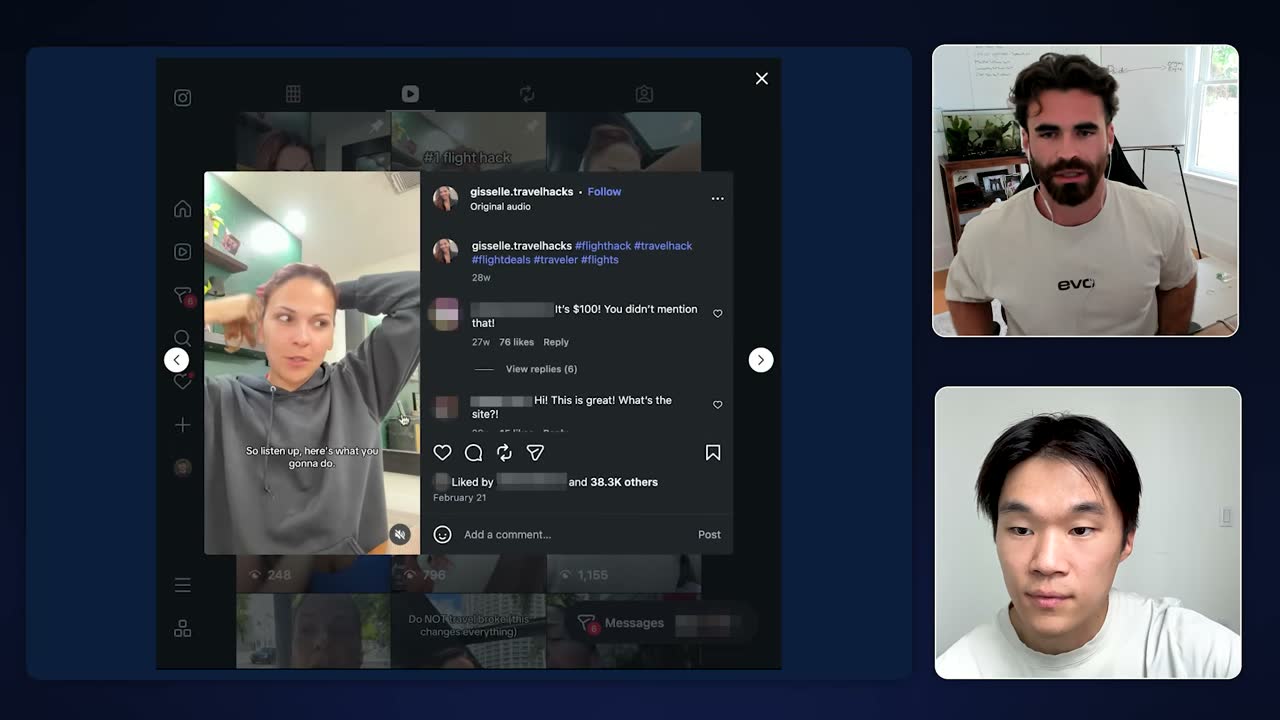
Instagram post by gisselle.travelhacks with 38.3K likes, using a ponytail visual hook.

The 1 Billion Views Content Strategy Every App Should Steal in 2026
Ex-flight attendant creators open with a credential and list tips, with the app as one tip. The flightcheatcode.com redirect domain attributes installs to organic videos.
Jetpack cast ex-flight attendants because flights are a considered purchase. Travel is bought weeks ahead, so Jetpack used creators with real expertise and opened each video with the credential, then listed tips. Impulse products like Dupe.com and Bible BFF used relatable creators sharing a pain point instead.
The hook the creators use: "I am credible because I'm an ex flight attendant. Here are tips that you need to know to get what you want." The rule is to match the hook and messaging to whether the product needs trust or relatability.
Jetpack's videos centered on the creator's tips, not on demoing the app. Flight savings is a boring product on screen, so the videos focus on the result and the creator's credibility, with the app appearing as one tip in a list.
By contrast, Bible BFF car videos that show people using the product were still performing months after posting. Showing the product pays off only when the product itself is viral, which tends to be more Gen Z.
Jetpack used a benefit-led redirect URL, flightcheatcode.com, to attribute organic installs. Because the Jetpack name means nothing to viewers, the team made flightcheatcode.com, which redirects to the app. It is easy to say, tells viewers the value, and gives clean organic attribution.
Attribution matters when paid ads, other agencies and in-house creators all run at once. The same approach was used a couple of weeks before the recording for SMB Market (buyabusiness.com). It is not needed for brands people already know, like Polymarket.
Instagram post by gisselle.travelhacks with 38.3K likes, using a ponytail visual hook.
More in Travel
 Travel
Airbnb
A marketplace where hosts list unique homes and travelers book stays in 220 countries.



 46 sources · 87 tips
 Travel
Uber
A ride-hailing app that connects riders with nearby drivers.

 27 sources · 65 tips
 Travel
Lyft
A ride-hailing app connecting riders with drivers, positioned as a semi-managed marketplace.
7 sources · 14 tips Travel
Waymo
A fully driverless ride-hailing service that operates autonomous cars in select US cities.
8 sources · 12 tips Travel
Southwest Airlines
A low-cost US airline that flies only Boeing 737s and focuses on short-haul routes.
 4 sources · 22 tips
 Travel
AllTrails
A trail discovery and navigation app for hiking, trail running, mountain biking and backpacking.
4 sources · 20 tips Travel
BYHOURS
A booking platform for regular hotel rooms rented by the hour for short stays.
 1 source · 12 tips
 Travel
Nomad Table
A solo travel app where users post activities and nearby travelers get notified and can join.
1 source · 16 tips