
Nomad Table
A solo travel app where users post activities and nearby travelers get notified and can join.
A solo founder passed a million downloads and about $65k a month almost entirely through organic UGC, with 60 to 70 creators drawing 30 to 44 million views monthly. He proved formats on his own account first, tracked the share watching past 3 seconds, and paid $1 to $2 CPM. Lesson: test formats yourself, then hand creators only proven ones.
- 1Jay tests formats himselfFirst 50-100k downloads from own videos
- 2Hand creators only hitsAll the flopping's done on his end
- 360-70 creators post dailyEach gets about one viral video monthly
- 430-44M views a monthPaid $1-2 per thousand views, uncapped
- 5Past a million downloadsNo team or funding
From Nomad Table founder Jay, podcast interview
What was said about Nomad Table
1The founder-first UGC machine behind a million downloads
Prove formats on your own account before paying any creator. Jay got Nomad Table's first 50 to 100k downloads from his own videos and only started hiring creators in April, once his formats worked repeatedly.
He keeps doing all the testing and hands creators only the formats that hit, so they follow a recipe that is close to guaranteed to earn. "I only have my creators remake the ones that hit like all the flopping's done on my end." He allows some creative freedom so creators stay motivated, though their own ideas usually flop.
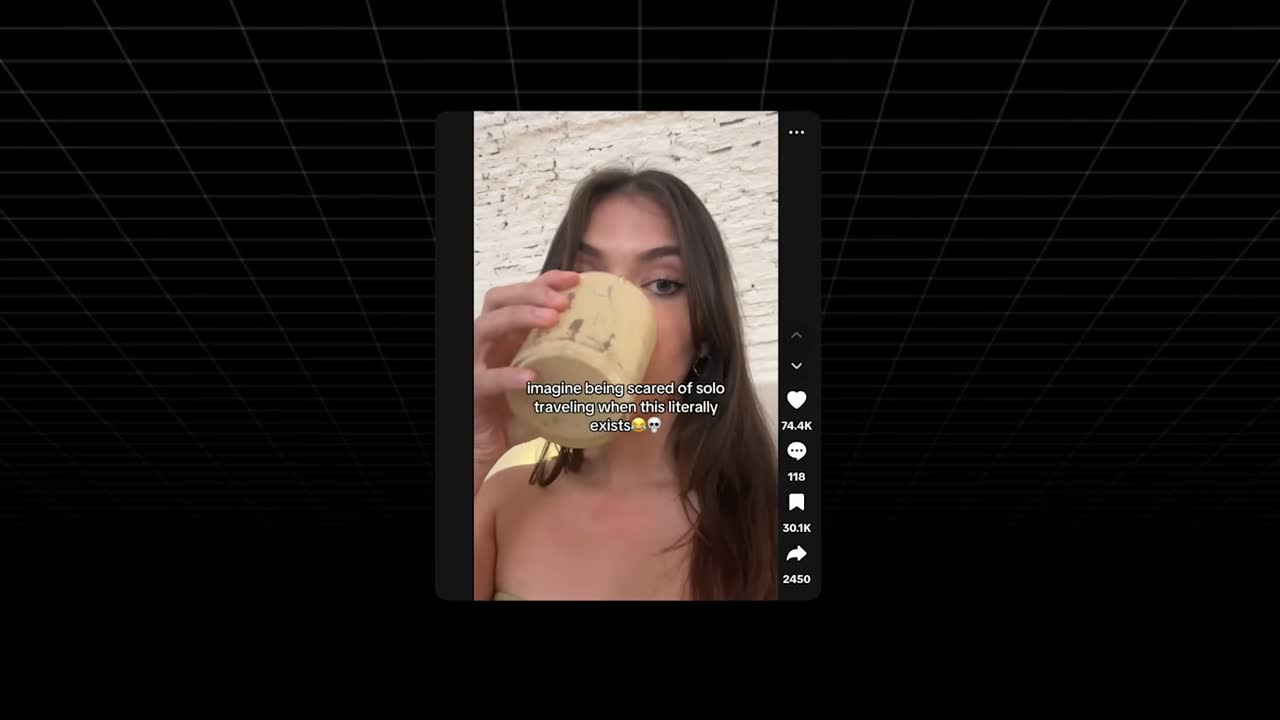
Example TikTok hook "imagine being scared of solo traveling when this literally exists" drew 74.4K likes, 30.1K saves. Many creators posting proven formats turn viral luck into steady hits. With 60 to 70 creators posting daily on TikTok and Instagram, each account gets about one viral video a month and the network makes 30 to 44 million views a month. That carried the app past a million downloads with no team or funding.
Luck still matters: Jay once posted for a month at 81% past 3 seconds with nothing going viral. Viral videos keep pulling views for months, and one kept picking up views for a whole year, so hits stack up. "With that many people it's pretty hard to not go viral once a week if you have a good format."
Pay creators $1 to $2 per thousand views, uncapped. Jay pays about 60 creators mostly on views with no retainer, at $1 to $2 CPM, which stays far cheaper than paid ads. His top payout was about $8,000 in a month for around 8 million views, likely from one video.
View-based deals only work once creators believe the app gets views, so show them your own account or other viral videos; if you can't, start with retainers. He counts views on old posts for about 3 months and never caps payouts, because the subscriptions repay them. The highest CPM he has seen offered elsewhere was $3.
Stay a top creator so creators take your feedback seriously. Jay has been the top views poster for 2 to 3 months while managing 60 to 70 creators alone through a WhatsApp group and one-on-one chats.
He spends most of his time there because, in his words, with apps like this distribution is everything. "I think it motivates them a bit more when they see me as the founder getting in the trenches as well."
2Judging a format: 3-second retention and the view trap
A format holding 75 to 80% past 3 seconds will go viral eventually. Jay judges formats by the share of Instagram viewers who watch past 3 seconds, alongside engagement; all his good formats hold at least 70%, with average watch time of 6 to 10 seconds.
On TikTok a good format gets at least 4 to 5k views per video consistently; if it keeps landing under about 5k, he drops it. These thresholds come from his own niche and he says they may not carry over.
Clickbait hooks the product can't pay off bring empty views. A hook like "some girl showed me this. I'm never staying in a hostel again" held watch time, so Instagram pushed it, but a 300k-view video got only 174 likes and 8 comments.
Viewers expected something gross and got an app demo. He posted that style hundreds of times, and other creators' downloads hid whether it worked, though a few multi-million-view posts still drove downloads. "Don't fall down the view trap."
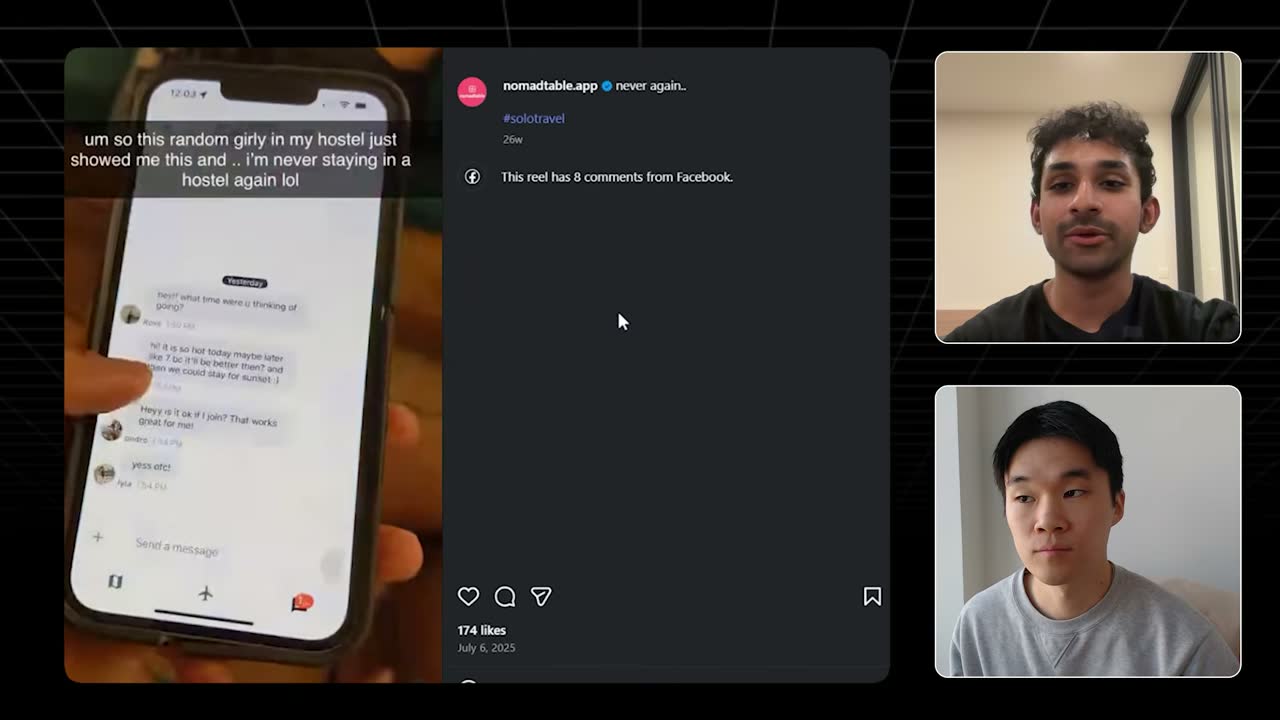
Nomad Table's clickbait hostel reel drew about 300k views but only 174 likes, showing weak engagement. Pick formats any creator can film anywhere. The hostel-set videos stopped the scroll because the background instantly said hostel, but every clip required being in a hostel, so Jay dropped the format when his trip ended.
"I'm not going to have all my creators stay in hostels."
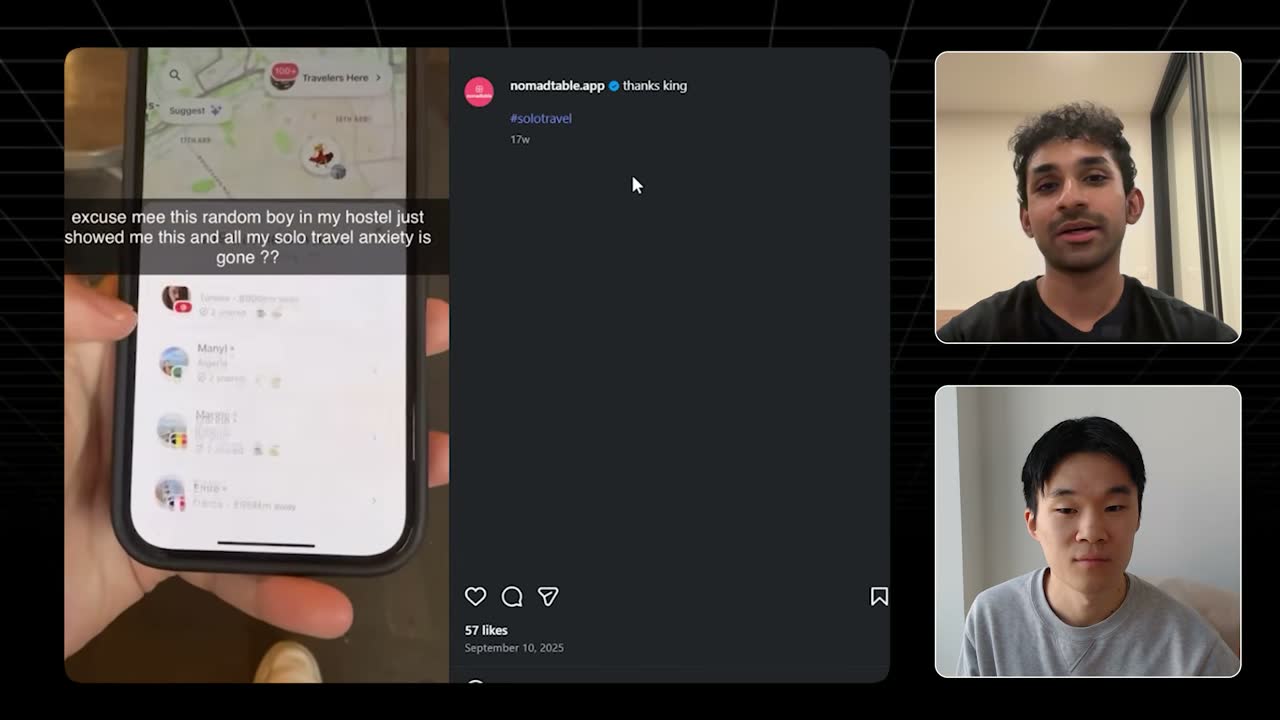
Nomad Table Instagram post: hook text over an app demo showing nearby travelers, 57 likes.
3The hook-then-demo video format
A borrowed text hook followed straight by the app demo works across creators. Jay's first viral video opened with "I've been solo traveling for 2 years and now I find out about this" and a facepalm, then cut to a phone demoing activity planning. A creator's version later reached 74,000 likes and 30,000 bookmarks.
He copied the hook from another niche and swapped in solo traveling, and shot it before launch when the app was only open for pre-order. A good text hook carries even when the creator isn't a strong actor.
Specific real details make an organic promo feel believable. The first viral video closed with a line about the most unsocial hostel in Thailand, and viewers engaged and asked about the app.
Jay says naming the exact hostel would have made it even more real. "When you add details about things, it makes stuff more believable."
4Solving the cold start with a waitlist and building in public
- 1Build in public pre-launchFace, story and every signup milestone
- 2Waitlist of 12-15kMany were fans of Jay personally
- 3About 6k join day oneUsers spread worldwide
- 410-20 users per big cityTwo people in a place is enough
From Nomad Table founder Jay, podcast interview
A pre-launch waitlist gave the social app density on day one. Jay built a waitlist of about 12 to 15k people; about 6k got the app on day one, and big cities like Barcelona had 10 to 20 people each.
Without critical mass a social app becomes "a revolving door." Because Nomad Table works with just two people in a place, users spread worldwide was enough. He recommends Andrew Chen's The Cold Start Problem.
Founder-led content created early users who wanted him to win. Early videos showed Jay's face, his story and every signup milestone, and many of the first 6k users were fans of him personally who stuck around through an imperfect launch.
He says he should do more of it again. "If people want you to win, stuff will probably end up being okay."
5The product and why it skips ads and paid acquisition
Nomad Table recreates hostel social life without the hostel. Users post an activity, from drinks to sightseeing, and nearby travelers get notified and can join. The idea came from a solo trip where meeting people was the best part.
Hostels make meeting people easy but mean sharing rooms with eight people, and some are far less social than others.
Jay trades revenue per user for a larger user base. The app makes about $65k a month from weekly, monthly and annual subscriptions ($69.99 a year); he says adding ads could easily push it past $100k but refuses to protect app quality.
He knew a social app would have lower ARPU than a hard paywall app and believes a big user base can be monetized later.
Low ARPU social apps shouldn't rely on paid ads. With low revenue per user, even cheap downloads rarely pay back, so Nomad Table's cold traffic is entirely organic TikTok and Instagram, and word of mouth brings 10 to 15% of new users.
Paid ads may help at the very start with the cold start, but not long term, unlike high-ARPU categories such as betting. The word-of-mouth share is an estimate from an onboarding question.

Copy This UGC Strategy, It'll Make Your App Go Viral
Reached over a million downloads and about $65k a month as a solo founder, almost entirely from organic UGC across 60 to 70 creators making 30 to 44 million views a month. Plans are weekly, monthly and annual ($69.99 a year), and word of mouth brings 10 to 15% of new users.
Prove formats on your own account before paying any creator. Jay got Nomad Table's first 50 to 100k downloads from his own videos and only started hiring creators in April, once his formats worked repeatedly.
He keeps doing all the testing and hands creators only the formats that hit, so they follow a recipe that is close to guaranteed to earn. "I only have my creators remake the ones that hit like all the flopping's done on my end." He allows some creative freedom so creators stay motivated, though their own ideas usually flop.
Example TikTok hook "imagine being scared of solo traveling when this literally exists" drew 74.4K likes, 30.1K saves. Many creators posting proven formats turn viral luck into steady hits. With 60 to 70 creators posting daily on TikTok and Instagram, each account gets about one viral video a month and the network makes 30 to 44 million views a month. That carried the app past a million downloads with no team or funding.
Luck still matters: Jay once posted for a month at 81% past 3 seconds with nothing going viral. Viral videos keep pulling views for months, and one kept picking up views for a whole year, so hits stack up. "With that many people it's pretty hard to not go viral once a week if you have a good format."
Pay creators $1 to $2 per thousand views, uncapped. Jay pays about 60 creators mostly on views with no retainer, at $1 to $2 CPM, which stays far cheaper than paid ads. His top payout was about $8,000 in a month for around 8 million views, likely from one video.
View-based deals only work once creators believe the app gets views, so show them your own account or other viral videos; if you can't, start with retainers. He counts views on old posts for about 3 months and never caps payouts, because the subscriptions repay them. The highest CPM he has seen offered elsewhere was $3.
Stay a top creator so creators take your feedback seriously. Jay has been the top views poster for 2 to 3 months while managing 60 to 70 creators alone through a WhatsApp group and one-on-one chats.
He spends most of his time there because, in his words, with apps like this distribution is everything. "I think it motivates them a bit more when they see me as the founder getting in the trenches as well."
A format holding 75 to 80% past 3 seconds will go viral eventually. Jay judges formats by the share of Instagram viewers who watch past 3 seconds, alongside engagement; all his good formats hold at least 70%, with average watch time of 6 to 10 seconds.
On TikTok a good format gets at least 4 to 5k views per video consistently; if it keeps landing under about 5k, he drops it. These thresholds come from his own niche and he says they may not carry over.
Clickbait hooks the product can't pay off bring empty views. A hook like "some girl showed me this. I'm never staying in a hostel again" held watch time, so Instagram pushed it, but a 300k-view video got only 174 likes and 8 comments.
Viewers expected something gross and got an app demo. He posted that style hundreds of times, and other creators' downloads hid whether it worked, though a few multi-million-view posts still drove downloads. "Don't fall down the view trap."
Nomad Table's clickbait hostel reel drew about 300k views but only 174 likes, showing weak engagement. Pick formats any creator can film anywhere. The hostel-set videos stopped the scroll because the background instantly said hostel, but every clip required being in a hostel, so Jay dropped the format when his trip ended.
"I'm not going to have all my creators stay in hostels."
Nomad Table Instagram post: hook text over an app demo showing nearby travelers, 57 likes. A borrowed text hook followed straight by the app demo works across creators. Jay's first viral video opened with "I've been solo traveling for 2 years and now I find out about this" and a facepalm, then cut to a phone demoing activity planning. A creator's version later reached 74,000 likes and 30,000 bookmarks.
He copied the hook from another niche and swapped in solo traveling, and shot it before launch when the app was only open for pre-order. A good text hook carries even when the creator isn't a strong actor.
Specific real details make an organic promo feel believable. The first viral video closed with a line about the most unsocial hostel in Thailand, and viewers engaged and asked about the app.
Jay says naming the exact hostel would have made it even more real. "When you add details about things, it makes stuff more believable."
A pre-launch waitlist gave the social app density on day one. Jay built a waitlist of about 12 to 15k people; about 6k got the app on day one, and big cities like Barcelona had 10 to 20 people each.
Without critical mass a social app becomes "a revolving door." Because Nomad Table works with just two people in a place, users spread worldwide was enough. He recommends Andrew Chen's The Cold Start Problem.
Founder-led content created early users who wanted him to win. Early videos showed Jay's face, his story and every signup milestone, and many of the first 6k users were fans of him personally who stuck around through an imperfect launch.
He says he should do more of it again. "If people want you to win, stuff will probably end up being okay."
Nomad Table recreates hostel social life without the hostel. Users post an activity, from drinks to sightseeing, and nearby travelers get notified and can join. The idea came from a solo trip where meeting people was the best part.
Hostels make meeting people easy but mean sharing rooms with eight people, and some are far less social than others.
Jay trades revenue per user for a larger user base. The app makes about $65k a month from weekly, monthly and annual subscriptions ($69.99 a year); he says adding ads could easily push it past $100k but refuses to protect app quality.
He knew a social app would have lower ARPU than a hard paywall app and believes a big user base can be monetized later.
Low ARPU social apps shouldn't rely on paid ads. With low revenue per user, even cheap downloads rarely pay back, so Nomad Table's cold traffic is entirely organic TikTok and Instagram, and word of mouth brings 10 to 15% of new users.
Paid ads may help at the very start with the cold start, but not long term, unlike high-ARPU categories such as betting. The word-of-mouth share is an estimate from an onboarding question.
More in Travel
 Travel
Airbnb
A marketplace where hosts list unique homes and travelers book stays in 220 countries.



 46 sources · 87 tips
 Travel
Uber
A ride-hailing app that connects riders with nearby drivers.

 27 sources · 65 tips
 Travel
Lyft
A ride-hailing app connecting riders with drivers, positioned as a semi-managed marketplace.
7 sources · 14 tips Travel
Waymo
A fully driverless ride-hailing service that operates autonomous cars in select US cities.
8 sources · 12 tips Travel
Southwest Airlines
A low-cost US airline that flies only Boeing 737s and focuses on short-haul routes.
 4 sources · 22 tips
 Travel
AllTrails
A trail discovery and navigation app for hiking, trail running, mountain biking and backpacking.
4 sources · 20 tips Travel
BYHOURS
A booking platform for regular hotel rooms rented by the hour for short stays.
 1 source · 12 tips
 Travel
onX
A maker of outdoor navigation apps with land boundary maps for hunting, off-roading, backcountry skiing and fishing.
1 source · 16 tips