
Bible BFF
A Bible app that narrates Bible stories, aimed at Gen Z.
Bible BFF, a Bible app that narrates stories for Gen Z, grew on TikTok with relatable creators sharing a pain point and videos showing the product in use, such as listening in the car. A December 11th video was still performing months later. Lesson: for impulse products, use relatable creators, show the product if it is naturally viral, and repost creator winners via collab posts.
- 1Relatable creator postsShares the audience's pain point
- 2Video shows app in useLike listening to stories in the car
- 3Video hits ~20,000 viewsThe signal it's a winner
- 4Repost as Instagram collabOn the brand's main page
- 5Both gain extra viewsOriginal views are not hurt
From Bible BFF growth notes
What was said about Bible BFF
Bible BFF builds its videos around people actually using the app. Because the app is an impulse buy and naturally viral, its videos show it in use, such as people listening to Bible stories in the car. Those car videos were still performing months after posting, and a December 11th video is still going.
The rule given is to show the product only when the product itself is viral. For dull products like flight savings or business buying, the demo screens are boring, so those brands lead with the result and the creator's credibility instead.
Relatable creators on TikTok suit a Gen Z impulse purchase. Bible BFF cast relatable creators who share the audience's pain point, rather than credentialed experts. This fits an impulse buy, unlike considered purchases such as travel, where Jetpack opened with ex-flight attendants.
Platform follows audience age. Bible BFF and shopping apps blow up on TikTok, which reaches 18 to 25 year olds. Facebook and Instagram suit older audiences of 30 to 40 year olds.
Bible BFF reposts winning creator videos on its own brand page. When a creator video reaches about 20,000 views, it gets reposted on the brand's main page, preferably as an Instagram collab post. Bible BFF and Dupe.com both do this and the reposts still go viral.
Reposting does not hurt the original views. The video can pick up additional views, and the brand page benefits too.
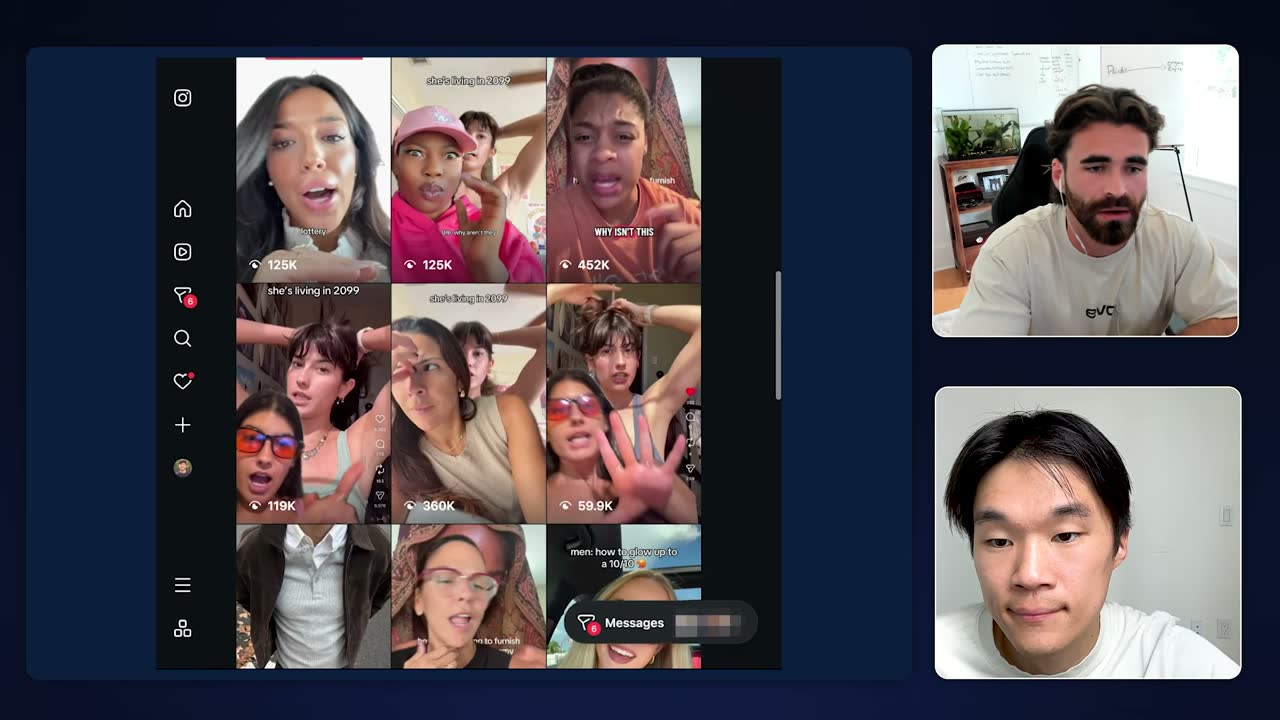
Dup's Instagram grid of green-screen reaction videos, drawing between 59.9K and 452K views each.

The 1 Billion Views Content Strategy Every App Should Steal in 2026
An impulse-buy product that is naturally viral, so videos show it in use, such as listening in the car. A December 11th video is still performing and the brand reposts creator videos.
Bible BFF builds its videos around people actually using the app. Because the app is an impulse buy and naturally viral, its videos show it in use, such as people listening to Bible stories in the car. Those car videos were still performing months after posting, and a December 11th video is still going.
The rule given is to show the product only when the product itself is viral. For dull products like flight savings or business buying, the demo screens are boring, so those brands lead with the result and the creator's credibility instead.
Relatable creators on TikTok suit a Gen Z impulse purchase. Bible BFF cast relatable creators who share the audience's pain point, rather than credentialed experts. This fits an impulse buy, unlike considered purchases such as travel, where Jetpack opened with ex-flight attendants.
Platform follows audience age. Bible BFF and shopping apps blow up on TikTok, which reaches 18 to 25 year olds. Facebook and Instagram suit older audiences of 30 to 40 year olds.
Bible BFF reposts winning creator videos on its own brand page. When a creator video reaches about 20,000 views, it gets reposted on the brand's main page, preferably as an Instagram collab post. Bible BFF and Dupe.com both do this and the reposts still go viral.
Reposting does not hurt the original views. The video can pick up additional views, and the brand page benefits too.
Dup's Instagram grid of green-screen reaction videos, drawing between 59.9K and 452K views each.
More in Lifestyle
 Lifestyle
Drunk Mode
A nightlife app that helps students find parties while staying safe with friends.
 2 sources · 26 tips
 Lifestyle
Gojek
An Indonesian super app for ride hailing, food delivery, payments and many other on-demand services.
 2 sources · 23 tips
 Lifestyle
Thumbtack
A marketplace connecting homeowners with local service professionals for home projects.
7 sources · 10 tips Lifestyle
Hermes
A French luxury house making handcrafted leather goods, silk scarves and clothing, run by the Dumas family.
 2 sources · 18 tips
 Lifestyle
Houzz
A home remodeling and design app and marketplace connecting homeowners with products and professionals.
 2 sources · 5 tips
 Lifestyle
Life360
A family safety app that locates and protects people, pets and things through shared circles.
 2 sources · 19 tips
 Lifestyle
Purpose
An AI mentor app for personal growth, co-founded by Mark Manson, that pushes back on users.
 2 sources · 17 tips
Caveman
A paid app giving men one romantic tip for every day of the year.
1 source · 9 tips