
BlackBerry
A maker of phones with physical keyboards, popular before the iPhone.
BlackBerry appears in two lessons. Only 1% or 2% of phone users owned one, a loyal niche the iPhone team chose not to serve, with Steve Jobs settling the keyboard debate when data gave no answer. Lexicon's BlackBerry name was first dismissed by its founder, then stood out for its pair of Bs. Lesson: judge bold choices by what they signal, not first reactions.
From Tony Fadell on the iPhone team's debate
What was said about BlackBerry
The iPhone team weighed BlackBerry's loyal niche against the other 98% of phone users. Only 1% or 2% of mobile phone users had a BlackBerry, which Tony Fadell calls really just a texting machine. The iPhone team debated serving that loyal niche versus the other 98%.
The debate was over whether to build for physical-keyboard fans or for everyone else, and it came down to the keyboard question.
For a new category, put one or two tastemakers in charge of 1.0 calls. The iPhone keyboard debate had no clear data either way, and Steve Jobs made the call for a virtual keyboard over BlackBerry's physical one. Fadell's advice is to give one or two people ownership, back them with prototypes and expert input to form an informed gut, and explain why each call was made.
Be ready to correct later and take the heat. Fadell's view on data: "If you try to do data-driven decisions all the way along, you're either not doing a differentiated product because you're taking data from another thing or you're just getting just data." A new category has few analogs, so most decisions have to be opinion-based.
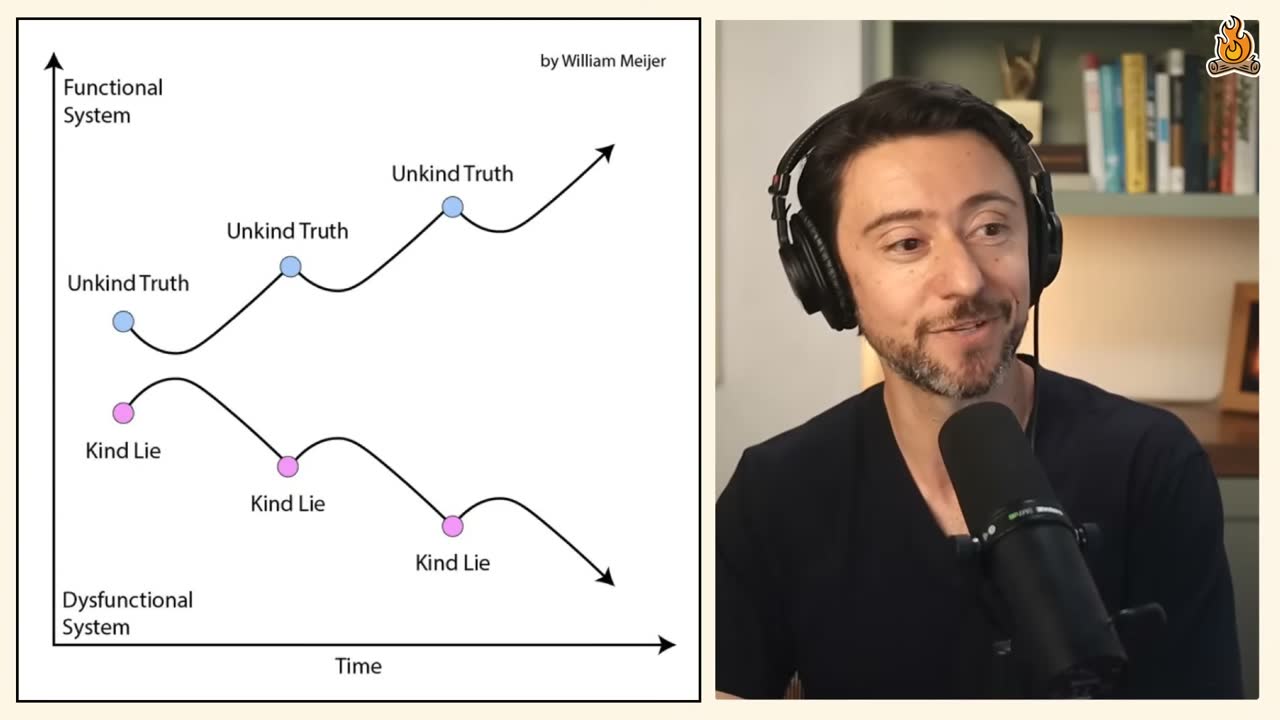
William Meijer's chart: repeated unkind truths build functional systems, while kind lies lead to dysfunction.

Tony Fadell: How to build real taste (and why AI makes it matter more)
Only 1% or 2% of mobile phone users had a BlackBerry, which Tony calls really just a texting machine. The iPhone team debated serving that loyal niche versus the other 98%.
The iPhone team weighed BlackBerry's loyal niche against the other 98% of phone users. Only 1% or 2% of mobile phone users had a BlackBerry, which Tony Fadell calls really just a texting machine. The iPhone team debated serving that loyal niche versus the other 98%.
The debate was over whether to build for physical-keyboard fans or for everyone else, and it came down to the keyboard question.
For a new category, put one or two tastemakers in charge of 1.0 calls. The iPhone keyboard debate had no clear data either way, and Steve Jobs made the call for a virtual keyboard over BlackBerry's physical one. Fadell's advice is to give one or two people ownership, back them with prototypes and expert input to form an informed gut, and explain why each call was made.
Be ready to correct later and take the heat. Fadell's view on data: "If you try to do data-driven decisions all the way along, you're either not doing a differentiated product because you're taking data from another thing or you're just getting just data." A new category has few analogs, so most decisions have to be opinion-based.
William Meijer's chart: repeated unkind truths build functional systems, while kind lies lead to dysfunction.
Naming expert shares process for creating billion-dollar brands: Vercel, Azure, Windsurf, Sonos
The founder first thought Lexicon was crazy. Pointing out the assets, such as the reliable pair of Bs, made people lean in, and the name told the market they were not like the other guys.
More in Other
 Other
Apple
A consumer technology company that makes the Mac, iPod, iPhone and software.



 74 sources · 200 tips
 Other
Google's web search product, now including AI Overviews, AI Mode and Lens.
 47 sources · 97 tips
 Other
Google Play
Google's app store for Android, with its own listing rules and search ranking.
 18 sources · 49 tips
Standard Oil
John D. Rockefeller's oil refining company that came to dominate American kerosene and oil distribution.
5 sources · 48 tips Other
TSMC
The world's leading contract chip maker, a pure-play foundry that manufactures chips for fabless designers.
6 sources · 32 tips Other
Tesla
An electric car maker that builds its own key components and factories.
13 sources · 23 tips Other
Intel
A semiconductor company that made memory chips and the first microprocessor.
10 sources · 20 tips Other
SpaceX
A private aerospace company building reusable rockets, the Dragon capsule, Starship and the Starlink satellite network.
4 sources · 27 tips