Locked
A gamified focus and task app that uses XP and competition to keep Gen Z on task.
Locked, a gamified focus app, reached $14,000 a month mostly through manual creator outreach on view-based deals. One day-in-the-life video with about 1 million views earned at least $3,000 and the first $1,000 day. It converts a bit over 10% of downloads on a $30 annual or $7 weekly plan. Lesson: pay for views, keep CPM ($1 to $2) under RPM ($3 to $4), and vet creators by comments.
- 1Test channels cheaplyReddit, X, paid ads, influencers
- 2DM creators "paid promo?"5,000 to 10,000 DMs, 3-4% reply
- 3Pay by views$1-2 CPM, minimum view clause
- 4Show app in routineChecking off tasks within 15 seconds
- 5Pin "what's the app called?"Over $14,000 a month, almost no budget
From Evan Yadegari, Locked founder interview
What was said about Locked
1How Locked grew to $14,000 a month with creator videos
Test several channels cheaply, then go all in on the one that wins. Evan Yadegari, a 14-year-old high-school freshman, tried Reddit, X, paid ads and influencer marketing for Locked. Influencers were the clear winner and took the app to over $14,000 a month with almost no budget.
He tested channels himself instead of copying his older brother Zach, founder of Cal AI. His view on spending: "If you pay an influencer $500, maybe you're profitable, and if you're not, then you'll still learn." Retention, refunds, churn and total spend were never shown, so the real profit behind the $14,000 is unclear.
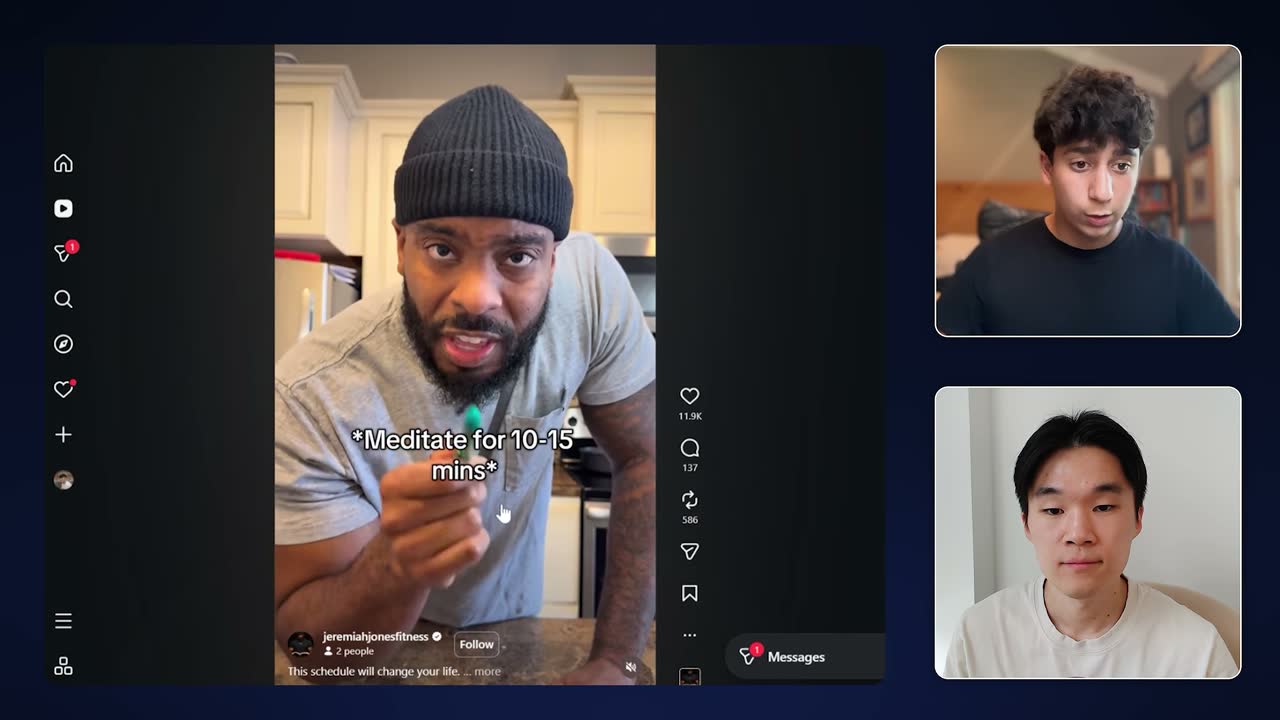
Example influencer reel by jeremiahjonesfitness (11.9K likes) showing the routine-style video that integrates the app. Pick creators whose normal format already shows your product in use. Of the gym, self-improvement and day-in-the-life creators he paid, day-in-the-life fit best, because creators already list tasks through the day and checking each off in Locked adds no extra ad step. A Jeremiah Jones video with about 1 million views across Instagram, Facebook and TikTok earned at least $3,000 and brought Locked's first $1,000 day.
The hook was "this schedule will keep you locked in for 2026"; he walked through an ideal day, opening the app and typing each task. "When the Gen Z audience sees them checking off tasks on a gamified app, getting XP, competing with others, they're intrigued."
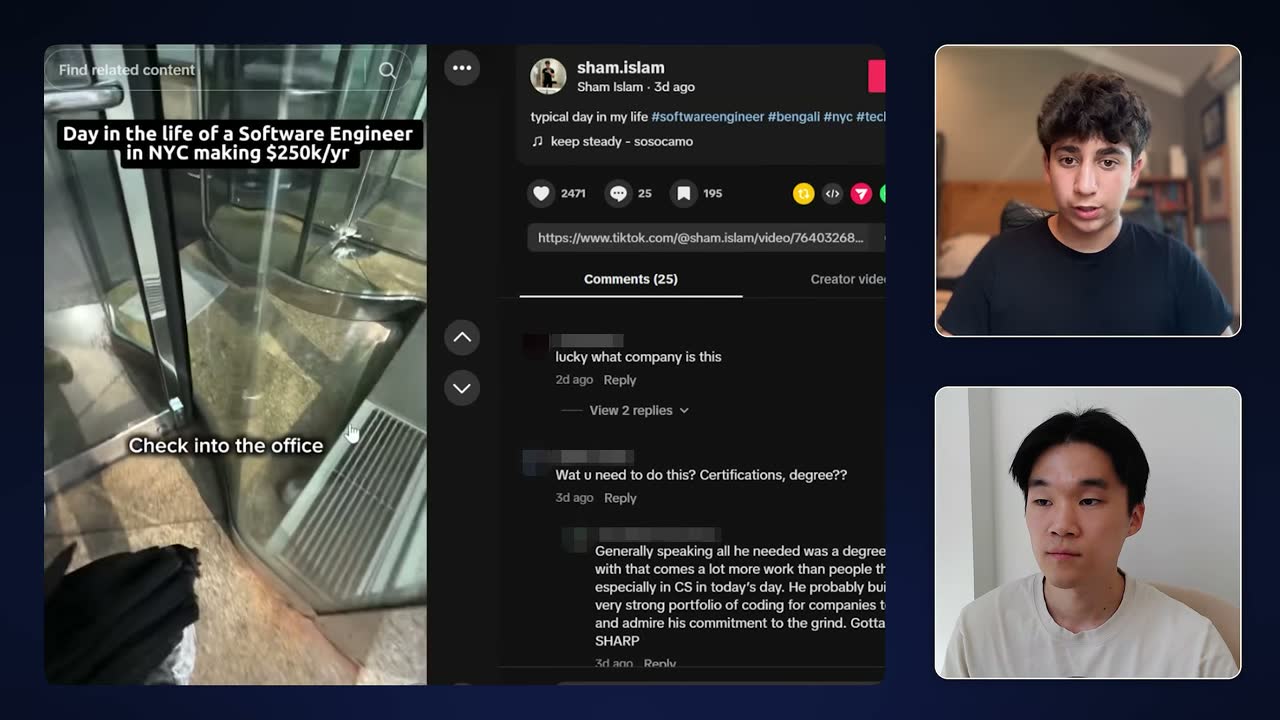
TikTok "Day in the life of a Software Engineer in NYC making $250k/yr" video with 2,471 likes and comments.
2Finding and pitching creators
Choose creators by views per video and real comments, not followers. He looks for creators pulling 5,000 to millions of views per video and skips anyone under about 5,000, whatever their follower count. Good comments are on-topic, ask questions, get likes and have viewers replying to each other; a pile of emoji-only comments signals a weak audience.
His biggest early mistake was paying creators with poor comments because he only checked followers and views. "Followers don't matter at all. It's mainly just engagement rates and also the amount of views the creators pull."
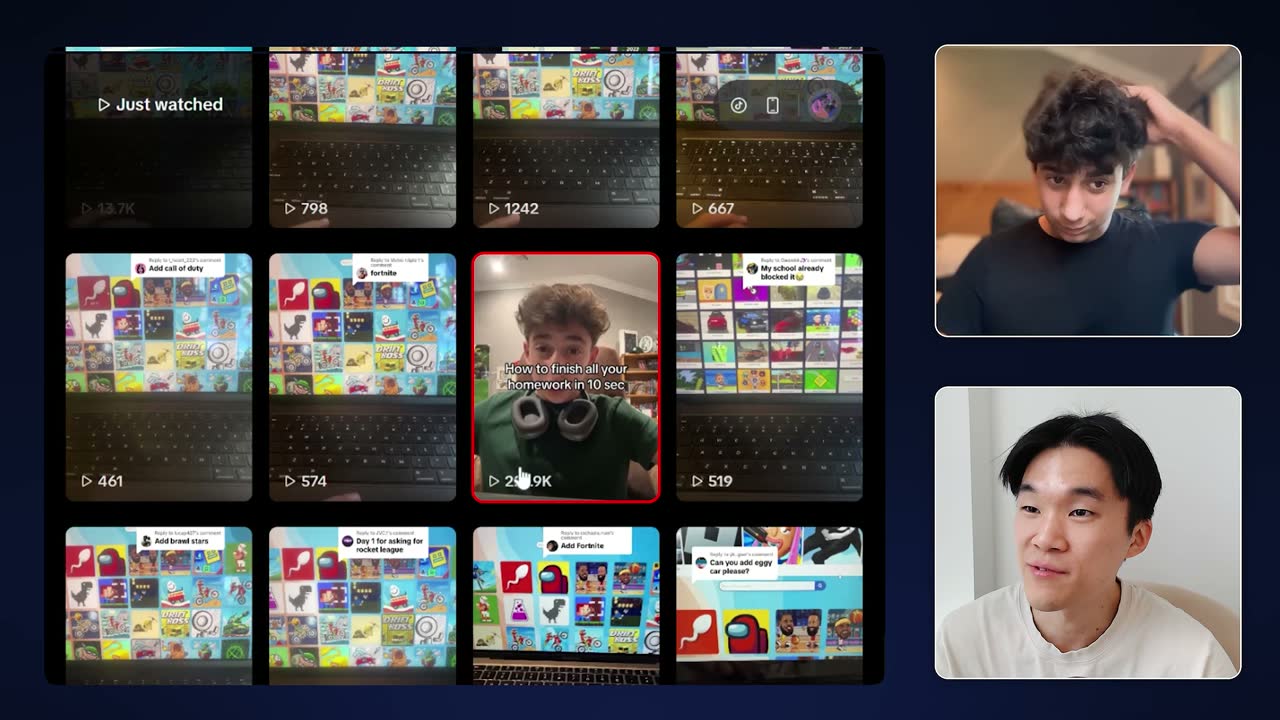
TikTok account grid showing the Problem Pal "finish all your homework in 10 sec" video, ~200K views. Plan for thousands of manual DMs from several verified accounts. Reply rates run about 3 to 4% on Instagram and about 2% on TikTok, so he sent at least 5,000 to 10,000 DMs, up to 500 a day at peak. Instagram caps each account at about 100 DMs a day, so the team ran multiple accounts.
Creators were found by searching niche terms like gym, self-improvement or day in the life. Each outreach account was bought over 1,000 followers and verified so it would not look suspicious; the Instagram reply rate assumes that setup.
Open with "paid promo?" and push every creator onto a call. The word "promo" makes creators stop in a crowded inbox. The follow-up says he is the founder of Locked, partnering with a select group of day-in-the-life or self-improvement creators, and asks to hop on a call to discuss a deal.
Creators often reply "let's discuss over DMs" and he still pushes for a call, since it builds the relationship before negotiating the deal structure. "I would almost never negotiate over DMs unless I absolutely have to."
3Deal structures and the view math behind them
- 1About 10 downloads per subA bit over 10% convert
- 2Sell $30 annual, $7 weeklySubscription plans
- 3Earn $3-4 per 1,000 viewsRevenue per thousand views
- 4Pay creators $1-2 CPMHard cap, such as $500
From Evan Yadegari, Locked founder interview
Pay creators a CPM below what a thousand views earns you. Locked converts a bit over 10% of downloads to subscribers, about 10 downloads per sub, on a $30 annual or $7 weekly plan, giving revenue per thousand views of about $3 to $4. He keeps CPMs at about $1 to $2.
CPM deals pay $1 to $2 per thousand views with a hard cap, such as $500, so a viral video cannot blow the budget.
Make a minimum view clause deal your default structure. Pay a flat fee per post, such as $1,000 for 500,000 views, and the creator keeps posting until videos collectively hit the total. The view target is set from a $1 to $2 CPM, so an $800 deal gets a 400,000 to 800,000 view clause.
If a creator wants to stop early, he pays in proportion: on a $400 deal with a 400,000 view clause, 50,000 views earns $50, which keeps the full amount as the target. He calls this his favorite of the four structures.
Add a view bonus to any deal, and pay flat only for proven creators. The bonus deal pays $250 up front plus $250 more if the video reaches 250,000 views, and can be combined with standard, CPM or minimum view deals. Flat standard deals, $500 for one video or $1,200 for four, are reserved for creators who reliably pull huge views.
4Making a sponsored video sell without looking like an ad
Require the app to appear within the first 15 seconds. Earlier looks like an ad, and later hurts because viewers have already left. Beyond that rule, creators get a fair amount of creative freedom and send the post for approval before it goes live.
Seed and pin a "what's the app called?" comment on every video. A personal account comments something like "I need this. What's the app called?", the creator replies with the name and pins it. The videos carry no explicit "download this" line.
The app name also appears big and bold in the top left when the first task opens, so curious viewers find it from the screen or the comments.
Match download spikes to post timing, then renew winning creators. Instagram allows no direct link attribution, so he lines up each post against download and revenue spikes. Profitable creators get the same deal renewed, then a bigger one negotiated.
Spike-watching cannot show which creator drove which sale when posts overlap.
5How Locked was conceived and built
Gamify a real pain point so the product is both useful and demoable. Locked came from a friend who couldn't stay focused, and applies the XP and competition that make video games addictive to staying on task. The gamified flow is also what makes it visual enough for creator videos.
He advises starting from problems you or people like you face with a big enough market; trend apps like party games can work, but people pay to solve problems. He points to teens' hours on social media and the "brain rot" aimed at them.
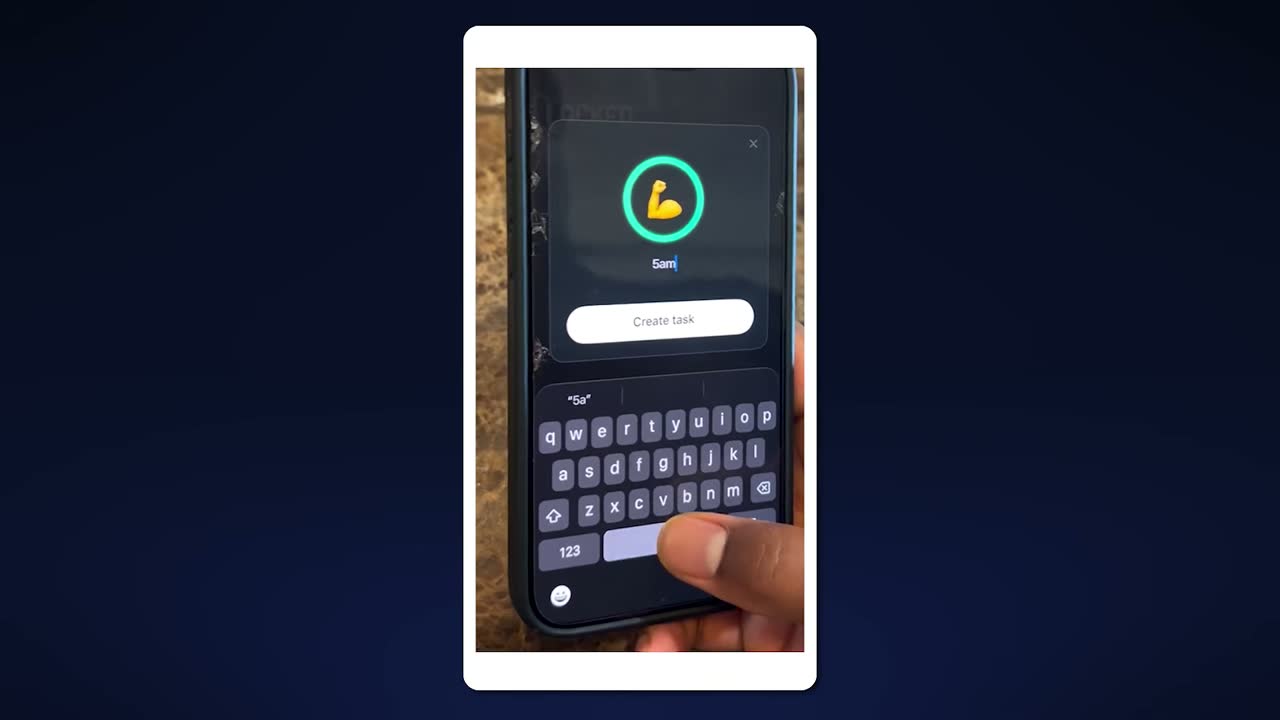
Locked app demo: creating a "5am" task with a flexed-bicep goal icon. Design screens in Figma, then have Claude build the prototype. Evan and his co-founder scoped onboarding and the main screens in Figma, finalized them, and fed them to Claude to generate a prototype. After that came constant iteration: plugging in keys, fixing bugs, improving UX and UI.
Evan never learned to code; his background was content, including growing the Totally Science account from about 30K to almost 100K followers and a first app, Problem Pal, that reached $2,000 a month.
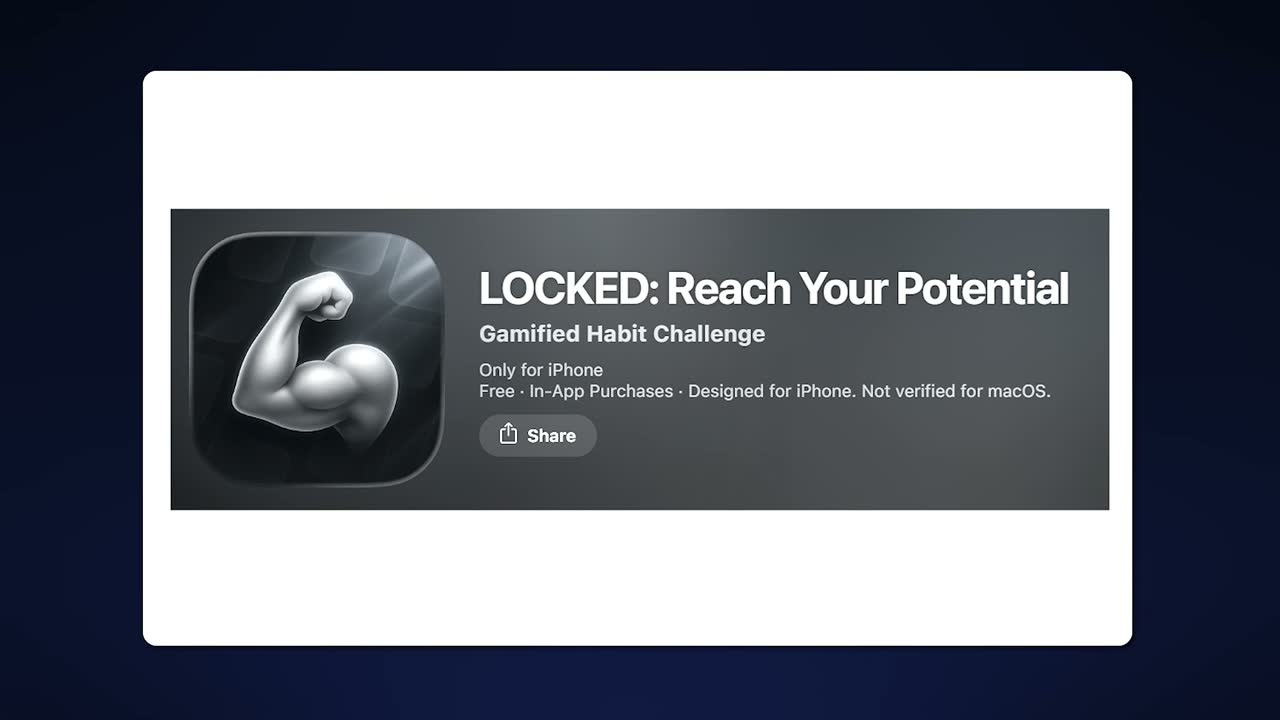
App Store listing for LOCKED: Reach Your Potential, a free iPhone gamified habit challenge app.

The 14-Year-Old Who Built a $14k/Month AI App
Scaled to $14,000 a month mainly through manual influencer outreach with view-based deals. One day-in-the-life video with about 1 million views earned at least $3,000 and brought its first $1,000 day. It converts a bit over 10% of downloads to subscribers on a $30 annual or $7 weekly plan.
Test several channels cheaply, then go all in on the one that wins. Evan Yadegari, a 14-year-old high-school freshman, tried Reddit, X, paid ads and influencer marketing for Locked. Influencers were the clear winner and took the app to over $14,000 a month with almost no budget.
He tested channels himself instead of copying his older brother Zach, founder of Cal AI. His view on spending: "If you pay an influencer $500, maybe you're profitable, and if you're not, then you'll still learn." Retention, refunds, churn and total spend were never shown, so the real profit behind the $14,000 is unclear.
Example influencer reel by jeremiahjonesfitness (11.9K likes) showing the routine-style video that integrates the app. Pick creators whose normal format already shows your product in use. Of the gym, self-improvement and day-in-the-life creators he paid, day-in-the-life fit best, because creators already list tasks through the day and checking each off in Locked adds no extra ad step. A Jeremiah Jones video with about 1 million views across Instagram, Facebook and TikTok earned at least $3,000 and brought Locked's first $1,000 day.
The hook was "this schedule will keep you locked in for 2026"; he walked through an ideal day, opening the app and typing each task. "When the Gen Z audience sees them checking off tasks on a gamified app, getting XP, competing with others, they're intrigued."
TikTok "Day in the life of a Software Engineer in NYC making $250k/yr" video with 2,471 likes and comments. Choose creators by views per video and real comments, not followers. He looks for creators pulling 5,000 to millions of views per video and skips anyone under about 5,000, whatever their follower count. Good comments are on-topic, ask questions, get likes and have viewers replying to each other; a pile of emoji-only comments signals a weak audience.
His biggest early mistake was paying creators with poor comments because he only checked followers and views. "Followers don't matter at all. It's mainly just engagement rates and also the amount of views the creators pull."
TikTok account grid showing the Problem Pal "finish all your homework in 10 sec" video, ~200K views. Plan for thousands of manual DMs from several verified accounts. Reply rates run about 3 to 4% on Instagram and about 2% on TikTok, so he sent at least 5,000 to 10,000 DMs, up to 500 a day at peak. Instagram caps each account at about 100 DMs a day, so the team ran multiple accounts.
Creators were found by searching niche terms like gym, self-improvement or day in the life. Each outreach account was bought over 1,000 followers and verified so it would not look suspicious; the Instagram reply rate assumes that setup.
Open with "paid promo?" and push every creator onto a call. The word "promo" makes creators stop in a crowded inbox. The follow-up says he is the founder of Locked, partnering with a select group of day-in-the-life or self-improvement creators, and asks to hop on a call to discuss a deal.
Creators often reply "let's discuss over DMs" and he still pushes for a call, since it builds the relationship before negotiating the deal structure. "I would almost never negotiate over DMs unless I absolutely have to."
Pay creators a CPM below what a thousand views earns you. Locked converts a bit over 10% of downloads to subscribers, about 10 downloads per sub, on a $30 annual or $7 weekly plan, giving revenue per thousand views of about $3 to $4. He keeps CPMs at about $1 to $2.
CPM deals pay $1 to $2 per thousand views with a hard cap, such as $500, so a viral video cannot blow the budget.
Make a minimum view clause deal your default structure. Pay a flat fee per post, such as $1,000 for 500,000 views, and the creator keeps posting until videos collectively hit the total. The view target is set from a $1 to $2 CPM, so an $800 deal gets a 400,000 to 800,000 view clause.
If a creator wants to stop early, he pays in proportion: on a $400 deal with a 400,000 view clause, 50,000 views earns $50, which keeps the full amount as the target. He calls this his favorite of the four structures.
Add a view bonus to any deal, and pay flat only for proven creators. The bonus deal pays $250 up front plus $250 more if the video reaches 250,000 views, and can be combined with standard, CPM or minimum view deals. Flat standard deals, $500 for one video or $1,200 for four, are reserved for creators who reliably pull huge views.
Require the app to appear within the first 15 seconds. Earlier looks like an ad, and later hurts because viewers have already left. Beyond that rule, creators get a fair amount of creative freedom and send the post for approval before it goes live.
Seed and pin a "what's the app called?" comment on every video. A personal account comments something like "I need this. What's the app called?", the creator replies with the name and pins it. The videos carry no explicit "download this" line.
The app name also appears big and bold in the top left when the first task opens, so curious viewers find it from the screen or the comments.
Match download spikes to post timing, then renew winning creators. Instagram allows no direct link attribution, so he lines up each post against download and revenue spikes. Profitable creators get the same deal renewed, then a bigger one negotiated.
Spike-watching cannot show which creator drove which sale when posts overlap.
Gamify a real pain point so the product is both useful and demoable. Locked came from a friend who couldn't stay focused, and applies the XP and competition that make video games addictive to staying on task. The gamified flow is also what makes it visual enough for creator videos.
He advises starting from problems you or people like you face with a big enough market; trend apps like party games can work, but people pay to solve problems. He points to teens' hours on social media and the "brain rot" aimed at them.
Locked app demo: creating a "5am" task with a flexed-bicep goal icon. Design screens in Figma, then have Claude build the prototype. Evan and his co-founder scoped onboarding and the main screens in Figma, finalized them, and fed them to Claude to generate a prototype. After that came constant iteration: plugging in keys, fixing bugs, improving UX and UI.
Evan never learned to code; his background was content, including growing the Totally Science account from about 30K to almost 100K followers and a first app, Problem Pal, that reached $2,000 a month.
App Store listing for LOCKED: Reach Your Potential, a free iPhone gamified habit challenge app.
More in Productivity
 Productivity
Notion
A connected workspace for docs, projects and AI agents, built around blocks.



 16 sources · 74 tips
 Productivity
Grammarly
A writing assistant that checks grammar, tone and clarity across apps and browsers.
 10 sources · 43 tips
 Productivity
Opal
A screen time app that helps people block distracting apps and reduce phone use.
3 sources · 36 tips Productivity
Dropbox
A cloud storage and file sharing service for individuals and teams.
 11 sources · 27 tips
 Productivity
Gamma
An AI tool for making presentations, documents and websites without fixed slides.
4 sources · 39 tips Productivity
Superhuman
A fast, keyboard-driven email app for high performers, now with AI features and team collaboration.
10 sources · 29 tips Productivity
Gmail
A free web-based email service from Google with searchable storage.
7 sources · 11 tips Productivity
Calendly
A scheduling tool that lets people book meetings by sharing a link to their availability.
5 sources · 22 tips