 Caddie
The bottom line
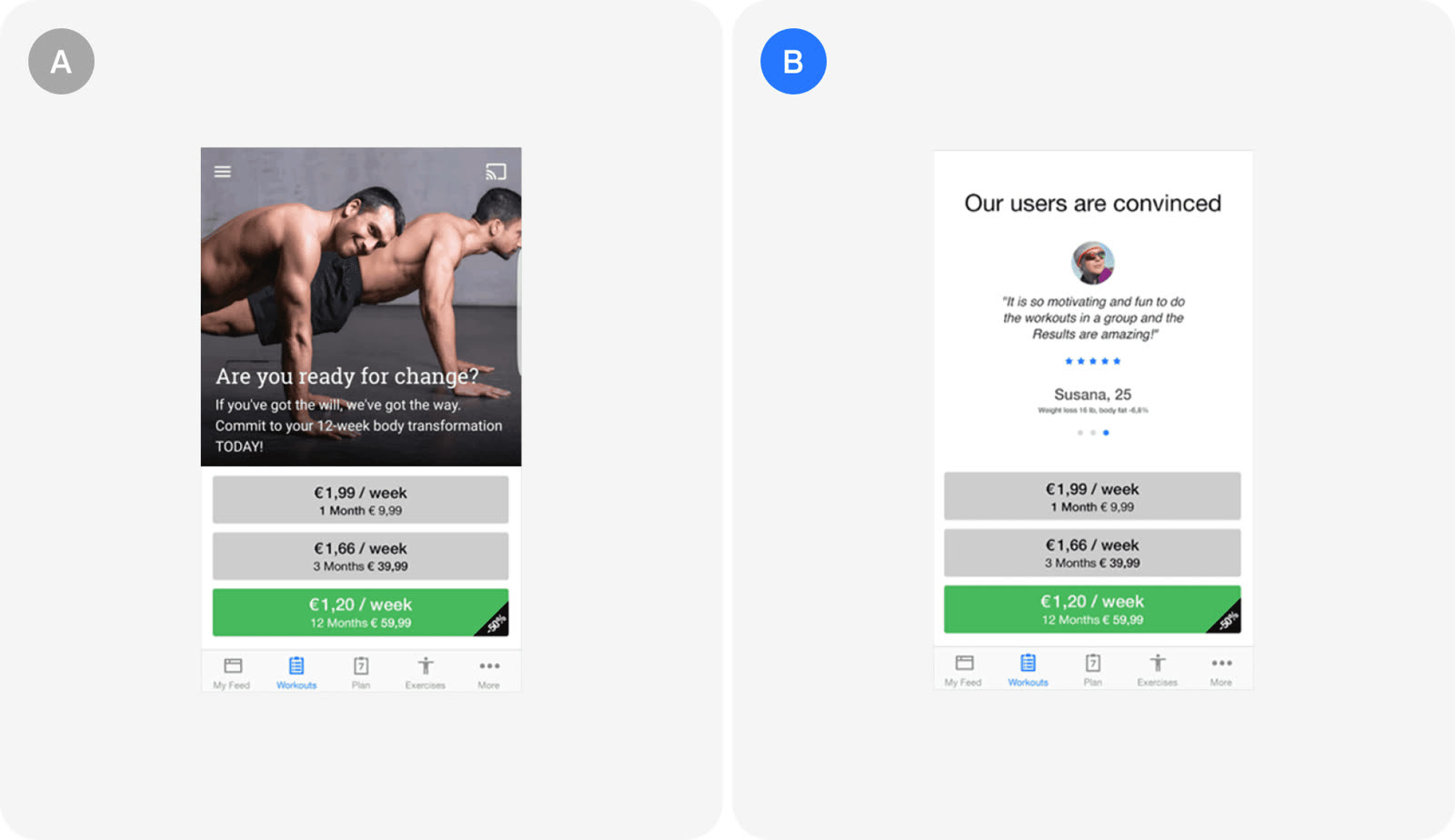
Replacing the promotional statement on Runtastic's paywall with a real user review and 5-star rating raised paid subscriptions by 44%. Social proof can lift upgrades more than promotional copy does.
Key takeaways
- A real user review with a 5-star rating beat the promotional statement on the paywall. The variant with social proof produced more paid subscriptions.
- Result: a 44% increase in paid subscriptions.
- The test changed only one thing: the message shown on the paywall. This makes the review the likely cause of the gain.
- The promotional statement was swapped out for the review and rating.
- The test was built on a social proof hypothesis. Runtastic expected other users' opinions to persuade people to upgrade.
The test
One paywall swap: promo copy out, user review in
| Control | Variant | |
|---|---|---|
| Paywall message | Promotional statement | Real user review + 5★ rating |
| Persuasion type | Brand's own claim | Social proof from other users |
| Paid subscriptions | Baseline | +44% |
Runtastic replaced the promotional text on its paywall with a user review and a 5-star rating to see if it would raise subscriptions.
- The goal was to increase in-app membership upgrades.
- The test ran on the paywall, in the "Paywall & free trial" category.
- The hypothesis was that social proof would raise subscription rates.
The result
User review lifted paid subscriptions by 44%
Promotional statement100
User review + 5★144
The user review variant increased paid subscriptions by 44%.
- Social proof outperformed the promotional statement.
- The measured outcome was paid subscriptions.
In the growth library
Runtastic, Paywall & free trial test. Runtastic replaced the promotional statement on its paywall with a real user review and a 5-star rating to use social proof. The change produced a 44% increase in paid subscriptions.
Lessons that draw on this:
More from  abtest.design · The whole library, and ask it anything