 Caddie
The bottom line
Letting users pick several reasons for using Headspace during onboarding, instead of one, raised free trial conversion by 10%. It shows that capturing varied needs lets the app tailor its offerings and turn more free users into paid ones.
Key takeaways
- Headspace changed onboarding from a single reason to multiple reasons for using the app. Users often have more than one need.
- Example reasons: anxiety relief and mindfulness.
- The multi-intent approach was meant to tailor the app's offerings to each user. Better tailoring was expected to raise conversion from free to paid.
- The test produced a 10% increase in free trial conversion. That result supports the multi-intent design.
The test
Headspace let new users pick several reasons, not one
| Onboarding | Single reason | Multiple reasons |
|---|---|---|
| Reasons a user can pick | One | Several |
| Example | Anxiety relief | Anxiety relief + mindfulness |
| Fit to user's needs | Partial | Varied needs captured |
| Free trial conversion | Baseline | +10% |
Headspace let onboarding users select more than one reason for using the app, aiming to better fit their varied needs.
- The onboarding flow moved from one choice to several.
- Users could pick reasons such as anxiety relief and mindfulness together.
- The app category is onboarding, and the app is Headspace.
- The goal was to raise conversion from free to paid users.
- Tailoring the app's offerings to users' varied needs was the route to that goal.
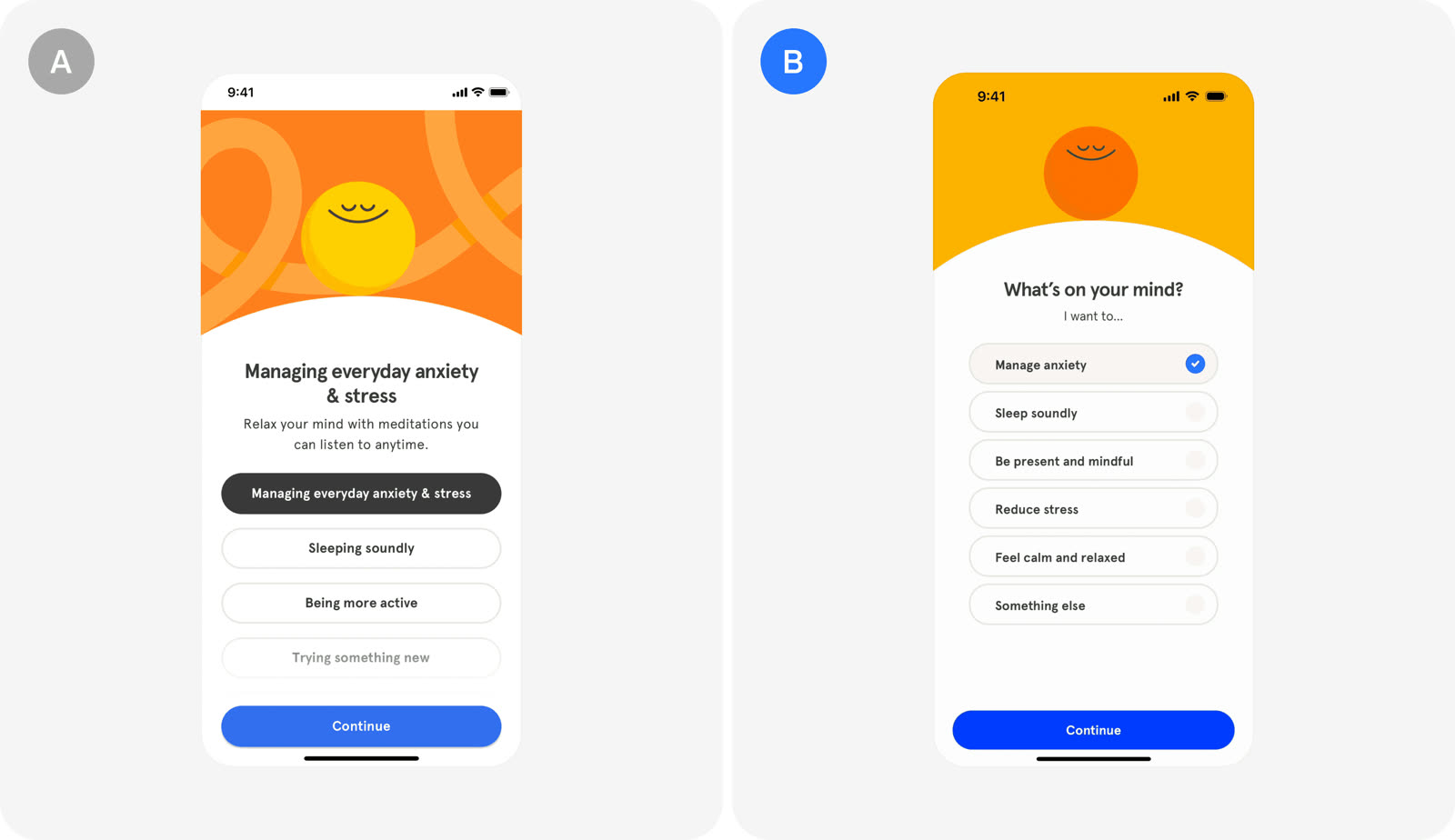
The result
The multi-intent onboarding lifted free trial conversion by 10%.
- Free trial conversion rose 10%.
- The gain came from the multi-intent redesign of onboarding.
In the growth library
Headspace, Onboarding test. Headspace let users pick several reasons for using the app during onboarding instead of just one. This multi-intent change produced a 10% increase in free trial conversion.
Lessons that draw on this:
More from  abtest.design · The whole library, and ask it anything