0:00I was just uh like a broke college student honestly who didn't have much going for him in his life. I was a computer science major so I was given like computer science advice, you know. I didn't go anywhere. I think I got to 150 followers. That's Cayenne Santiago. Today he runs Tone Adapt, a guitar tone matching app he built in 3 days and it pulls in around $84,000 a month. Almost all of it built on the back of UGC. He has 10 creators posting one to three videos a day. All of the different formats that my creators can post. You open it, you know, there's three example videos of, you know, videos that they should try and copy literally as closely as possible.
0:32>> The first thing that surprised me is how little his creators have to guess at. Nine formats sit in his notion brief, and each one has three example videos the creator is told to copy as closely as they can. A Discord server where creators will have a private one-on-one channel with me for feedback. They'll have their own feedback channel, actually, that's public to every creator where they will send their videos before posting so I can review their videos, give them any feedback. and he doesn't do that feedback in private. Every creator posts our video for review in a public channel where the rest of the team watches him break it down before it goes live.
1:02>> I'd say 75% of my winning ads just come straight from UGC posts that my creators have made. >> But this is the part that was really smart. Honestly, I don't know why more people don't do this with ads. Kayen has every creator upload every single video they post, not just the winning ones, into a shared Google Drive folder. And then Kayen tests a lot of these as paid ads. And 75% of his winners come straight from those organic posts. So his UGC is doing double duty. In this episode, we dig into the nine format bank and the notion brief Cen sends to every creator before they post a video for him. The Discord setup, how he gives mass feedback to creators. The Google Drive folder organic to paid ads pipeline. The three actual videos that took him from 150 followers to his first $12,000 month, including a sixth post that hit 600,000 views. and the view bonus structure he runs that gets him
1:47millions of high converting views at well under $1 CPM. If you're growing your app with organic content, watch this video for a very efficient model for running a UGC program before you run yours. I want to start as we often do with the tweet. So he said here, UGC is the marketing channel with the most upside, but might be the hardest to crack for mobile apps today. Very interesting. And you said you scaled your app to over 50K a month with just organic UGC, but it looks like a guitar app. Tell tell me about that.
2:15>> I mainly just scaled through UGC all the way up to, you know, even past $50,000 a month in revenue. And yeah, like I like I said, I think it just has by far the most potential, the most upside. You know, if you start off with paid ads, it's you're going to spend a lot of money trying to get [music] meta get Meta to figure out the algorithm. You know, even if you get subscribers, you're likely going to be paying like $15 to $20 per subscriber. You're going to be bringing back maybe $30, maybe $40, even $50. But still, you're not the margins are never going to be as high as UGC, where you could pay a creator $600 to post 30 videos over the course of a month. And one video in itself can result in thousands of dollars of revenue. So, you can see here, like I started out pretty simple. Like, it's literally just me videos of uh myself recording the website that I made. At the time when I first launched, it was
3:01just a website. It wasn't even an app yet. Um, and you could see my fifth video, I think that's oh, my my sixth video um got 604,000 views. Um, and obviously this doesn't happen to everyone. Uh, but you know, I was willing to put myself out there and just make videos, which a lot of people, you know, you'd be surprised, just won't post videos. They're either embarrassed, you know, they get bored, they give up after they post four videos. But literally, like just putting anything out there is always better than nothing.
3:28Um, and you can see like it's just a super simple video of me um, talking. It's like literally just me talking and showing off the thing I built. And yeah, like like once I had these kind of formats down that were working, I then I just hired like three creators to kind of just spam the exact same formats multiple times every single day. And I paid them pretty well because it, you know, worked out well for me. So it worked out well for them. Like I could show you. This is the first UGC creator I hired. You know, his Instagram account is up to is up to 1500 followers now.
3:56And he's had the same exact videos kind of just get 585,000 views, 250,000 views. And yeah, it's a pretty repeatable format. Like I say, it's hard to get down because you kind of have to you have to figure out how to manage people. Uh you also have to kind of like do all this outreach and put together an entire program. But once you kind of crack that, I just think there's so much more potential than working with influencers or running paid ads.
4:17>> You only started with three creators, you said? >> So I actually only started myself. I got it to around like $12,000 a month in revenue completely with my own UGC. And then, yeah, I did start out with three UGC creators posting the same exact videos that I was posting. And with myself posting and those three UGC creators, I got it to, I believe, around like $40,000 a month in revenue. And then obviously I scaled up and brought more creators on as well.
4:43>> Wow. What's the revenue at now? >> Yeah. So, I think in October did about $85,000 uh to 85,00 how many creators for at this point now? >> At this point, we have around 10 UGC creators. Um, and they post anywhere from one to three times per day. And then I also work with a few influencers as well and run ads now as well. >> Yeah. I mean, you have like the whole machine right now, but like in the beginning it was just your own video. It was 12K a month just from your own UGC and it was like a brand new account too.
5:14It was like the six like the sixth video just like hit and then you just ran with [music] it. And then only three creators for 40k a month. Wait, what were you doing before? Before like the app stuff. I was just a like a broke college student honestly who didn't have much going for him in his life. And I actually started doing UGC myself before I created my app for about two months before I launched it which was super like I honestly and even before I started doing UGC I just started posting on social media like once per day. I was a computer science major so I was given like computer science advice you know it didn't go anywhere. I think I got to 150 followers. But I would like seriously recommend like anyone if so many people say they don't know what to do or they're lost or they don't like what they're currently doing. Literally just start posting on social media. Like it will open up so many doors for you.
6:00You'll be able to meet people. You know, I didn't even know UGC existed until I started posting on social media just giving computer science advice. These brands started reaching out to me offering, you know, UGC deals for me to post for them. Obviously, I said yes because I was broke. It's not only a great way to make money, but I was able to connect with other app founders who were running UGC programs, learn exactly how UGC programmers built and ran at scale and just kind of understand how to go viral as a whole. Uh, and that's why I was able to take that like directly into my own app and my own product and scale it so fast.
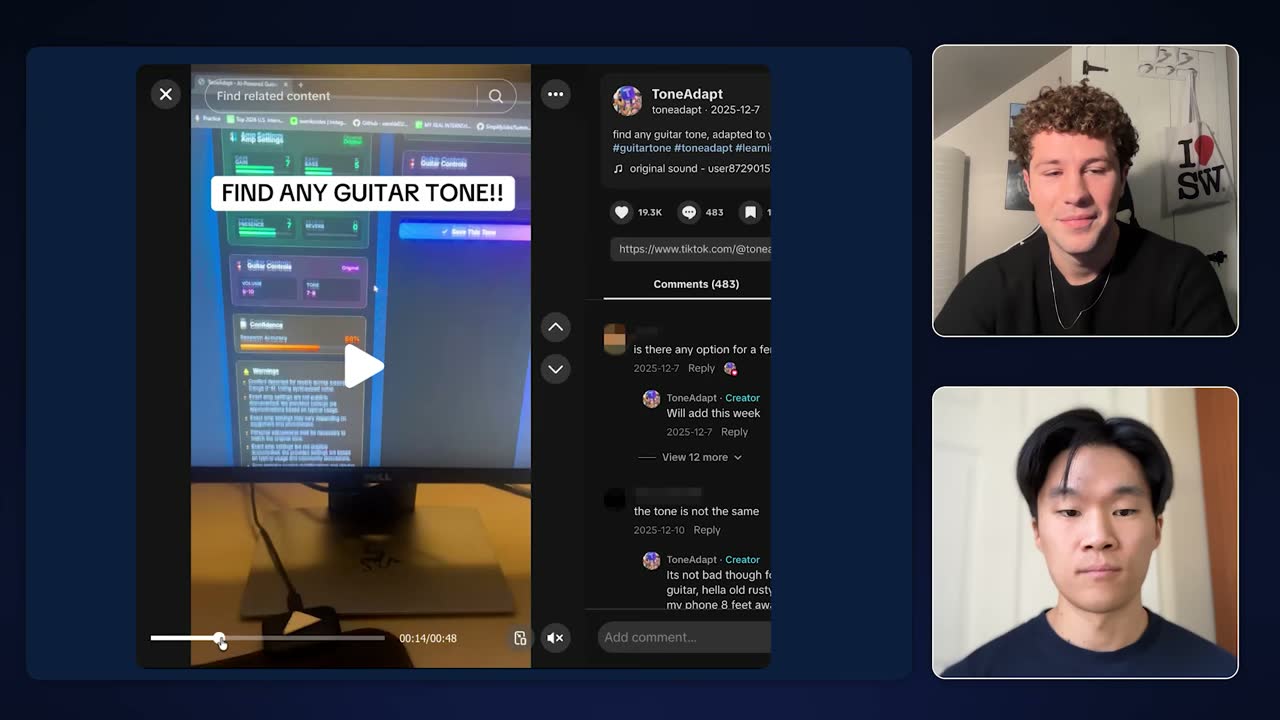
6:28>> I want to break down that sixth video a little bit. Like what was your Instagram account? I maybe I can share. >> It's just that tone adapt. Also, I think uh I think I could be wrong, but I think my Tik Tok video I think the first video went viral. Okay, so I posted like four guitar playing videos before, but then like the first video I posted about Tone Adapt got 282K views on Tik Tok. >> Just random guitar playing videos four in a row and then 280K. Wow. So the video after that you did like more of a talking narration like you're you had the voiceover in the background, but this one was just pure music and showing the the the computer screen.
7:07>> Yeah. And you could tell it's like the most vibecoded piece of slop ever. Like I literally made it it like 3 days. It was the first thing I ever built. Um yeah, it's the power of guitar. >> Come up with the idea for the product itself. >> I honestly started playing the guitar like a year before I made this video, maybe about a year and a half. And I was looking for a project to put on my resume to get like a computer science internship. Also, in the back of my mind, I kind of thought, you know, if I make something, maybe I can get people to pay for it as well. I was using Chatb2 to do exactly what Tonad app does. And I realized there was also no app for it. So, I thought there was a good spot to, you know, make a good GPT rapper, but better. You know, Chad GPT also wasn't the best at kind of matching guitar tones. So, I kind of tried to build on that.
7:47>> So, basically the premise is like you put in like you have a song that you want to play and so you put you input the song into the website and then it tells you all the settings um for the tone. >> Yeah. So, like in the guitar world, in the electric guitar world, pretty much you could see the amp. That's that's that's an amp. That that machine that was up there with the knobs, that's a guitar. Um, so every amp has different settings. Every guitar sounds different, has a different output. So, pretty much the user will be able to put in their guitar, their amp, whatever pedals they have, and look up whatever song they want. And then you can see it'll show them the original gear that the original song was recorded on. Then it'll tell them how to set up all their gear to sound just like that song, but on their gear. It's a good like premise. I mean, there's like other guitar education apps
8:33like tells you the chords for how to play this song or whatever, but then it seems like this is a little bit more for advanced people. I'm guessing like they already kind of know how to play the songs and they just want it to sound as close as possible to the actual like original. >> Honestly, it's for just anyone who plays the electric guitar. I would even say it's more towards beginners because people who are more advanced will kind of know how to do this on their own, right? like >> Mhm. Mhm.
8:56>> beginners are kind of lost trying to like trying to sound like whatever song they want. Uh so this will help them do that. >> It's like surprisingly like a huge niche. Like the fact that you're able to get what is this 280K views on talking about guitar tones. Slightly surprising to me, but I guess not really because there's a ton of people that play guitar. >> Yeah. Something like 10% of the world's population plays the guitar. And you know, I app only my my app only is for electric guitar. So like it's a subset of a subset.
9:26>> Uh but still like yeah, a lot of people. >> And then so that that was the first video and then this one was like slightly different like your voice over anymore. >> On my Instagram there's like some better ones where it's just like one of them might be pinned too. It should just be like some videos of like my head talking in the real section. >> 1.6 million. It was >> that's actually just me playing the guitar. >> Okay. Okay.
9:47>> Like there's literally just videos of me talking and it got like there there's a few of them that got like 1.4 million views right there. >> It's just like hook and it's like kind of like hook and demo, but this is like a talking hook. It's basically just here's the result that you want and then here's all the objections that you might have that could make it painful or like with the existing solutions. You don't need all these other things. And then for the entire rest of the video, which is like 80% of the video, it's just pure demo. Um, did you did you think about this strategically at all? Like the framework or like the format of this video?
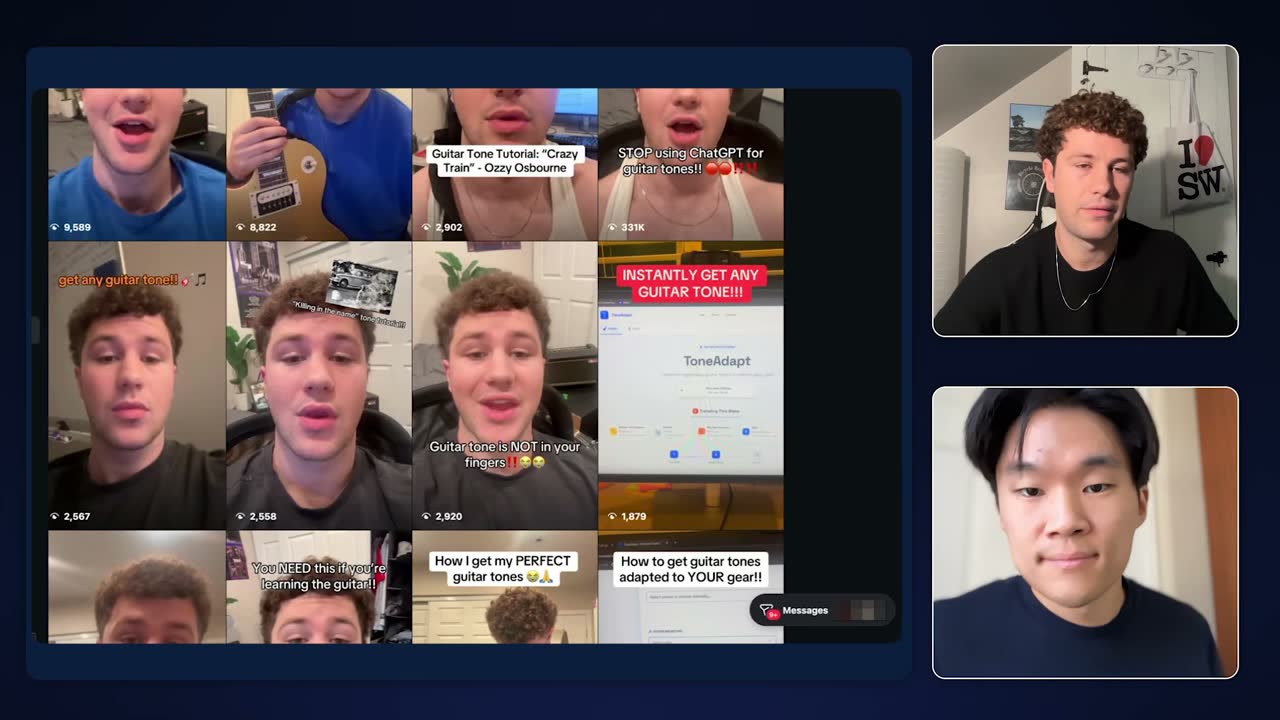
10:22>> Yeah. So, there was some other videos like out there on Tik Tok and Instagram that were kind of in the same format just literally talking head explaining how to get good guitar tones except they weren't showing off a product. They were kind of just explaining it. You know, if you're playing metal, turn your gain all the way up to nine. Uh so I kind of tried to like take that exact format and just show off a product that solves that issue instead of you know walking through it myself.
10:47>> So like all the existing educational content out there was like talking about how to use the alternative methods that were like harder or like more cumbersome >> just like the the traditional way to get guitar tones. And you know I just kind of made the same format except I made a product that just does that whole process for you. >> What is the alternative? like what what's the painful alternative towards like instead of using your app?
11:10>> Yeah. So, you could buy some super expensive software that you have to figure out how to install on your computer and then you have to get some hardware to connect your guitar into your computer and even then there's a huge learning curve of just figuring out how to work all this digital gear. Or you could go the route of getting, you know, modeling amps, which you can kind of a lot of this brand new guitar gear kind of has a tone adapt feature built into it, but it's just like super expensive. You know, a lot of guitarists just have a guitar and a simple amp and just want to sound like whatever song they want to play. And without plugins, like something that you physically plug into your guitar, either into your computer or into your phone, there's nothing that really kind of helped you get the tone for whatever song you want to play.
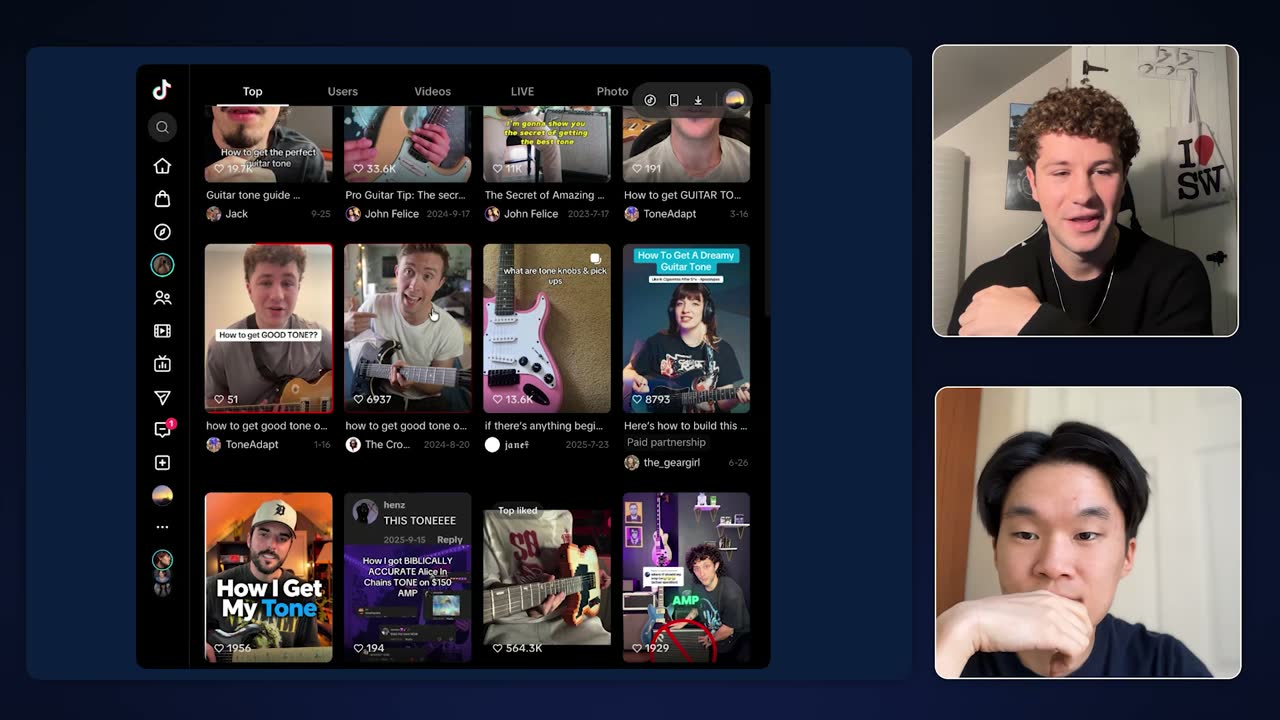
11:50>> So, like the alternative is just it's really expensive. Uh you need the hard you need to buy this hardware and then you need to do the software. And like even like it's expensive, but then like it's also complex. Like it's hard to use. is like you might not even know how to use the software and the and the hardware especially if you're a beginner and [snorts] then and then sometimes like the solution itself doesn't even work fully and like and so there's all these like the reason I was asking is I think this is like a general like marketing framework that people can use because if you look up videos on [music] like I don't know how to tone like adapt tone electric guitar like on Tik Tok you're seeing all this education content out there already. So, you can see that video right there that your mouse is on is actually like the one I like copied to get I think like look at them next to each other. You can see the video of me
12:42and the video to the right of it. It's like the same exact hook in the same exact place. [laughter] It's literally like that simple. I mean, that one obviously didn't do well, but that's where I took inspiration from. >> Yeah. Yeah. Yeah. It's like similar. It's like similar, but I can see how you adapted some of these some of these hooks. And it seems like most of these videos are not really monetized. Like did you did you ever get a s like as you're doing research in this did you get a sense of if any of these creators are monetized like these videos themselves are doing are like brand deals or UGC or do you just feel like most of it is organic?
13:19>> No, most of these videos were just organic them trying to post educational content and you know help their audience. Like did that kind of like almost persuade you that it was a good opportunity because there's like sort of under untapped like there's all these creators making content already and they're just they haven't like monetized it with an app or some kind of product. >> Honestly, no. Because I built the entire thing out before even, you know, looking at a monetization strategy or doing market research. Yeah. It's so easy to build stuff nowadays. Like I just built it and then figured it out cuz I could build the entire thing in a day. Okay.
13:54So 12 12k 12k revenue a month from just your own UGC. How many videos did you make? Cuz it seems like after you found that one format, you just kept posting like pretty similar videos over and over. >> I I I like switched it up a little bit. Um especially in the beginning, I was kind of most mostly posting the same exact formats. I was trying to post once per day and I got to 12k revenue a little little bit over a month I believe. 12k revenue per month. So, you know, I was probably posting one to two videos per day, but also trying to like be very involved with my audience. Like I was respond I was trying to respond to, you know, pretty much every single comment I got, get as much feedback as I could through the website and kind of build like a personal brand that aligned with the company as well, you know, not just if like if you look at all these videos, they're on the main [music] brand's page and it's just my face
14:47behind all of it. you know, it's it's not very professional looking, but because of that, I think I was able to build like a good send a good sense of trust between me and my users, especially early on. But then like the formats, so when you hire creators and you had them make similar formats, did you find that there was less trust with them because they're not like as personal a brand? They're not saying, "I made this website." But it seems like you don't also you also kind of don't position it like that. You're not saying, "Hey, I'm the founder of this."
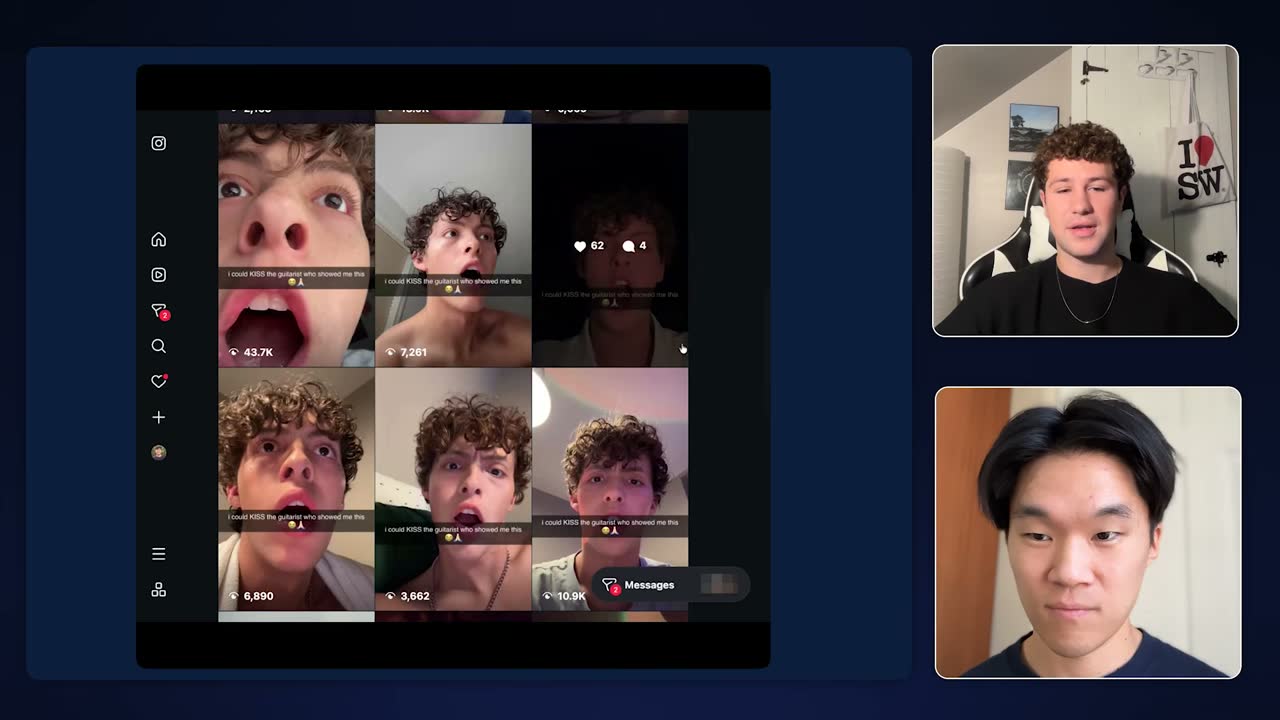
15:19You're just saying, "Here's the problem or here's the result that you want. Here's how to do it." >> As soon as I brought my creators on, they were able to perform super well. And, you know, one one of my creators even just started posting reaction formats before I even started posting them. And then >> that was kind of the next format that started blowing up a lot for the website before I ended up making the app. >> This makes me want to learn electric guitar, by the way. This is just [laughter] like I think that's a big aspect. Do you think the music in the background like makes the video just feel more engaging?
15:52>> Yeah, 100%. Like a little bit later, uh, we could pull up one of my other UGC creators accounts where he was posting reaction formats for the app and it's like the same two songs every time. And they those two songs just always perform well. It's like Smells Like Teen Spirit and Everlong. Everyone loves those songs. >> Yeah. there's like some of the familiarity I don't know what they call it in marketing familiarity bias or whatever but like [music] just having any kind of sometimes a video it's not even about like crazy like hook you know attention grabbing psychology tactics.
16:27It's just it's just like does this feel comfortable and familiar? And it's like if you put a song that everyone loves and you put it in like a super sick like electric guitar you know adaptation like it's just automatically like pretty engaging. So this is the so he started out with copying the formats that you had created originally, right? And then he later on added his own like hook reaction. And so when you're getting videos that are like this level of like 5,000, like 18,000, how do you think about those? Are these like do you think that you're getting downloads from them? Are they considered like winning videos?
17:09>> I mean, a few. I I don't mind that much cuz I mean, if you look right here, there's one video with 18.8K and like that's that's just a good sign, you know? That means one of these videos probably will go viral and get at least 100K. Obviously, you're not going to hit with every single video. But, you know, at least if you're getting a couple thousand views and you know, every now and again one of them gets a good amount of views, usually ends up working out.
17:32He actually, for some reason, [music] didn't do well with the Snapchat format. I don't know specifically why I like his reaction. It like it feels very authentic. Like I feel like a lot of people I don't know like two years ago they used to do the hook reaction formats where it's just like a shocked face like no way and then and then it immediately switches back. You should look up uh this guy this other creator that we had a his name's his account handle is like Isaac Isaac tone adapt.
18:01>> Oh that's a super quick one. If you scroll through his reels, he he would get a lot of views like like very consistently. >> 40k. That's really crazy. Like the Snapchat format is so like this is like a one or two second hook. It wasn't even long at all. So this is like the Snapchat format. So you're saying like the caption style looks it looks native to Snapchat, which is really interesting to me. >> Yeah, I mainly started doing a Snapchat format when I launched the app. It feels more natural with an app than just regular Tik Tok or Instagram added text, you know.
18:37>> I see. Because it's probably like, do you think it's younger users that are more willing to use the iOS app compared to the desktop? >> Honestly, I like wish I could explain why, but so many more people download, subscribe, and use the mobile app than the website. Okay. Well, I will get so many more visitors to the website. Okay. By the way, like uh since April I launched the app, I don't market the website at all. It's just all work on the [music] app, the mobile app. But I will get so many more visits to a website, like a fraction of the paying subscribers than I would get from an app. It's crazy. I mean, that's why people do apps in general. I think like consumer there's just a lot of trust with app. There's like a certain legitness that comes with, oh, you're actually on the app store. or it's like an it's like a real app that I can download versus like some random website like anyone can make a well not anyone
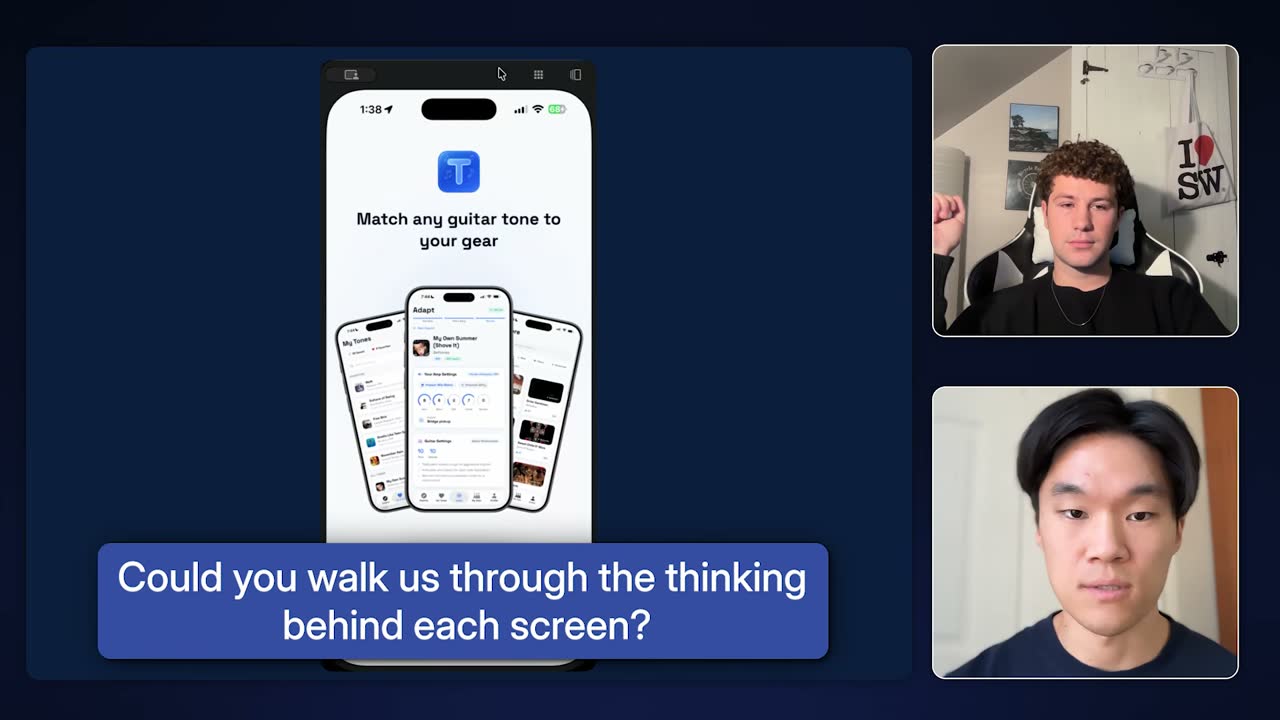
19:28can make a website but yeah it's just like the perception I guess of like being associated with Apple app store is a benefit of that. Okay, this is really cool. So like you got to 40k month with just like three creators and they're doing kind of similar formats. Yeah, actually could we look at the the onboarding like the the actual app? Yeah, for sure. Okay, nice. So match any guitar tone to your gear. You want to just kind of like narrate and how you thought thought about each of these screens.
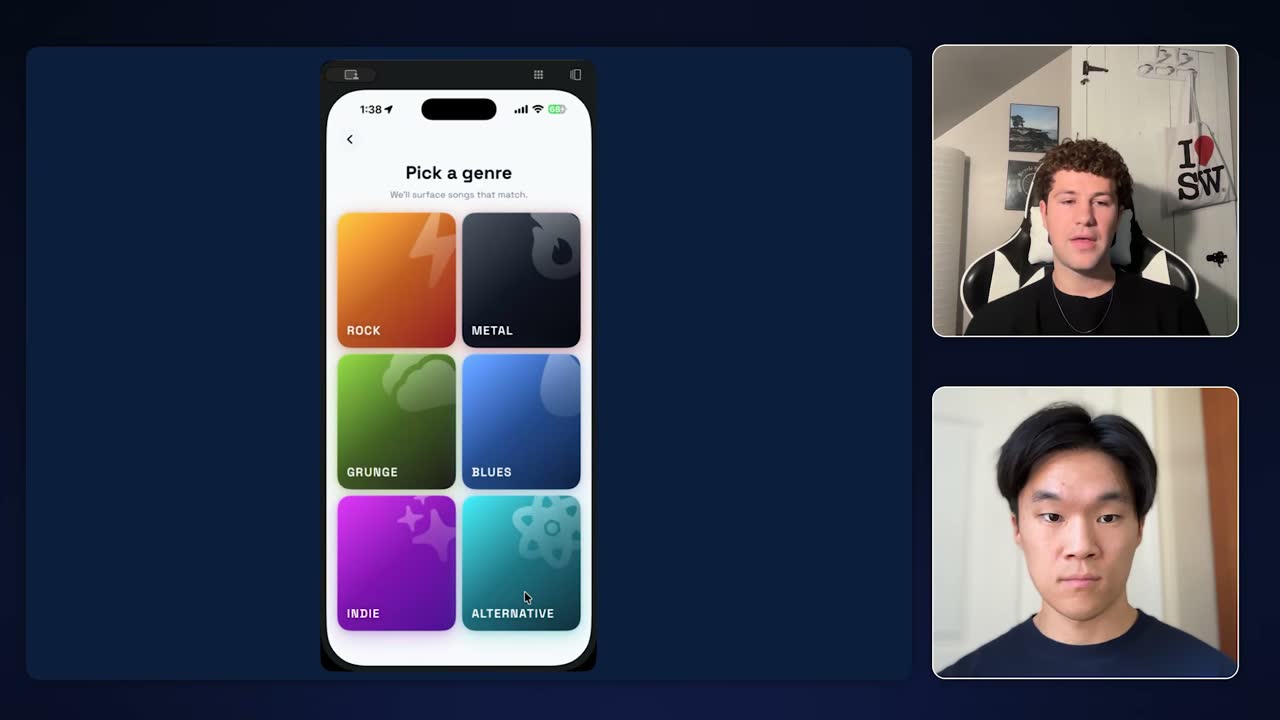
19:56>> So yeah, just a nice uh nice welcome screen with uh you know mentioning that we have 200,000 guitarists and then just straight into a couple questions, you know, getting to know if the just kind of making it feel personalized to the user, you know, making them kind of get that first sense of commitment of them answering questions and feeling like we're customizing the app exactly to their needs and what they have. Um, and then you can see right here we go straight into like a mini demo. So they kind of understand what the app is about. They get something interactive.
20:24They understand exactly how it works. And they kind of get that wow moment super early on. So you can see you can pick a genre. You can pick whatever song that you want to get the tone for. And then you search up your gear. This is kind of the magic part because users will realize, okay, we have, you know, over 4,000 guitars, over 4,000 amps in our database. We can, you know, no matter what gear you have, we've got you covered. And you could just hit continue with that one on this one.
20:51>> Does that change the onboarding if you uh >> It might a little, but it should be fine. Yeah. Unfortunately, I wouldn't recommend to include registration in your onboarding for your apps anymore, but I did create it with, you know, I it was first on a website and it was just way easier to carry that over. Yeah. And I specifically put that um the sign in button or register for an account right before they kind of get that, you know, peak euphoria moment of getting their personalized tone because usually, you know, if you have to create an account or sign in, that's where you're going to lose a lot of users. You know, a lot of users will drop off in the onboarding at that point. So, it's like a very strategic kind of placement putting it right there.
21:28>> It like increases the friction to getting the peak the peak moment. But does that like decrease the drop off actually? >> Uh yeah. Yeah, it does. Um because it's like, you know, if I if I put sign in or register for an account, the first screen that the users see when they open up the app, so many people are just going to be like, "Okay, well, I'm not signing up or I'm not giving you my info." Whereas, like, you know, if it goes through something like mine, you ask them a few questions, you get to know, you know, exactly what gear they have. They spend time looking for it and putting all their gear in. They think they're about to get this like tone that's going to work exactly perfectly for their gear. then they hit the sign in or create an account screen, they're they're so much more likely to just be like, "Okay, like I really want to see this. Let me create this account now."
22:12>> But like I said, nowadays I wouldn't recommend even using sign in or account creation at all if you're building a mobile app. >> It's just not worth it. Like what what is the purpose of getting the sign in in the first place? >> Yeah. So like originally I built it as a website and that's kind of how like a lot of the back end worked. it was very reliant on um user accounts for tracking and >> uh limits uh plans stuff like that. And so it was just a lot easier to >> kind of build that into the mobile app rather than kind of like rebuild how the entire back end and database works.
22:44Obviously we also send like a bunch of emails. We have like email campaigns too. >> So but the email campaigns don't really you're just saying it's not even worth it like the the the small lift that you might get from a few more downloads from the email. uh not downloads but like more conversions from the email just doesn't really justify the severe drop off. >> Yeah. I mean I just think if you have an account registration page in your onboarding for your app, you're going to experience at least a 5% drop off just from having that screen in your onboarding and asking users to create an account with their email address. So I mean unless you're building something that really requires it or you're really trying to collect that information, there's it's honestly just hurting you more than it's helping you. at least 5% drop off just from that one screen of signing in. Yeah, it seems like definitely not worth it. Okay. So, so
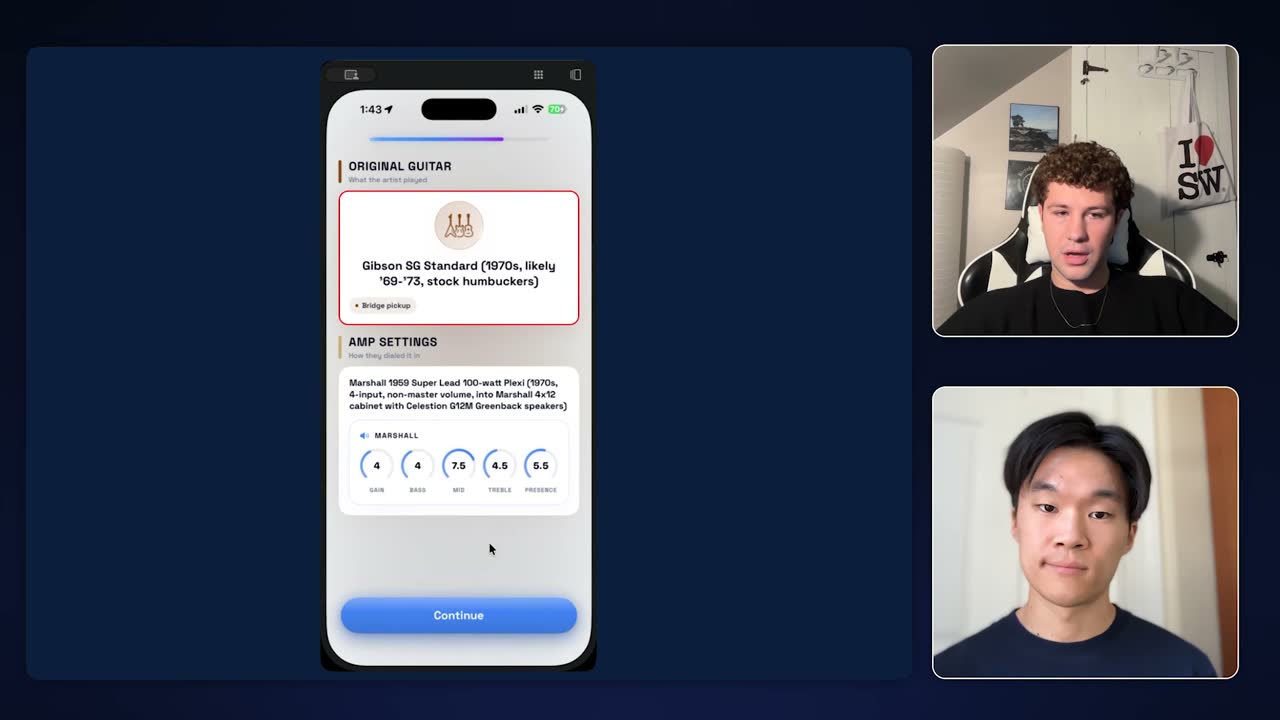
23:32now you have like the the reward for Y, >> you know, the the thing that they've been wanting >> and then it finds the tone. I see. Yeah. So now you can see this is the original guitar that the song was recorded on and the original amp settings um that the song was recorded on along with the amp, the cabinet and then you can see their pedals uh the original pedals that the original band in this case AC/DC used. And then now it kind of shows you the problem. You know their rig isn't yours, right? You have different gear. The same settings won't allow you to sound like that song on your gear. It's drawing you a little diagram of what's different.
24:07>> I like this. This is very visual. It's like, okay, here's exactly where the the tone is different. >> And then kind of explaining, you know, okay, we'll fix that. >> Ah, I see. Yep. Okay. So, it creates the gap. See, okay. Here's a big thing that I feel like a lot of people miss is, you know, they understand in marketing, you need problem solution. So, you go through the onboarding and they describe the problem, answer a couple multiple choice questions, and then okay, here's the solution. here's, you know, a demo maybe. But then I think the past three screens that we just covered are really important because it creates exactly how the app solves the problem. It's like me like the mechanism of it, which is here's the exact waveform of where the the the gap is between this part of the tone and and the tone that the original song used um in the recording. And so you're like showing exactly how the the
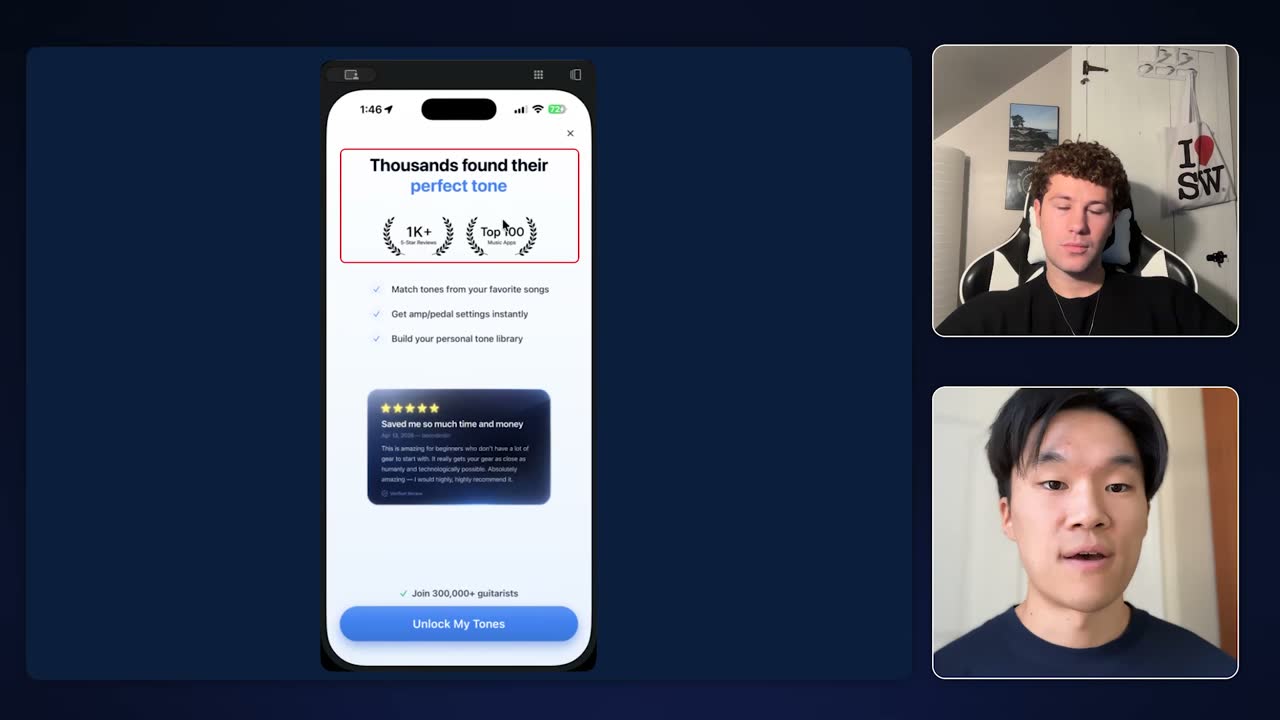
25:06app will help and then you're connecting it back to them. So then okay, here's how this will help you specifically and then that's peak. It's just like it matches it. It bridges the gap. Exactly. You create the gap and then you bridge the gap. Yeah. Then you get pay wall. So then it's that's peak like desire. It's like you you create the problem and then you show the solution and then you show them the gap their current gap between the problem and solution and then the mechanism for exactly how to solve the gap and then and then and then now it's payw wall. So then it's unlock my so it's like now it's social proof as well.
25:43So thousands found their perfect tone and join 300,000 guitarists and then there you show the five star review >> and then unlock my tones and then that's when the payw wall comes up. This is interesting. Do you have like a sheet a bottom sheet that that comes up? Is there a reason why you chose this style of payw wall? Yeah, I kind of wanted to uh just have like something like really clean, an annual plan and a monthly or weekly plan. And I thought this was like kind of the best way to just show that, you know, it looks a lot, in my opinion, a lot cleaner than trying to pack a bunch onto one screen with uh two plans.
26:19>> That makes sense. Are you doing any AB tests on the payw walls, too? >> Yeah, a bunch. Like always, there's always a bunch of tests running for pricing, for [music] payw walls, plans. This is actually like these are some of the cheapest prices uh you can get. So, this would be a good time to purchase if you if you have a guitar. >> Okay, nice. Okay, so you do $34.99 per year for annual and then $8.99 per week. That's about what is that? $9 like you're getting a huge discount. 92% discount for doing annual.
26:49>> Most of the pricing for yearly is a lot higher than this one. >> Okay. Okay. So, normally like 30 like $40 $50 a year. >> Yeah. And the most consistent has been $60 a year actually. >> And that uh creates the most revenue uh when it's like higher >> so far. Yeah. Especially I found out even cheaper weekly plans usually can like usually end up resulting in a lot more revenue than people think. Yeah. Like anywhere from like $6 to $7 a week.
27:14It's it's pretty crazy. A lot of people like underrate how much money those subscriptions can make you over the course of 6 to 12 months >> cuz people actually renew the week. I mean, most people cancel the weekly, but then the ones that do renew, like over the course of months, it ends up paying you back for like the small percentage that actually renew. >> Exactly. And I think, you know, price points where it's $6 or $7 a week compared to $9 or $10 a week, uh, often they're kind of like below that threshold where people will see that notification, they're like, "Oh crap, I need to cancel this right now. This is way too expensive." you know, if you're seeing yourself getting charged 10 bucks a week compared to six bucks a week, you know, it's only four $4, but it's like a big big difference in the brain. You know, if you see something, >> it's kind of like the coffee price of like, okay, I could pay $6 at Starbucks.
28:00I do that anyway, like once a week. I guess that's fine, but there isn't as much that you would spend $10 on. Like, you know, a coffee is kind of like the the benchmark for a lot of people, I guess. >> Like 10 Yeah, 10 like 10 versus six. I could see how that's, you know, there's less of a churn risk for that. And then you say no commitment cancel any time. Are you using Superwall? >> Yes, I am. >> Do you have a dashboard where you could show like a cool like AB test?
28:26>> Yeah. So, you can see right here, this is for my iOS app. And you could see it's the main payw wall. So, the payw wall that everyone sees at the end of onboarding actually separate the specific payw walls that I send users from paid ads to. They'll get certain payw walls. And then users who come from organic videos will see a different set of payw walls. So yeah, usually with paid users for paid acquisition, try and send users to pay walls with uh with less free trials. That usually ends up working a little bit better for me. And then users who come organically will get shown different pay walls. Maybe sometimes with free trials or different pricing usually ends up converting. You know, they usually like users who come from paid ads and users who come from organic videos just always end up converting better at different price points on different pay walls, you know, maybe with free trials or without free
29:15trials. >> Interesting. Is it generally lower pricing for organic? >> Yeah, usually. >> And you're doing Yeah, it seems like for the for some of these the you're doing like a full a full screen payw wall, too. Are the Have have these been converting better than the kind of like bottom sheet that we were looking at before? Oh, so this this is uh what do you Oh, you mean like these right here? >> Yeah, yeah, yeah. >> Yeah, these are all these are all old.
29:40Don't really run these anymore. Um I kind of found out the bottom sheet usually just ends up working a little bit better. Okay. And yeah, here you could see kind of like the conversion rates for specific payw walls, um specific pricing. Uh the conversion was, you know, the best with the three-step $35 and $9 payable with no trial, but you know, the the average revenue per user ended up being better with, you know, $40 a year and $10 a week with no trial. And now $60 a year and $20 a month is a new variant that I just introduced recently, which has a lower conversion rate, but the average revenue per user is a lot higher than a lot of these other payrolls as well.
30:19>> Yeah, that's that's super interesting. So the yeah the 35 uh9 has 8.6% conversion rate and there's 418 conversions but the 40/10 which is a little bit more >> has 7.6 so it's like 1% less converting but 365 and so you're actually making more money from the the higher price. >> Yeah. Exactly. >> And $10 that's like $9.99. >> Yeah. $9.99. Yeah. >> $9.99 a week and $39.99 a year. >> Yes. And then the 6021 that's uh $20 a month or $19.99 a month and $15.99 a year. You see that down below is like that's $14.99 a month. I actually experimented with it for a bit. This entire panel is kind of pretty new payw walls.
31:12>> But so far you're seeing like promising results from the 60/15 over all the other ones. usually like I think just with this higher pricing my return on ad spend my rowas are able to kind of I mean my row is just increase with increased pricing right you know >> if I'm paying $15 or $20 to acquire subscriber but I'm sending them to the 359 payw wall my rorowas it's going to be pretty hard to have really positive rorowaz on day one right compared to if I'm sending them to the 60 or $20 payw wall you know my rorowaz might or my my CPAs might go up to 20 to $25 per subscriber but you It's going to be a lot easier to have positive return on ad spend on day one.
31:53>> Yeah. It's just this weird thing where like you're if a person is willing to pay for the [music] app period at $30 or $40 then the number of people that drop off if you increase that to 60 is I mean for this it shows that it's so far it's only a 3% drop off from 35 to 60 or a difference in 3% like 8.6 6 down to 5.6, but then the number of people that you're like that just gives you but the amount of revenue you're getting is almost double. So you're getting like a lot more wiggle room in your ads. Uh you're not having your cost. You're only like or you're not having your conversion rate. You're only you know minus 3%. So see it's like very worth it. Yeah, I do see that holding a lot of people back. Just like not not willing to increase the the prices once it's already working. But it seems like you started out with lower annual plans just to see the demand and then you can increase it over time.
32:58>> Yeah, I actually did start out with $60 a year and then I went down to experiment with cheaper pricing >> which is honestly like the the opposite route that a lot of people take or a lot of people take and now kind of experimenting again with that higher pricing. The most profitable app founders I know have been using Superwall to AB test their payw walls because yes, they have the basics like building and deploying payw walls super quickly without coding, targeting users with different payw walls based on behavior and demographics. But now, Superwall AI actually predicts who will subscribe before they see a payw wall.
33:29The AI can do this because Superwal analyzes over 1 billion paywall interactions to score user intent and then recommends optimal pricing in real time. A good way to start is paywallexperiments.com. It's a free tool that gives you databacked payw wall experiment ideas to increase your app's revenue. Okay, so I wanted to switch gears a little bit like the organic and paid marketing is pretty interesting. Like you started out with 12K a month just only your own UGC, then up to 40K a month with more [music] with just just three creators and then now you have about 10 creators, you know, 80 you said 80K a month. I believe LA October was like 84 >> 84K a month in uh as of October and then you're doing like a bunch of marketing channels. You're doing like UGC but also influencer marketing and paid ads. Do those all work together or do you feel like they're all like separate channels?
34:24They totally all work together. Um especially organic content and paid ads. I think UGC is like the first marketing channel that everyone needs to get into just because like I said, it just has such a it's just it's something that's exponential uh compared to paid ads and influencers. You're kind of just taking some shots in the dark. But, you know, I think organic content and paid ads go together handinand. I'd say, you know, 75% of my winning ads just come straight from UGC posts that my creators have made. You know, I try and test as many of my organic posts that my UGC creators uh put up. I try and test as many of those as I can on paid ads and as frequently as I can. Uh [music] cuz, you know, every every now and then I'll find a winner that performs super well for months from, you know, an organic post that got like 5,000 views that my creator posted two months ago. So, yeah, I think I think uh pretty much all of my
35:15paid ads kind of trickle from my UGC creators. >> Yeah. Just uh quickly on that, like do you see the CPM being a lot lower when you take that like 5,000 view video and then run it as an ad compared to if you just like try to create an ad creative yourself? >> I'm not going to lie, I don't even pay attention to CPM. Um it's pretty much just all like I really only pay attention to my CPA, my cost per acquisition. >> That that's pretty amazing though. like a 5,000 view video, you would consider it not a winner, but then you put it on ads and then you get a a a low CPA for months. Like multiple months is is great for for meta.
35:51>> No, 100%. And um maybe maybe like around like two months, that's probably what I meant by months, but uh >> yeah. No, I mean that's still amazing. >> Usually my more viral organic posts or or that my creators have posted, usually those perform even better as ads. >> So any So you don't even adapt it very much. You you just run the actual video as as ads. >> Yeah. So I have all of my UGC creators upload all of the videos that they post organically into a Google Drive folder.
36:18So then, you know, I can just download the videos and test them out, run them as ads, whenever. >> That's a really good workflow actually. Yeah. Just like you don't even have to ask for the videos. You just they're already all there and you just test them. Is there like a budget that you do to test out the profitability? Yeah, usually, you know, when there's like a testing day, I'd say like once a week, I kind of just throw a lot of new ads into a new ad set, run that, you know, anywhere from I think you're fine.
36:42Anywhere from a hundred to $300 a day is a good portion to kind of test with, especially if you're testing a bunch like I do at once. Usually, you'll be able to find like a couple winners from that. >> That that's that's smart. You then you don't have to like guess on like specific videos like, "Oh, I think this one might work. I'm just going to put $20 a day on that one. And Meta knows which creators are going to do well. So, you just put them all in one uh ad set and then find which one is the winner from that. That makes a lot of sense.
37:11That's really good. And do you test all of the videos as ads or just only the ones that meet like certain thresholds? >> I don't test all of them, but once you kind of like run ads for a bit and scroll enough on Instagram, I guess you kind of have an eye for what can make a good ad or what you know might not make a good ad. And a lot of the videos that my creators post are like the same format as well. You know, usually if something's a little bit different, you know, um I might try and test that format a little bit if I haven't tested it before. You know, if one format is kind of dying on Meta's side, maybe I won't throw any new videos in that format into the new ad set. But yeah, I'd say like once once you kind of like experiment with Meta enough, you'll kind of just know which ads are going to be successful.
37:54>> At this point, it's not just you. It's like the companies. It's like a company like you're it's or it's a business like it's operating as even if you're out of the equation your your UGC creators are continuously making videos and those are like being double [music] dipped with putting all of those in meta ads and it doesn't take like it doesn't it barely takes a human to almost like do the judgment call of like which ads which of the organic videos should be sent to ads cuz a lot of people will like manually boost boost videos if they do well. But you're just saying like, "Oh, Meta will know which video." It's it's just like normal meta ads where you upload all your ad creatives into one ad set and see which one works. Except for you, your ad creatives are being made for free essentially like like I mean you're paying for them because they're organic videos, but you're pay you're only
38:50paying like $600 per month for the like 30. It's like $20 a video and then those are getting conversions on organic but then they're also being used as ads. It's a very good machine. Do you also pay like CPM bonuses or anything like that for the organic videos? Yeah. So, we usually pay anywhere from $500 to $850 base over the course of a month. And that's usually for like around 30 videos per month, but uh you know that could also range from anywhere from 30 to 60 videos per month uh depending on the format. And yeah, there's also view bonuses as well. Um, you know, some frequent view some I guess the best view bonuses I like to work with go like $50 if one video hits 50,000 views, $75 if one video hits 100,000 views, uh $300 if a video hits 500,000 views, and $600 if it hits a million views. I also like to throw in some view bonuses when I'm talking to potential UGC creators. I'll say like if a video hits 3 million
39:49views, then I'll give you a $5,000 bonus as well. Because realistically, like no one's going to hit $3 million or sorry, no one's going to hit 3 million views on a single video. And if they do, I'd be more than happy to give them a $5,000 bonus for that. And it kind of just like makes them really want to go viral. So that's always good. Like that setting a high base is almost like uh it it gives them some reason to to just shoot for the moon. and they might go under that, but then they're still happy cuz they're getting paid the other bonuses that you said for 500K or 100K. So, I like that bonus structure actually cuz some people do milestones that only start at like 100k views, for example, and they'll pay out like $100 for that. But a lot of times a winning video that like does well, you only really need like 20 50k views. So, if you have that like smaller bonus threshold too, seems like that's a
40:45good way to still incentivize people to hit those 50k view videos too and not just be posting like 50k 50k and only get paid the base. So, um that's a good good way. What what's your view on the app space overall right now? Like do you are you trying to like make more apps or you trying to scale this one? Like what's the plan from here? I guess I guess we could say it like u yeah I'm looking to or I plan on exiting this app soon and then yeah I also have like a lot of honestly a lot of other apps that I've been working on over the past kind of say 6 months and those do you know pretty well none none of them do as well as tone adapt my main app but I'd say you know I probably make like an extra depends on the month but 5 to 15k a month from the these other apps as well and I have a couple other apps that I'm working on right now uh that I just launched recently which I really think are going to take off and go big but my
41:35view of the app space right now. Like I think I think we just have to like technically right now I'd say it's easy to scale apps. I don't think it's going to get any easier than it is right now. Like you can find all the information you need to scale apps to make them. Obviously everyone knows it's ridiculously easy to make them. It's mostly just marketing, right? And you could figure out how to market your app. It's becoming easier and easier by the day. So I think, you know, if you're in the app space, you really need to like take advantage of this next year and a half, two years and just try. You know, my my vision right now is scale as many apps as I can to, you know, above 50 100k a month and exit. Take your, you know, however much you can get, you know, 500 to 500K to $3 million and then immediately start running up the next one. Yeah, I think I think there's like never been a better time to do that than
42:24right now, obviously. Um, so super bullish as well. I just there's just so many apps like every every week I come across more founders that are and most of them are doing UGC like you said. It's just the easiest like cheapest way to get started and yeah but congratulations on all the success so far. It's been great to learn from you and yeah where can people find you? Are you're on Twitter right? >> Yeah I'm on Twitter kinds also on Instagrambuilds.
42:54>> Awesome. Thanks so much Ken. It was great to great to have you. >> Yeah, thank you guys. I appreciate it. >> As Kayen said, UGC is very hot right now for apps. Not sure if you've seen this, but I'm actually running some pretty big UGC campaigns myself right now. This one got 8.8 million views after a month of posting. Now, actually, it just hit 10.4 million at the time of recording, and we're adding like 4K a day in revenue profitably, which is the more important part. Obviously, the problem is I I can't run this for every single app out there. I don't have a big scaled agency with a big team, but I do want to help you build this kind of UGC program for yourself using the same exact playbook that I do and make your app go super viral. So, if you want to apply to work with me oneon-one, I made a video for you at that second link in the description. Thanks for watching and I'll see you in the next video.
43:39Something you might not know, most of the founders I cover on this podcast are hanging out right now in the Consumer Club Discord, sharing with each other what's working now for consumer apps. So, you can apply to join consumer club if that sounds interesting to you. And this is the Superwall podcast. Of course, you got to check out superwall.com. We have more videos on the channel. So dig into those to learn from app founders who are willing to share super tactical stuff about app growth.
 Caddie
 Superwall · The whole library, and ask it anything