 Caddie
The bottom line
Pinterest let users scroll through three pages of content before asking them to sign up, and signups rose 15-20%. Showing value first lowers early friction and keeps interest high enough to convert.
Key takeaways
- Letting people browse before signup raised signups by 15-20%. The result came from an A/B test in Pinterest's onboarding.
- The test gave users three pages of free scrolling before the signup prompt.
- Showing the product's value upfront reduces initial friction. Users see what they would get before being asked to commit.
- The change also aimed to cut bounce rates.
- Capturing interest before the ask is the core idea. Users who are already engaged are more likely to sign up.
The test
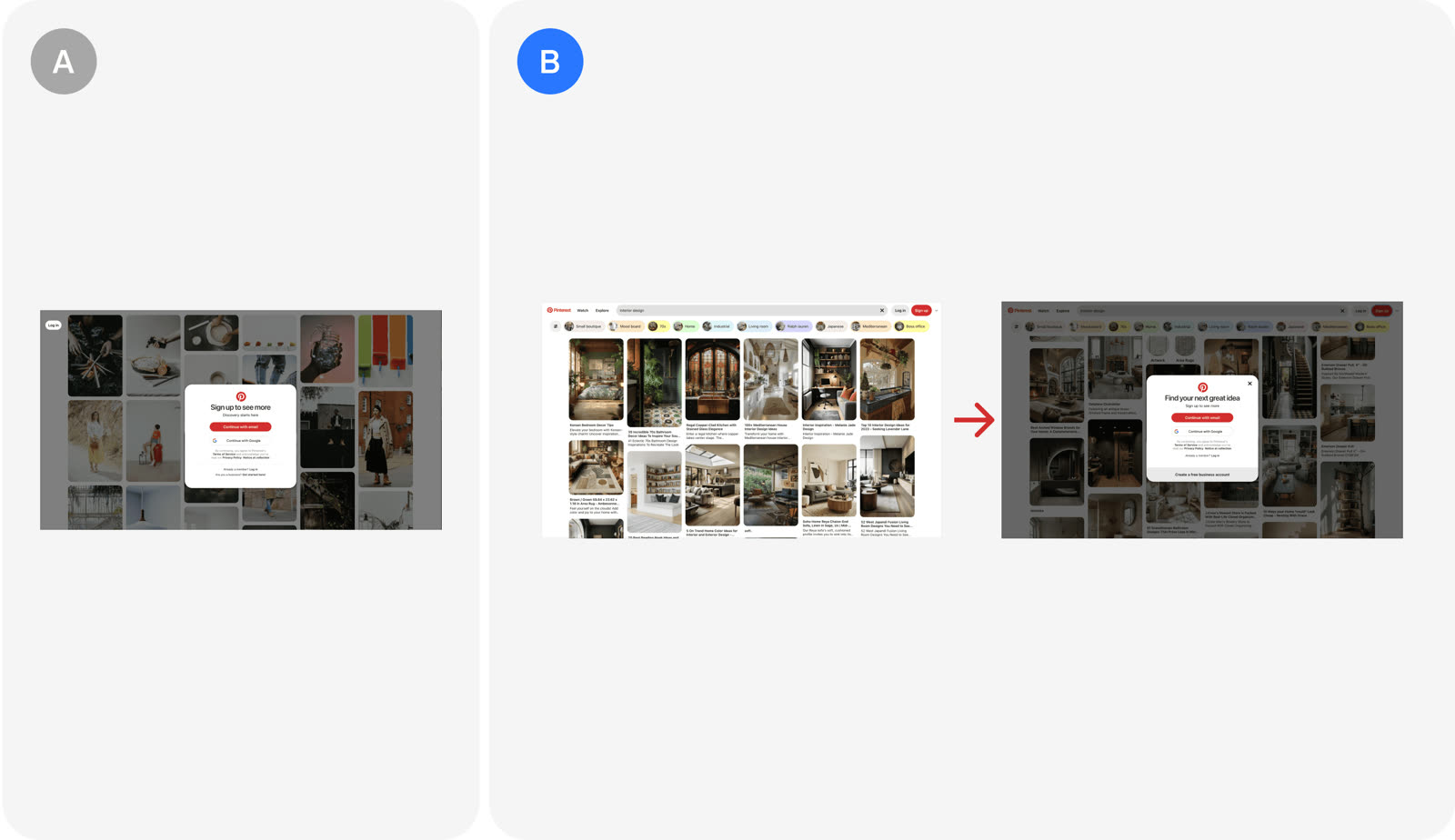
Pinterest moved the signup prompt behind three pages of freely scrollable content.
- The test sits in the onboarding category of Pinterest's app.
- Users explore content first and are prompted to sign up afterward.
- The goal was to increase signups and reduce bounce rates.
The result
Showing value first lifted signups 15–20%
| Prompt first | Explore first | |
|---|---|---|
| Signup prompt | Immediately | After 3 pages |
| Content before ask | None | 3 scrollable pages |
| User state at ask | Unconvinced | Already engaged |
| Signups | Baseline | +15–20% |
The free exploration approach increased signups by 15-20%.
- The gain is reported as a range, not a single figure.
- The increase was 15-20% in signups.
- The test was first written up by Insider Growth HQ in a piece on growth stories from Pinterest and Wish.
In the growth library
Pinterest, Onboarding test. Letting visitors scroll through about three pages of content before asking them to sign up reduces early friction by showing value first. Pinterest's test of this approach produced a 15-20% increase in signups.
Lessons that draw on this:
More from  abtest.design · The whole library, and ask it anything