 Caddie
The bottom line
TikTok raised enrollment in its revenue-sharing program by 25% by letting creators start making content and see potential earnings before linking a bank account. Asking for banking details up front was driving creators away.
Key takeaways
- Delaying the bank account step increased enrollment by 25%. Creators no longer had to commit to sharing banking details before seeing any value.
- The result was a 25% increase in creators enrolling in the program.
- The original KYC flow caused a significant drop-off. Creators were hesitant to give banking details at the start.
- The program required KYC, including a linked bank account, before creators could earn revenue.
- The new flow let creators produce content and see potential earnings first. This eased the initial commitment and built trust.
The problem
A required KYC step with bank details up front made creators hesitate to join the revenue-sharing program.
- TikTok wanted more creators to enroll in its revenue-sharing program.
- Creators had to complete KYC before they could earn revenue.
- KYC included linking a bank account.
- The initial process caused a significant drop-off.
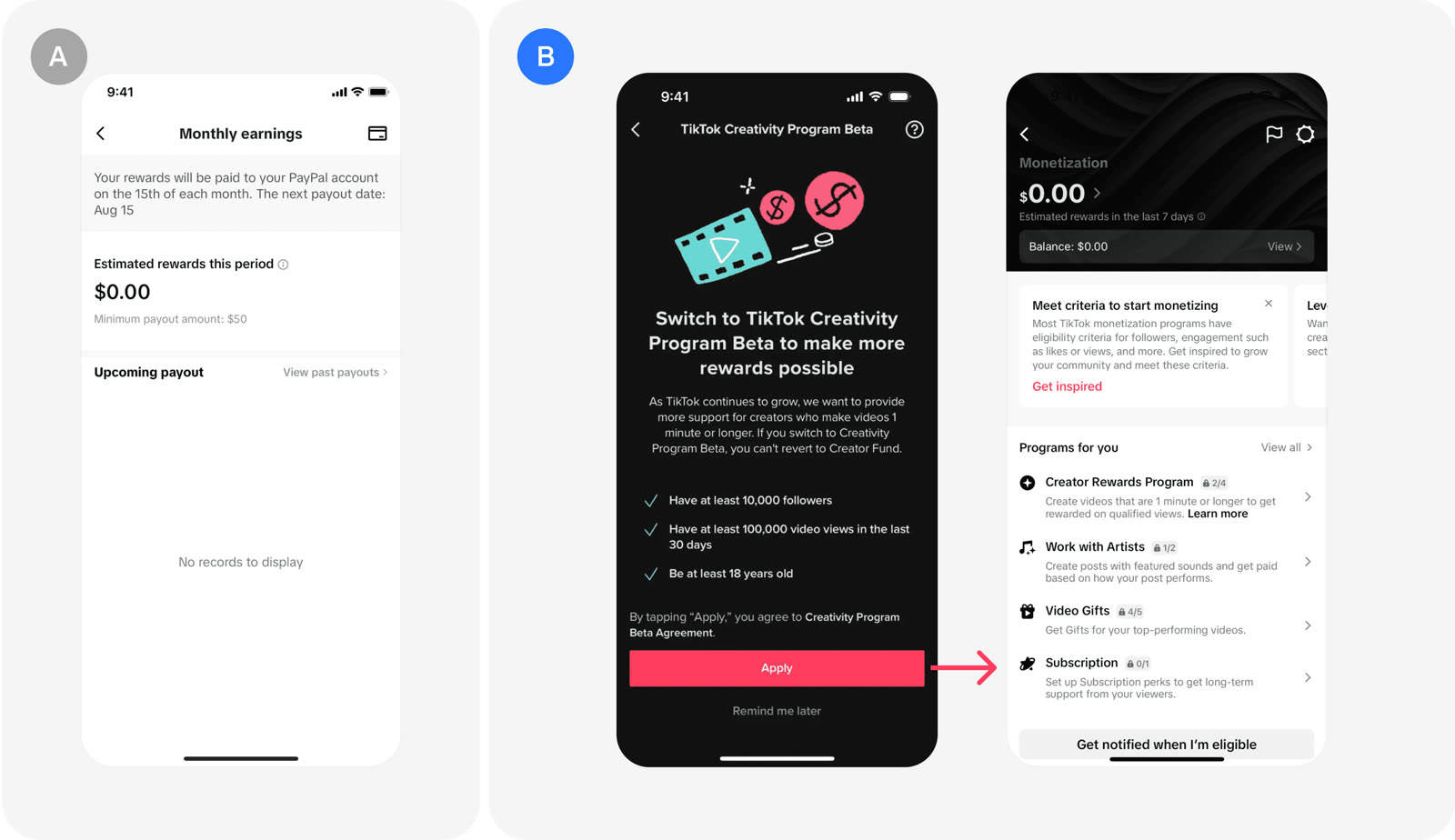
The change and result
Moving the bank account step later reduced friction and lifted enrollment by 25%.
- TikTok revised the onboarding flow so banking details came later.
- Creators could start producing content right away.
- They could see potential earnings before connecting a bank account.
- The aim was to lower friction and motivate more creators to join.
- Easing the initial commitment was meant to build trust.
- Enrollment in the program rose 25%.
In the growth library
TikTok, Onboarding test. Delaying the bank account step in a creator revenue-sharing program, so creators could start making content and see potential earnings first, cut onboarding drop-off. The change produced a 25% increase in creators enrolling.
Lessons that draw on this:
More from  abtest.design · The whole library, and ask it anything