 Caddie
The bottom line
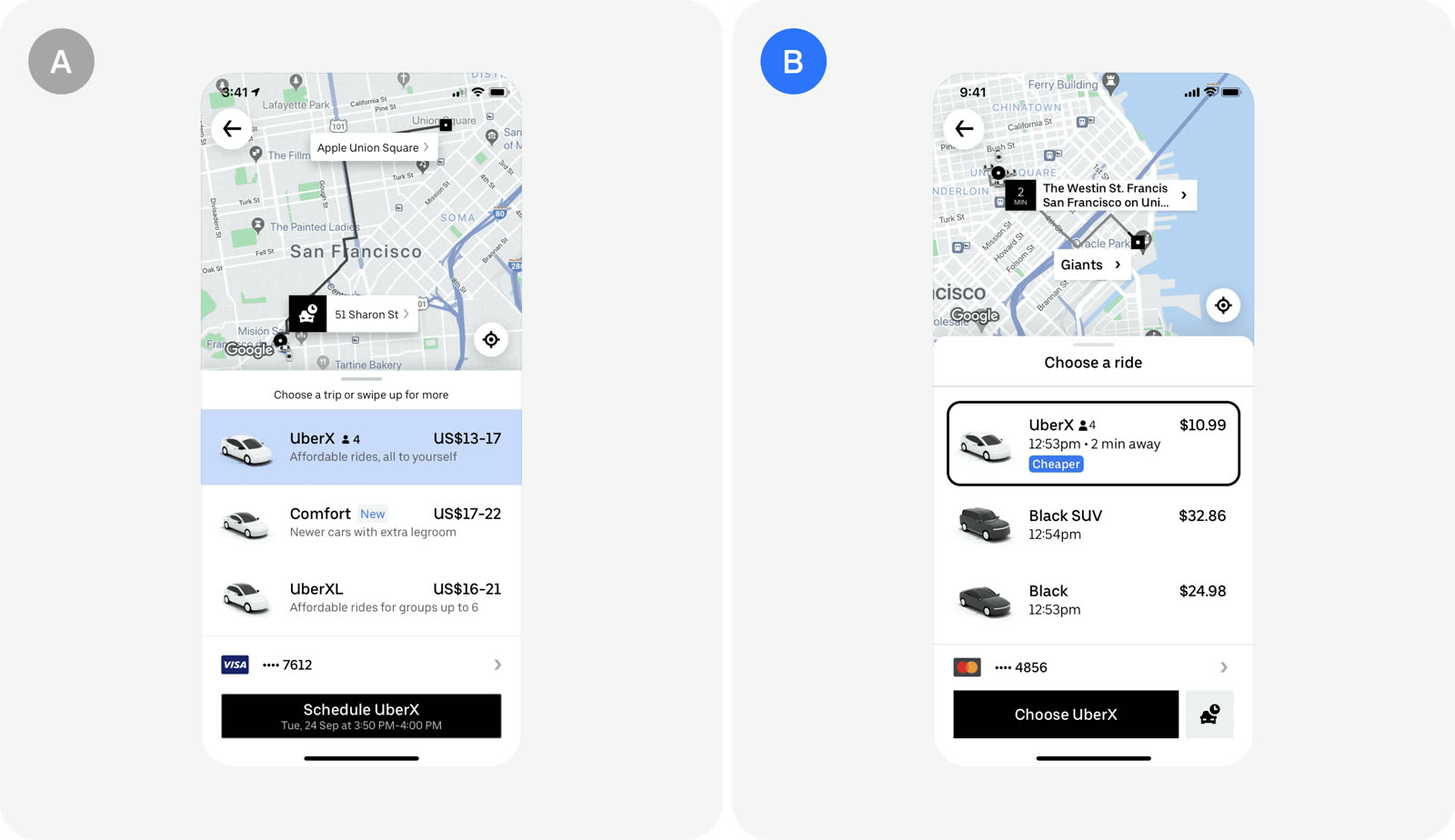
Uber got a double-digit increase in rides per user by replacing a ride price range with a single estimated price. A clear cost expectation cuts hesitation and builds trust, which leads to more bookings.
Key takeaways
Riders read a $14–$20 range as $20
- A single estimated price beat a price range. It produced a double-digit increase in rides per user.
- The range tested was $14-$20.
- Users fixated on the top of the range. That focus made the ride feel more expensive than it was.
- The uncertainty led to a decline in bookings.
- Clearer expectations build trust. Less doubt about cost means less hesitation before booking.
Clearer pricing estimate
One estimated price beat a price range
| Price range | Single estimate | |
|---|---|---|
| Rider sees | $14–$20 | One price |
| Attention goes to | Top end ($20) | The stated price |
| Feels | Uncertain, pricier | Clear, trustworthy |
| Outcome | Fewer bookings | Double-digit more rides per user |
Uber moved from showing a price range to showing one estimated price to win back bookings.
- The range was meant to help manage traffic and costs.
- Uber showed riders a range such as $14-$20.
- The range backfired with users.
- Riders focused on the higher end of the range.
- This created uncertainty and fewer bookings.
- The single estimate aimed to reduce hesitation and build trust.
- Rides per user rose by a double-digit amount.
In the growth library
Uber, Checkout & sales test. Showing a single estimated ride price instead of a price range reduced hesitation and built trust at checkout. The change produced a double-digit increase in rides per user.
Lessons that draw on this:
More from  abtest.design · The whole library, and ask it anything