Payout
An app that helps people find and claim class action settlements.
Payout, an app for claiming class action settlements, made $217,000 in 5 months through a 50/50 split between its builder and a creator who promotes it. Videos never name the app, about 50% of requested links get clicked, and download to paid is around 7%. The lesson: sell something that returns more than it costs, and pair it with a creator who owns equity.
- 1Turn down $500 sponsorshipCompetitor's offer became the app idea
- 2Connor builds PayoutDeveloper and creator split equity 50/50
- 3Reuse winning Gelato hookBest sponsored test reached about 1M views
- 4Payout video goes outHalf a million views, ~20,000 comments
- 5$217,000 in 5 monthsCasper's own revenue estimate
From Casper, Payout co-founder interview
What was said about Payout
1How Casper and Connor built Payout
A developer built the app and a creator owned distribution, splitting it 50/50. Connor built Payout, an app for finding and claiming class action settlements, and Casper, a creator with about 9 million followers, promoted it. It made $217,000 in 5 months.
Casper ignored Connor's first Twitter message and agreed only after his friend Austin vouched for Connor. The ask was low effort: Connor builds, Casper posts one video, with "no expectations, no guarantees." The revenue figures are Casper's own estimates.
Rejected sponsorship offers became the shortlist of app ideas. The first call went through about five ideas drawn from sponsors whose budgets were low or whose deals fell through. Connor chose the class action app as the easiest to build, and it came from a rejected $500 sponsorship from a Payout competitor.
Connor's plan: "If it works, we scale it. If we don't, we'll try a different idea." The first idea worked.
Pitch creators a finished app built from their own winning ad. Creators get about five outreach emails a day, so Casper says the pitch that wins is an app already built around a brand-deal format that worked on the creator's channel, with 50% equity and only a request to keep making similar videos.
A lower-risk version is to ask for one trial video with 100% of the revenue going to the creator. "If I saw that email come in, it would be really hard to say no."
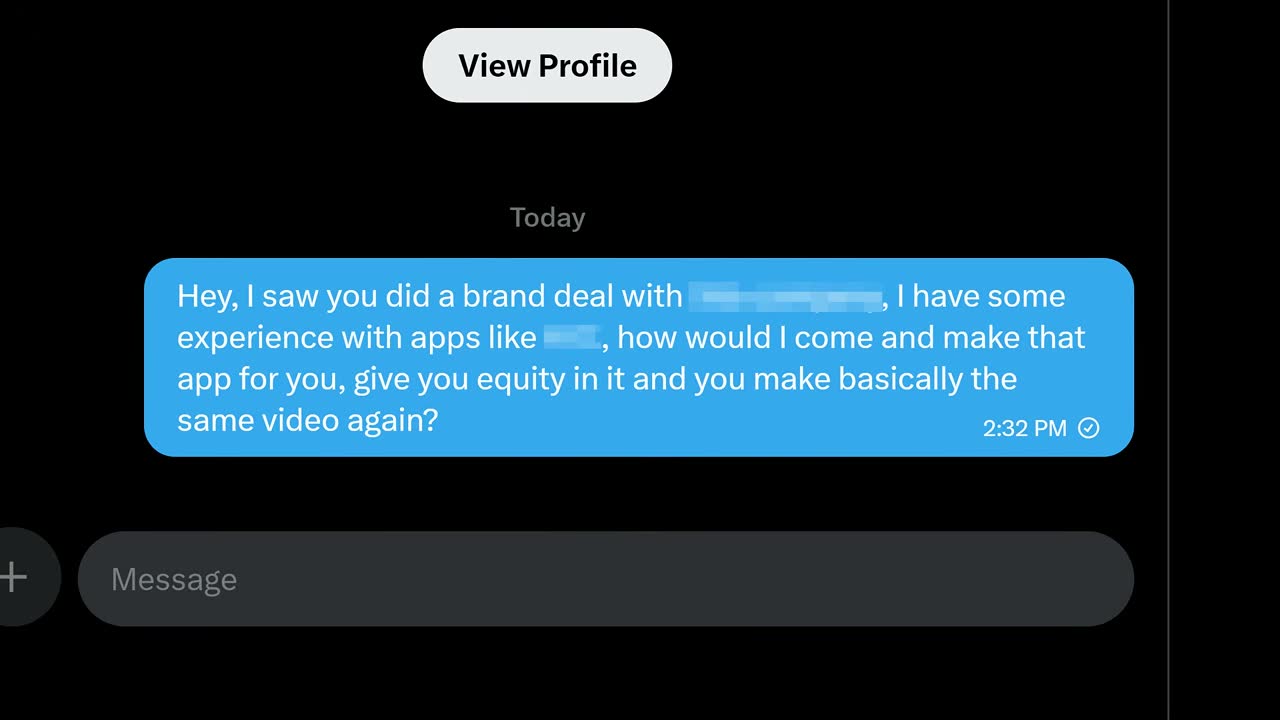
Sample DM pitch: offer to build an app from a creator's brand deal, giving them equity. Split equity by business value, not by who writes the code. With 50% equity, Casper has reason to keep inventing formats as old ones dry up. For his third app he gave the developer only 15%, since he now knows he can scale an app alone.
He argues development is getting easier, so paying someone $10,000 to $15,000 to build may beat giving up half. Joseph Choi adds that technical founders who outsource distribution without a marketing co-founder struggle because they lack years of iteration. How splits are enforced if a creator stops posting is not covered.
2Why Payout is an easy sell
Apps that return more money than they cost sell themselves. Payout costs about $40 a year and users can expect to claim at least $200. Casper calls this spend X, get X plus more back framing the biggest formula he has seen for app success.
He says the same logic drives Alex Sedlak's Media Labs, and he works deepest in the finance niche.
Choose a niche with steady demand over hit-or-miss topics. Casper's saving money videos swing between 100,000 and 10 million views, while side hustle videos always get at least 300,000. He picked Payout for consistent demand rather than "lotto shots."
Narrow audiences also make it easier to know what viewers want.
3Reusing brand-deal formats: the how-to and the skit
Remake your best sponsored video's hook for your own app. Gelato booked Casper for about five videos, each testing an idea, and the best reached about 1 million views. A week later he reused its hook and flow for Payout, getting half a million views, about 20,000 comments and probably close to $5,000 in subscription revenue.
Brands that keep rebooking a creator have found a format that pays, so sponsors are effectively paying the creator to experiment. To spot organic winners, likes near 2.5% of views suggest organic reach, while 2 million views with 2,000 likes suggests a boosted video.
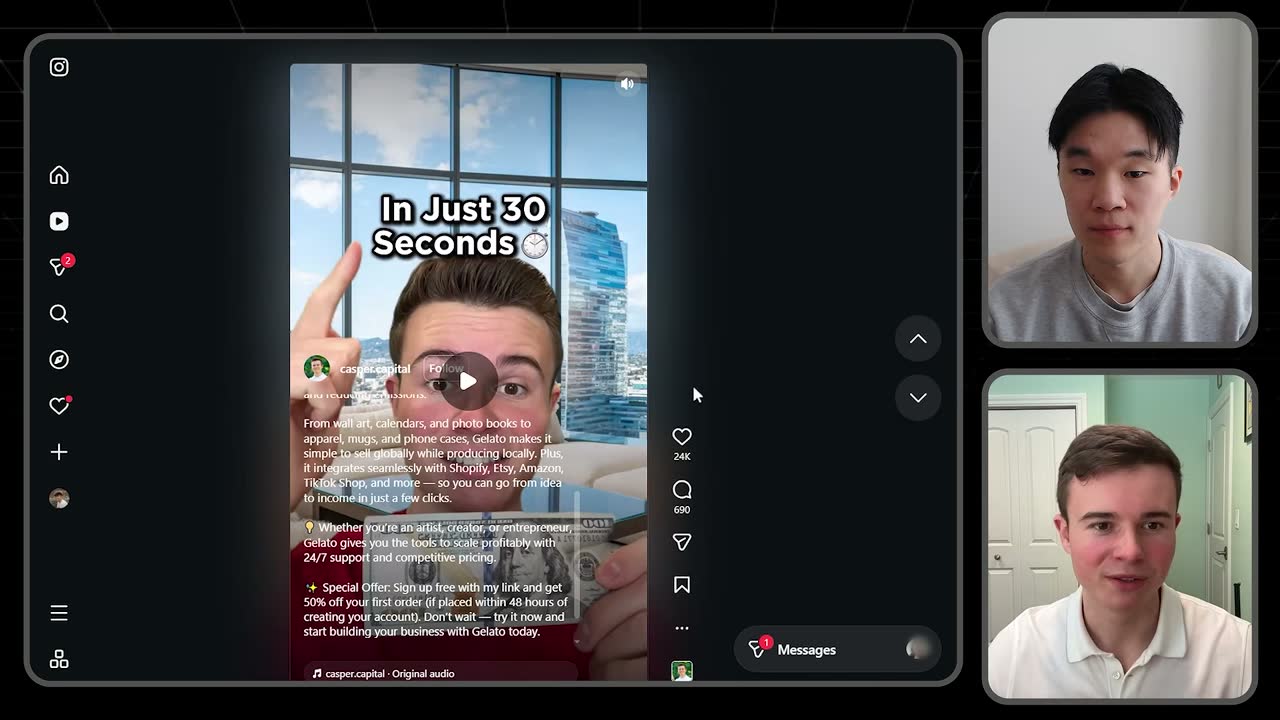
Casper's sponsored Gelato print-on-demand Instagram Reel, with about 24K likes and 690 comments. Keep a winning structure and change only numbers and backgrounds. The hook "Watch me make up to $900 in 30 seconds" was reused across many videos with new numbers (45 seconds instead of 30) and new opening backgrounds to avoid creative fatigue.
When the how-to format dried up, Casper cracked a second one. Only these two formats, the how-to and the skit, have made significant money.
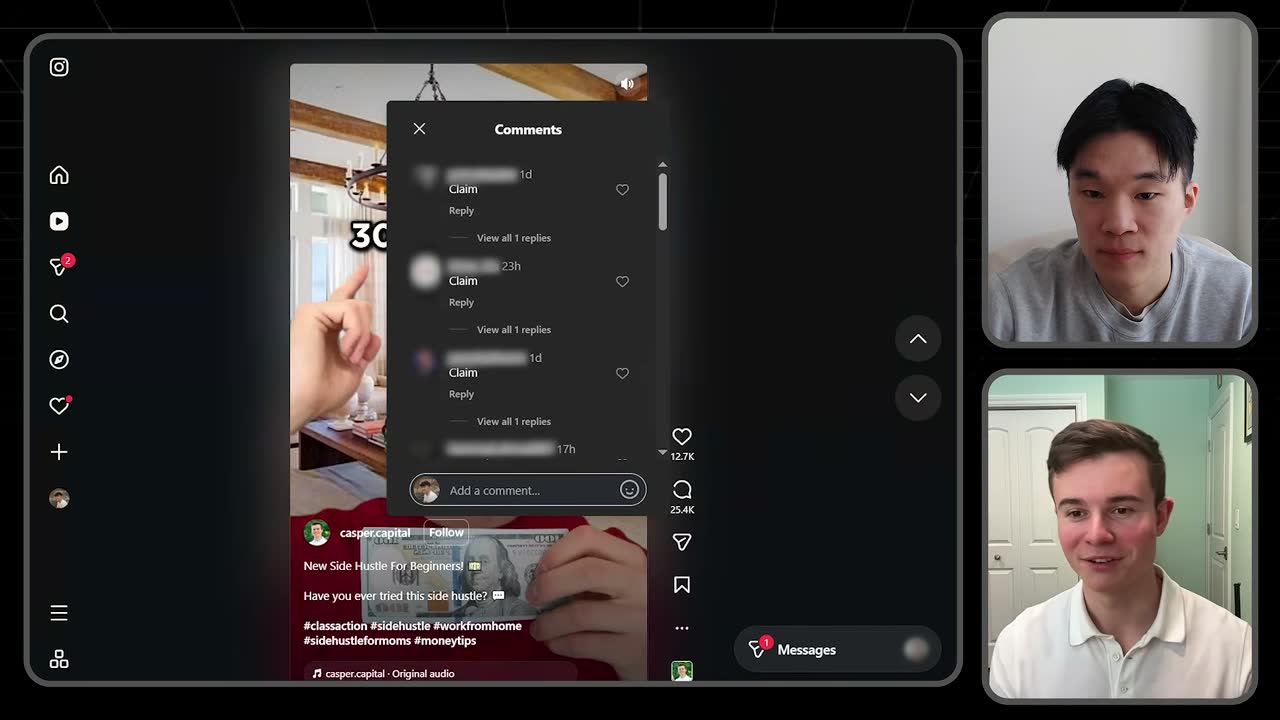
Instagram comments on casper.capital's side-hustle reel, filled with 'Claim' replies triggering ManyChat DMs (25.4K comments). Script around how the viewer gets paid, not the lawsuit. Videos explaining why a company was sued got views but few sign-ups. The skit opener "Hey Temu, is it true that I can make a thousand dollars from your lawsuit?" followed by a how-to probably brought close to $10,000 from one video.
The skit takes about 30 to 40% of the video, then the company character walks through the steps: find the lawsuit, click claim, check the deadline and proof needed, fill a simple form. Casper says about 90% of viewers only want to know if they can get paid.
The script matters more than retention tricks. Casper keeps the logic to one path, simple enough for a 12-year-old cousin, then adds light flowing hand movement and popping emojis as secondary retention aids.
Too much movement makes viewers scroll off and too little bores them. Pacing must fit each platform: a video that did well on Instagram did nothing special on TikTok, where a faster, 2x-speed delivery would likely do better.
4The soft sell and the comment-to-DM funnel
- 1Viewer comments "claim"About 13,000 commented on one video
- 2ManyChat DMs the linkUnopened DM sits as a notification
- 3Viewer clicks linkAbout 6,500 clicked, roughly 50%
- 4Download turns paidAround 7% download to paid
From Casper, Payout co-founder interview
Say "this app" instead of naming Payout. Casper has never said Payout's name in a video, so the plug sounds like a helpful tip rather than an ad, and he credits this as a big driver of conversions.
"That immediately triggers in people's minds ad ad ad ad ad scroll."
Drop the spoken CTA on TikTok and Shorts and pin a comment. Calls to action reduce retention, so on YouTube Shorts and TikTok Casper skips "link in bio," trims the video and pins a comment like "many apps can do this, the one in the video is called Payout."
On Instagram he uses a comment-to-DM flow instead.
A ManyChat comment-to-DM flow turns viewer intent into installs. Viewers comment "claim" and ManyChat DMs them the link. On one video about 13,000 people commented, about 6,500 clicked (roughly 50%), and download to paid was around 7%.
The comment count may have been closer to 25,000. The DM sits as a notification until opened, which pushes the click.
5Making each video pay longer
Have all creators post on the same day to chart. Five creators posting on one day brought $9,700 in revenue and pushed Payout to around 70 to 80 in the finance chart.
Charting in a category's top 20 brings browsing downloads and credibility. Casper asked friends to post, some for free or at about 70% off their rate, and admits some creator posts lose money.
Short-form videos keep earning for well over a year. Casper's best video had 2.9 million views in week one, 7.5 million in month one and 17 million lifetime. A video posted over 500 days ago still gets 30 to 50 views an hour.
His revenue baseline rose after each viral video, and he says he would still get a few hundred downloads a day if he stopped posting. About 70% of views came from non-followers.
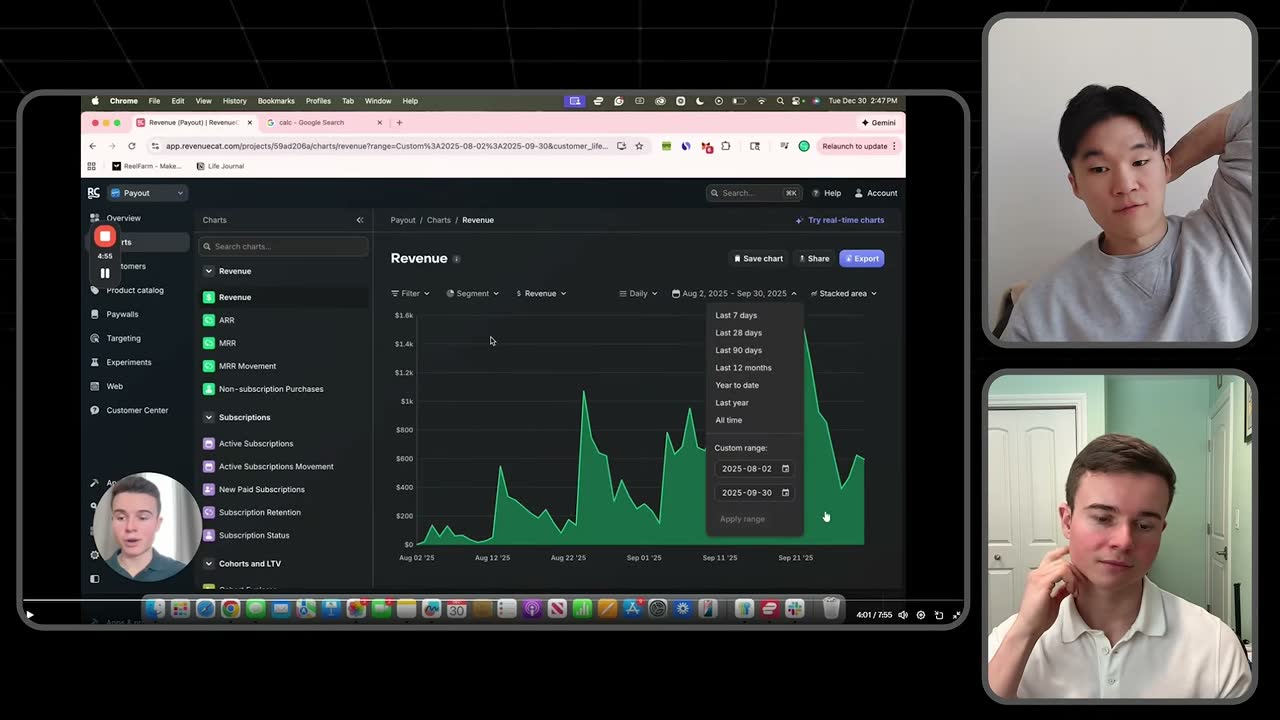
Payout's RevenueCat daily revenue, Aug–Sep 2025: video-driven spikes leave a rising baseline. Hand organic winners to the paid-ads team as creatives. Give the paid-ads partner the file or boosting code of any organic video that performs. One of Casper's organic videos ran profitably on Meta ads for a few weeks.
Outside UGC creators charge $1,000 to $1,500 per video, and perhaps only 20 to 30% of ads are profitable, so an equity-holding creator supplying creatives is cheaper.

The Stupid Simple Content Strategy That's Making Apps Go Viral
Built by Connor and promoted by Casper, it made $217,000 in 5 months on a 50/50 split. It costs about $40 a year with at least $200 in expected claims, and download to paid conversion is around 7%. Videos never name it, and one Temu skit probably brought close to $10,000.
A developer built the app and a creator owned distribution, splitting it 50/50. Connor built Payout, an app for finding and claiming class action settlements, and Casper, a creator with about 9 million followers, promoted it. It made $217,000 in 5 months.
Casper ignored Connor's first Twitter message and agreed only after his friend Austin vouched for Connor. The ask was low effort: Connor builds, Casper posts one video, with "no expectations, no guarantees." The revenue figures are Casper's own estimates.
Rejected sponsorship offers became the shortlist of app ideas. The first call went through about five ideas drawn from sponsors whose budgets were low or whose deals fell through. Connor chose the class action app as the easiest to build, and it came from a rejected $500 sponsorship from a Payout competitor.
Connor's plan: "If it works, we scale it. If we don't, we'll try a different idea." The first idea worked.
Pitch creators a finished app built from their own winning ad. Creators get about five outreach emails a day, so Casper says the pitch that wins is an app already built around a brand-deal format that worked on the creator's channel, with 50% equity and only a request to keep making similar videos.
A lower-risk version is to ask for one trial video with 100% of the revenue going to the creator. "If I saw that email come in, it would be really hard to say no."
Sample DM pitch: offer to build an app from a creator's brand deal, giving them equity. Split equity by business value, not by who writes the code. With 50% equity, Casper has reason to keep inventing formats as old ones dry up. For his third app he gave the developer only 15%, since he now knows he can scale an app alone.
He argues development is getting easier, so paying someone $10,000 to $15,000 to build may beat giving up half. Joseph Choi adds that technical founders who outsource distribution without a marketing co-founder struggle because they lack years of iteration. How splits are enforced if a creator stops posting is not covered.
Apps that return more money than they cost sell themselves. Payout costs about $40 a year and users can expect to claim at least $200. Casper calls this spend X, get X plus more back framing the biggest formula he has seen for app success.
He says the same logic drives Alex Sedlak's Media Labs, and he works deepest in the finance niche.
Choose a niche with steady demand over hit-or-miss topics. Casper's saving money videos swing between 100,000 and 10 million views, while side hustle videos always get at least 300,000. He picked Payout for consistent demand rather than "lotto shots."
Narrow audiences also make it easier to know what viewers want.
Remake your best sponsored video's hook for your own app. Gelato booked Casper for about five videos, each testing an idea, and the best reached about 1 million views. A week later he reused its hook and flow for Payout, getting half a million views, about 20,000 comments and probably close to $5,000 in subscription revenue.
Brands that keep rebooking a creator have found a format that pays, so sponsors are effectively paying the creator to experiment. To spot organic winners, likes near 2.5% of views suggest organic reach, while 2 million views with 2,000 likes suggests a boosted video.
Casper's sponsored Gelato print-on-demand Instagram Reel, with about 24K likes and 690 comments. Keep a winning structure and change only numbers and backgrounds. The hook "Watch me make up to $900 in 30 seconds" was reused across many videos with new numbers (45 seconds instead of 30) and new opening backgrounds to avoid creative fatigue.
When the how-to format dried up, Casper cracked a second one. Only these two formats, the how-to and the skit, have made significant money.
Instagram comments on casper.capital's side-hustle reel, filled with 'Claim' replies triggering ManyChat DMs (25.4K comments). Script around how the viewer gets paid, not the lawsuit. Videos explaining why a company was sued got views but few sign-ups. The skit opener "Hey Temu, is it true that I can make a thousand dollars from your lawsuit?" followed by a how-to probably brought close to $10,000 from one video.
The skit takes about 30 to 40% of the video, then the company character walks through the steps: find the lawsuit, click claim, check the deadline and proof needed, fill a simple form. Casper says about 90% of viewers only want to know if they can get paid.
The script matters more than retention tricks. Casper keeps the logic to one path, simple enough for a 12-year-old cousin, then adds light flowing hand movement and popping emojis as secondary retention aids.
Too much movement makes viewers scroll off and too little bores them. Pacing must fit each platform: a video that did well on Instagram did nothing special on TikTok, where a faster, 2x-speed delivery would likely do better.
Say "this app" instead of naming Payout. Casper has never said Payout's name in a video, so the plug sounds like a helpful tip rather than an ad, and he credits this as a big driver of conversions.
"That immediately triggers in people's minds ad ad ad ad ad scroll."
Drop the spoken CTA on TikTok and Shorts and pin a comment. Calls to action reduce retention, so on YouTube Shorts and TikTok Casper skips "link in bio," trims the video and pins a comment like "many apps can do this, the one in the video is called Payout."
On Instagram he uses a comment-to-DM flow instead.
A ManyChat comment-to-DM flow turns viewer intent into installs. Viewers comment "claim" and ManyChat DMs them the link. On one video about 13,000 people commented, about 6,500 clicked (roughly 50%), and download to paid was around 7%.
The comment count may have been closer to 25,000. The DM sits as a notification until opened, which pushes the click.
Have all creators post on the same day to chart. Five creators posting on one day brought $9,700 in revenue and pushed Payout to around 70 to 80 in the finance chart.
Charting in a category's top 20 brings browsing downloads and credibility. Casper asked friends to post, some for free or at about 70% off their rate, and admits some creator posts lose money.
Short-form videos keep earning for well over a year. Casper's best video had 2.9 million views in week one, 7.5 million in month one and 17 million lifetime. A video posted over 500 days ago still gets 30 to 50 views an hour.
His revenue baseline rose after each viral video, and he says he would still get a few hundred downloads a day if he stopped posting. About 70% of views came from non-followers.
Payout's RevenueCat daily revenue, Aug–Sep 2025: video-driven spikes leave a rising baseline. Hand organic winners to the paid-ads team as creatives. Give the paid-ads partner the file or boosting code of any organic video that performs. One of Casper's organic videos ran profitably on Meta ads for a few weeks.
Outside UGC creators charge $1,000 to $1,500 per video, and perhaps only 20 to 30% of ads are profitable, so an equity-holding creator supplying creatives is cheaper.
More in Finance
 Finance
Ramp
A finance automation platform combining corporate cards, bill pay, procurement, treasury and accounting in one place.

 10 sources · 64 tips
 Finance
Coinbase
A crypto exchange and app for buying, storing and trading Bitcoin, stablecoins, stocks and more.
3 sources · 22 tips Finance
Revolut
A global digital bank app offering accounts, cards, trading, crypto, credit and business banking in one place.
3 sources · 19 tips Finance
Nubank
A Latin American digital bank that started with a no-fee credit card in Brazil.
3 sources · 17 tipsPollen VC
A revenue-based financing company that advances cash to app developers against store and ad network receipts.
 1 source · 12 tips
 Finance
Wise
An international money transfer and multi-currency account provider that sells low-cost, fast cross-border payments to people and businesses.
1 source · 20 tips Finance
YNAB
A budgeting app and brand built on a blog, a book and a community.
1 source · 10 tips Finance
Bank of America
A major US bank that financed Disney's early feature films and studio.

 4 sources · 9 tips