
Dupe.com
A shopping app that finds cheaper lookalike versions of furniture and products.
Dupe.com ran relatable creators doing green screen reaction videos on every post for two to three months. Reposting one kitchen script with different text hooks gave a version 6.9 million views and 170,000 likes. Lesson: for impulse products, pair relatable creators with one cheap repeatable format, put the URL call to action inside the demo, and repost creator winners on the brand page.
- 1Pick a proven videoOne that worked, or the founder's own
- 2Green screen itCreator reacts in front of it
- 3Speak a bold hookIn the first three seconds
- 4Repost with new text hooksSame kitchen script: 6.9M views
From Dupe.com on growth podcasts
What was said about Dupe.com
1The dupe.com domain trick and the three-second aha moment
Typing dupe.com before any product URL showed value in seconds. Nikita Bier advised Dupe to buy a short domain, so users could type dupe.com in front of any product URL and see the cheapest lookalike. Dupe reached millions in ARR in under 60 days.
The habit was iconic and easy to remember, and videos about it went viral. Bier's rule is "If you can't demonstrate value in the first three seconds, it's over." He says about 50% of the companies he advises hit big success and 50% fail.
2Dupe.com's short-video content strategy
Dupe.com cast relatable creators because furniture dupes are impulse buys. A $40 furniture dupe is an impulse purchase, so Dupe.com uses relatable creators who share the same pain point rather than credentialed experts. The hook and messaging are matched to that.
The contrast is Jetpack, a travel product with a considered purchase, which used ex-flight attendants as experts and opened with the credential. Bible BFF, a faith app, also used relatable creators.
Green screen reaction videos were Dupe.com's low-effort format on every video. Dupe.com has used the green screen format on every video for two to three months. Creators react to a video that already worked, or to the founder's own video, with a bold spoken hook in the first three seconds.
The format is easy to train and shows credibility and relatability together. It converts better than long text or silent face reactions, which pull views but convert poorly. Separately, one SMB Market green screen got 214,000 views.
Reposting one kitchen script with new text hooks produced a 6.9 million view video. Dupe.com reposted the same kitchen script with different text hooks. One version got 6.9 million views and 170,000 likes.
The test is of hooks, not of new scripts: the content stayed the same and only the opening text changed.
Put the call to action inside the demo and show the URL slowly. Dupe.com's 'my mom's an interior designer' video followed the order of credible source, then pain point, then the product solving it, with the call to action inside the solution. The full URL stays on screen for about five seconds instead of half a second.
The aim is a call to action that is slow and easy to understand: "It's a very slow easy to understand call to action."
Repost creator winners on the brand page with collab posts. When a creator video reaches about 20,000 views, repost it on the brand's main page, preferably as an Instagram collab post. Dupe.com and Bible BFF both do this, and the reposted content still goes viral.
Reposting does not hurt the views, and the video can pick up additional ones while the brand page benefits too.
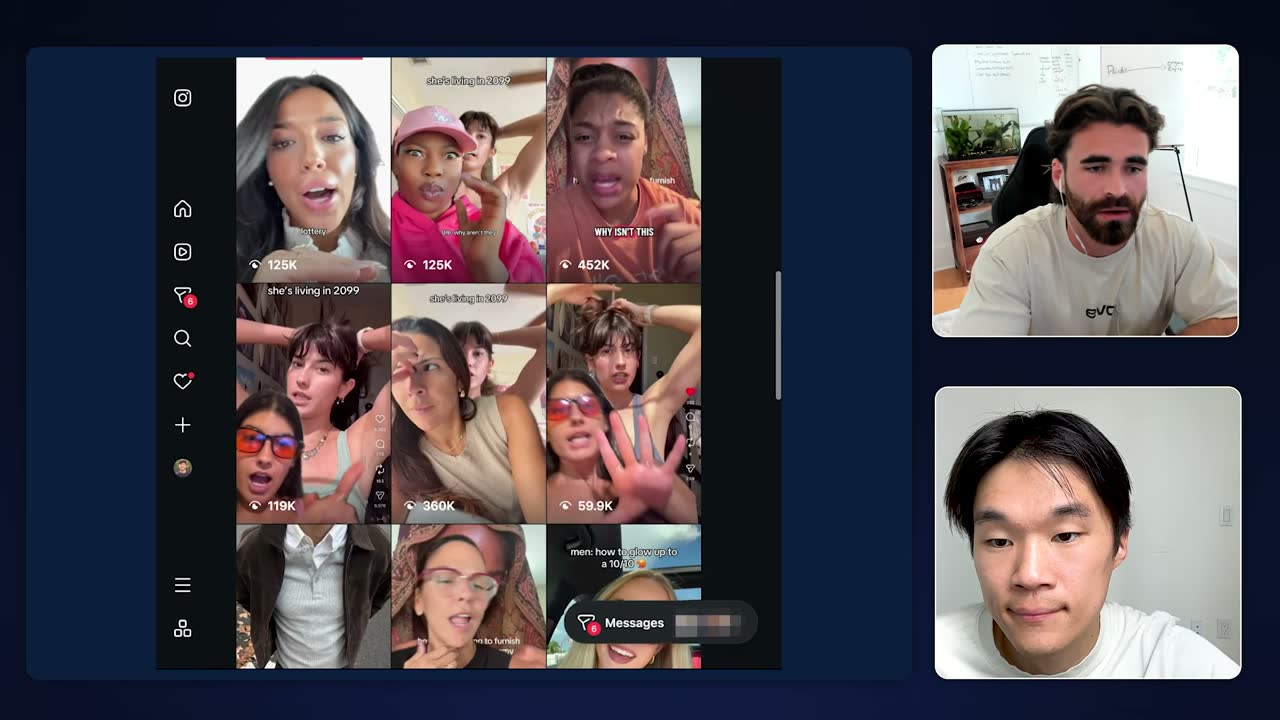
Dup's Instagram grid of green-screen reaction videos, drawing between 59.9K and 452K views each.

The 1 Billion Views Content Strategy Every App Should Steal in 2026
It uses relatable creators and green screen reaction videos on every video for two to three months. Reposting the same kitchen script with different text hooks gave one version 6.9 million views and 170,000 likes.
Dupe.com cast relatable creators because furniture dupes are impulse buys. A $40 furniture dupe is an impulse purchase, so Dupe.com uses relatable creators who share the same pain point rather than credentialed experts. The hook and messaging are matched to that.
The contrast is Jetpack, a travel product with a considered purchase, which used ex-flight attendants as experts and opened with the credential. Bible BFF, a faith app, also used relatable creators.
Green screen reaction videos were Dupe.com's low-effort format on every video. Dupe.com has used the green screen format on every video for two to three months. Creators react to a video that already worked, or to the founder's own video, with a bold spoken hook in the first three seconds.
The format is easy to train and shows credibility and relatability together. It converts better than long text or silent face reactions, which pull views but convert poorly. Separately, one SMB Market green screen got 214,000 views.
Reposting one kitchen script with new text hooks produced a 6.9 million view video. Dupe.com reposted the same kitchen script with different text hooks. One version got 6.9 million views and 170,000 likes.
The test is of hooks, not of new scripts: the content stayed the same and only the opening text changed.
Put the call to action inside the demo and show the URL slowly. Dupe.com's 'my mom's an interior designer' video followed the order of credible source, then pain point, then the product solving it, with the call to action inside the solution. The full URL stays on screen for about five seconds instead of half a second.
The aim is a call to action that is slow and easy to understand: "It's a very slow easy to understand call to action."
Repost creator winners on the brand page with collab posts. When a creator video reaches about 20,000 views, repost it on the brand's main page, preferably as an Instagram collab post. Dupe.com and Bible BFF both do this, and the reposted content still goes viral.
Reposting does not hurt the views, and the video can pick up additional ones while the brand page benefits too.
Dup's Instagram grid of green-screen reaction videos, drawing between 59.9K and 452K views each.

How to consistently go viral: Nikita Bier’s playbook for winning at consumer apps
Typing dupe.com before a product URL showed value in seconds and became an iconic habit. It reached millions in ARR in under 60 days, and Nikita advised it.
Typing dupe.com before any product URL showed value in seconds. Nikita Bier advised Dupe to buy a short domain, so users could type dupe.com in front of any product URL and see the cheapest lookalike. Dupe reached millions in ARR in under 60 days.
The habit was iconic and easy to remember, and videos about it went viral. Bier's rule is "If you can't demonstrate value in the first three seconds, it's over." He says about 50% of the companies he advises hit big success and 50% fail.
More in Shopping
 Shopping
Amazon
An online retailer and platform company that also runs AWS, Kindle, Echo and Prime.



 38 sources · 94 tips
 Shopping
Walmart
A discount retail chain built on everyday low prices, started in small Arkansas towns.
14 sources · 41 tips Shopping
Nike
A global athletic footwear and apparel company that began as a shoe importer called Blue Ribbon Sports.
 10 sources · 46 tips
 Shopping
Costco
A membership warehouse retailer selling a small range of bulk goods at capped markups.
11 sources · 28 tips Shopping
IKEA
A Swedish furniture retailer selling flat-packed, low-priced home furnishings through large stores and a catalog.
3 sources · 34 tips Shopping
Whatnot
A live stream shopping marketplace where sellers auction and sell products to buyers in real time.
4 sources · 15 tips Shopping
Home Depot
The world's largest home improvement retailer, selling tools, building materials and supplies through big-box warehouse stores.
5 sources · 20 tipsFedmart
A San Diego membership discount store founded by Sol Price in the 1950s.
2 sources · 12 tips